

Alibaba's HK$80 billion share placement — its first since 2019 — funds a three-year CNY 380 billion AI buildout that has already consumed half its budget.
Alibaba's HK$80 billion share placement — its first since 2019 — funds a three-year CNY 380 billion AI buildout that has already consumed half its budget.
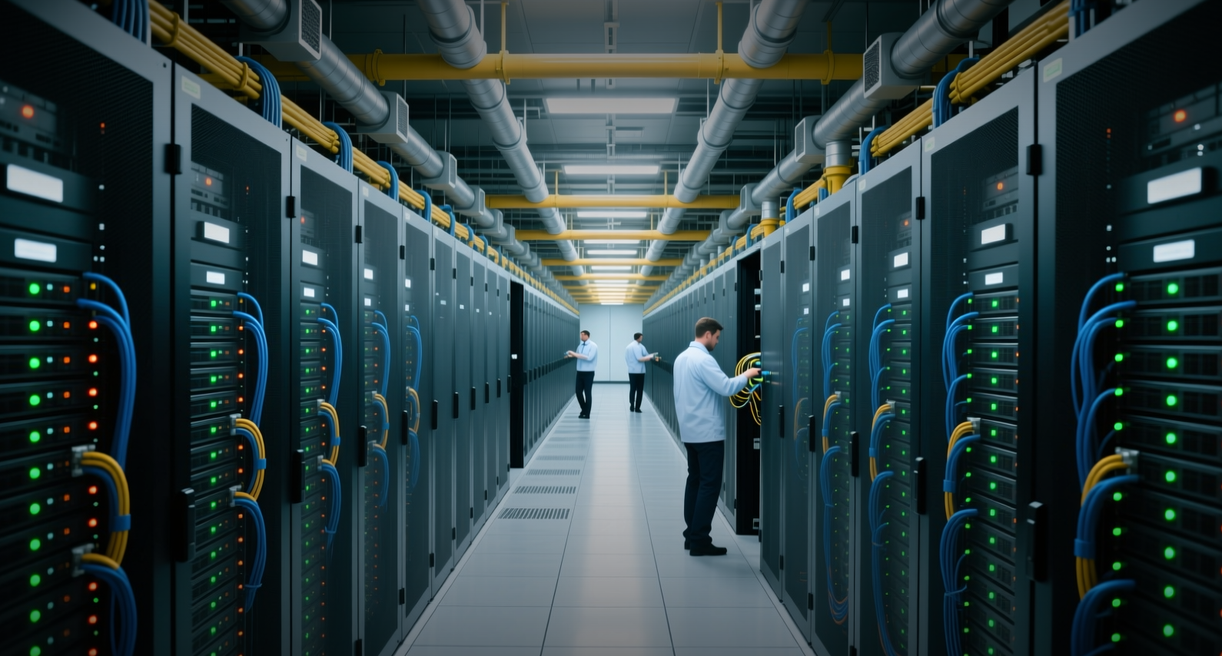
Alibaba Group priced an HK$80 billion placement of 710 million new shares at HK$112.70 each, its first equity raise since the 2019 Hong Kong listing, with all proceeds earmarked for AI infrastructure.
"Capex must come first before business growth can follow," said Toby Xu, chief financial officer at Alibaba, explaining the front-loaded investment logic on the company's Aug. 20 earnings call.
The placement, expected to close Aug. 26, was quickly oversubscribed with demand from sovereign wealth funds and other long-term investors, according to market sources. It follows a June quarter where Alibaba Cloud revenue grew 45 percent year-over-year and AI-related products reached an annualized run rate of CNY 49.5 billion, up triple digits for a 12th consecutive quarter.
The raise supplements a CNY 380 billion three-year AI investment plan, of which roughly CNY 190 billion had been deployed by June. Management expects computing power assets to recoup costs in about three years, potentially shortening to 2.5 years or even two as AI product gross margins improve.
AI commercialization accelerates
The placement's timing is deliberate. Three days before pricing, Alibaba reported June-quarter results showing AI-related products now account for 35 percent of Alibaba Cloud's external commercialization revenue, with cloud EBITA margin rising to 12 percent quarter-over-quarter. CEO Eddie Wu told analysts that AI commercialization has moved from "crossing the inflection point" to "accelerating growth and expanding margins."
The company's capital expenditure reached CNY 67.7 billion in the June quarter, up 75 percent year-over-year, while net income attributable to ordinary shareholders fell 76 percent to CNY 10.54 billion. Bloomberg reported a free-cash outflow of $6.6 billion for the quarter. U.S.-listed shares fell more than 8 percent on Aug. 21 as investors digested the earnings miss and the capex bill.
Xu cited operational data to justify the spending: V100 GPUs purchased in 2018 and A100 GPUs from 2020 still run at near-full capacity, suggesting the useful life of AI computing assets extends well beyond the theoretical depreciation cycle. After three years of cost recovery, he said, these assets can continue contributing positive free cash flow.
Equity over debt in the AI arms race
Choosing equity financing over debt reflects management's preference to lock in funding during a critical window. Alibaba's net cash reserves remain ample, but with roughly CNY 190 billion of the three-year plan still to deploy, the placement provides a buffer without adding interest costs. At a market capitalization of approximately HK$2.5 trillion, the dilution from 710 million new shares is relatively contained.
The move aligns with a broader trend among Chinese tech giants. Goldman Sachs estimates Alibaba, Tencent, ByteDance and Baidu will spend a combined $102 billion on AI capital expenditure in 2026. Tencent's first-quarter capex jumped 63 percent quarter-over-quarter to CNY 31.9 billion, with chief strategy officer James Mitchell pledging further increases in the second half.
Alibaba has also moved to divest non-core assets. On Aug. 17, Reuters reported the company agreed to transfer its entire stake in Lingxi Games to Trustar Capital for more than $2 billion, freeing capital for the AI buildout. Meanwhile, its in-house Zhenwu M890 AI processor has been adopted by more than 650 external customers across more than 20 industries through Alibaba Cloud, helping reduce dependence on imported chips as U.S. export restrictions tighten.
Management projects Alibaba Cloud's external commercialization revenue to reach $100 billion by 2030, with margins potentially exceeding 20 percent. The placement's success — oversubscribed within hours — suggests international investors are willing to fund that ambition. The question is whether Wu's three-year payback window holds as chip prices continue to climb.
This article is for informational purposes only and does not constitute investment advice.
