

Alphabet's AI leadership is being restructured at a critical moment, with its flagship Gemini model still unreleased and rivals recruiting its top researchers.
Alphabet's AI leadership is being restructured at a critical moment, with its flagship Gemini model still unreleased and rivals recruiting its top researchers.
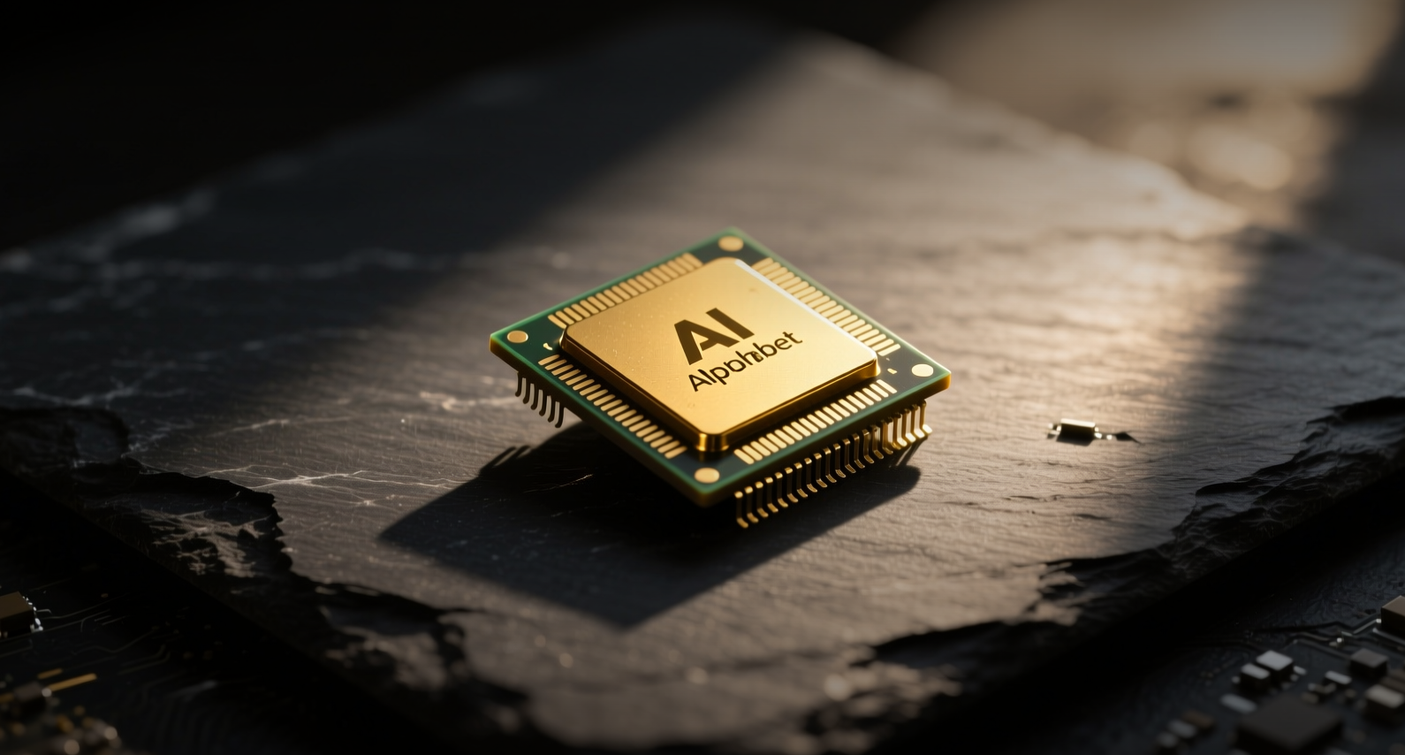
Alphabet shares fell more than 5 percent to $357.72 after the company announced a sweeping AI leadership overhaul, with Demis Hassabis stepping back from his CEO role and four senior engineers, including Jeff Dean, departing to found a new startup.
"Hassabis and I have been long discussing a role that allows him to put his full attention on actively shaping the future of AGI," Alphabet chief Sundar Pichai said in a companywide memo. "It's work that is vitally important to Alphabet and humanity."
Hassabis, a Nobel Prize recipient who co-founded DeepMind in 2010 and sold it to Google for about $650 million in 2014, will become Alphabet's chief scientist and chairman of Google DeepMind. Koray Kavukcuoglu, the unit's chief technology officer, will assume day-to-day responsibilities as senior vice president. Dean, Sanjay Ghemawat, Oriol Vinyals and Quoc Le — some of Google's most decorated AI and engineering leaders — left to launch Discovery Loop, a public benefit corporation focused on machine learning, science and engineering research.
The shakeup lands as Google's flagship Gemini 4 model remains unreleased despite a planned June launch, and after OpenAI and Anthropic each recruited a star Google AI researcher this summer. The departures raise questions about Google's ability to hold its competitive position in the AI race, with investors marking down Alphabet shares more than 5 percent intraday.
Dean, Vinyals, Le Exit to Found Discovery Loop
Hassabis and Dean were the two leading AI figures at Google for years before the field became the center of technological innovation. Dean co-founded Google Brain in 2011, building on his collaboration with Ghemawat on landmark infrastructure projects that still power the company today. In 2023, after OpenAI's ChatGPT caught Google off guard, Pichai merged DeepMind and Google Brain into Google DeepMind, appointing Hassabis CEO and Dean chief scientist.
Until recently, Dean, Vinyals and Noam Shazeer co-led Gemini development. Under their stewardship, Google released Gemini 3 last November, which the industry widely saw as closing the gap with leading models from Anthropic and OpenAI. But subsequent advances from those rivals, along with momentum for cheaper Chinese open-source models, have put Google on the defensive. At Google's developer conference in May, Pichai and other leaders touted Gemini's cost advantage rather than its state-of-the-art capabilities.
The brain drain accelerated in June when Shazeer left for OpenAI, less than two years after Google paid billions to hire him and his research team away from the startup he led. The same week, John Jumper, who won the Nobel Prize in Chemistry alongside Hassabis in 2024, said he would join Anthropic.
Vinyals and Le, along with former OpenAI chief scientist Ilya Sutskever, coauthored a 2014 research paper that became foundational to modern AI by establishing that scaling up data to "pre-train" AI systems would drive dramatic capability gains.
Hassabis Shifts Focus to Isomorphic Labs
In his memo, Hassabis touted "great progress" on Google's AI models, including an unreleased upgrade called Gemini 4. He said he would spend more time with Isomorphic Labs, the drug discovery company that spun out of DeepMind, where he serves as founder and CEO.
"I've always believed the No.1 application of AI should be to improve human health," he said. "It's time for AI to prove its unequivocal value to the world, and what better way to demonstrate that than to help finally cure diseases like cancer."
Discovery Loop received investment from Google and signed a partnership with its cloud division for computing capacity, according to the company. Alphabet did not provide details on what precipitated the moves or their coincident timing.
For investors, the leadership churn compounds existing concerns about Google's AI competitiveness. Alphabet shares, which had already been under pressure from the delayed Gemini 4 launch, now face additional uncertainty about execution continuity. The company's ability to retain top AI talent will be tested as OpenAI and Anthropic continue aggressive recruiting, and the market's 5 percent markdown reflects that risk.
This article is for informational purposes only and does not constitute investment advice.
