
Apple's Sept 10 event brings Apple Intelligence to mainland China after a two-year absence, a launch that may matter more than the company's first foldable iPhone.
Apple's Sept 10 event brings Apple Intelligence to mainland China after a two-year absence, a launch that may matter more than the company's first foldable iPhone.
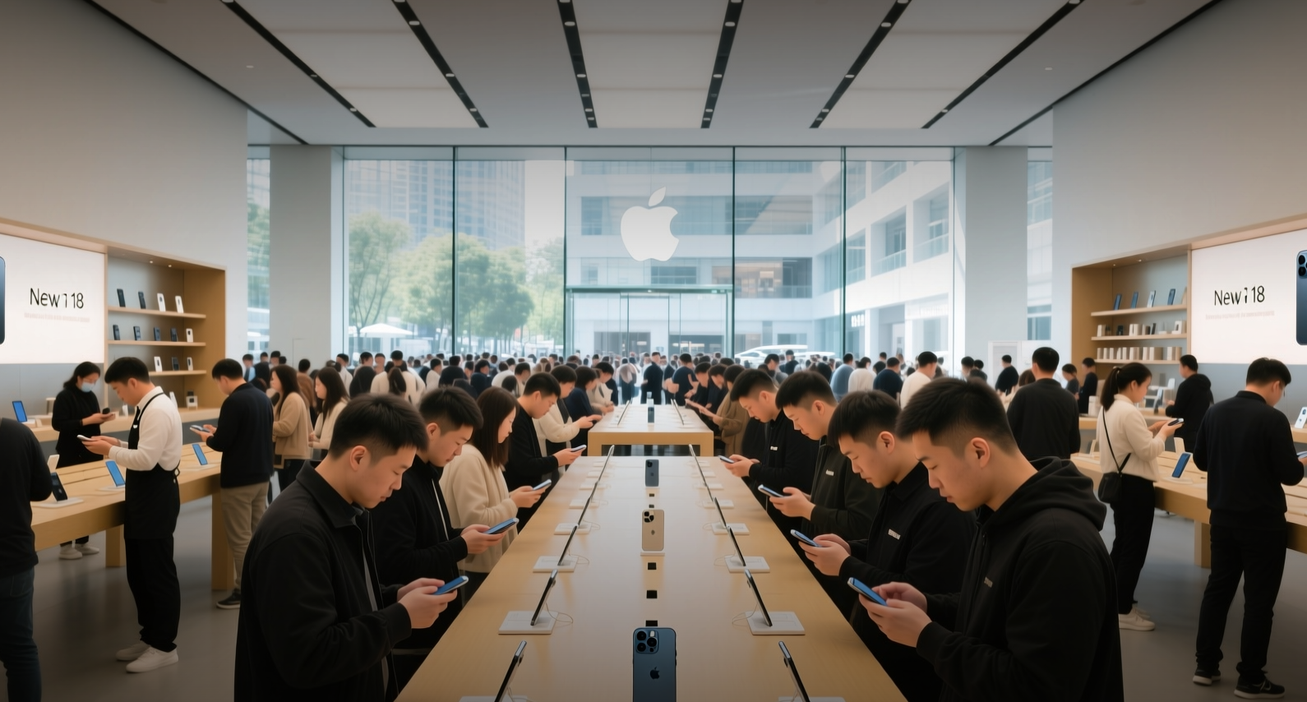
Apple's Sept 10 event brings Apple Intelligence to mainland China after a two-year absence, a launch that may matter more than the company's first foldable iPhone.
Apple will bring Apple Intelligence to mainland China iPhones on Sept 10 after a two-year absence, partnering with Alibaba's Qwen and Baidu to close the AI gap against domestic Android rivals in its fastest-growing market.
IDC data shows Apple grew 24.4 percent in China's second-quarter smartphone market, reaching second place even as the overall market declined sharply — a position the company held without Apple Intelligence. The filing with China's Cyberspace Administration in July cleared the regulatory path, with Alibaba confirming Qwen integration for iOS, iPadOS, macOS, and visionOS, and Baidu confirming participation in China AI development. Apple's China website now shows a help page for using Qwen with Apple Intelligence on Mac.
But the new Siri AI from WWDC26 — with personal context understanding and cross-app capabilities — launches first as an English Beta late this year, meaning China's initial rollout may not include all features. The scope of what Chinese users get first remains unclear: which functions open in the first batch, and how deeply Qwen and Baidu integrate into the system.
The launch determines whether Apple can close the AI gap against Huawei, Xiaomi, OPPO, vivo, and Honor — all of which have embedded AI across their systems — and whether iPhone 18 Pro's expected $100-300 price increase can hold in a market where component costs have surged.
The event also marks the first major product launch under CEO John Ternus, who inherited a company restructuring its iPhone release cadence for the first time. Standard iPhone 18, iPhone 18e, and iPhone Air 2 are delayed to spring 2027, leaving only the Pro, Pro Max, and the foldable iPhone Ultra in the fall lineup. The move concentrates the September event on higher-priced devices, with the foldable expected to start above $2,000.
The foldable iPhone Ultra, rumored at 5.5-inch outer and 7.7-7.8-inch inner displays with a 4:3 aspect ratio, unfolds to roughly 4.5mm thin. Apple reportedly removed Face ID in favor of side-mounted Touch ID and cut the rear camera array from three lenses to two, dropping the telephoto — trade-offs that may face scrutiny from Chinese consumers who have compared foldables from Huawei, Honor, OPPO, and vivo for years.
Component costs squeeze iPhone 18 Pro pricing
The pricing pressure is real. Memory component costs have surged, with a 12+256G configuration now costing about 2,200 yuan to source, up from roughly 500 yuan a year ago — a 1,700 yuan increase that exceeds the cost of a flagship chip, according to Digital Chat Station, a Weibo technology commentator. A20 Pro, Apple's first 2nm mobile chip, adds further cost pressure. Industry analysts predict iPhone 18 Pro price increases of $100-300, though Apple may absorb some of the increase to protect market share.
The A20 Pro's design priorities reflect Apple's shift toward AI workloads. Rather than chasing raw performance gains, the 2nm chip emphasizes power efficiency for on-device models, image computation, and sustained high-load tasks. Apple Watch Series 12 also gets a new chip focused on AI capabilities, suggesting Apple is allocating more compute budget to system-level AI across its product line.
What China gets first
The scope of China's Apple Intelligence launch remains uncertain. The new Siri AI from WWDC26 — with personal context understanding and cross-app capabilities — launches first as an English Beta late this year. Chinese users may get a more limited initial rollout, with Qwen handling text and image generation while Baidu contributes to the system's AI development.
For investors, the stakes are clear. Apple's China business grew 24.4 percent in Q2 even without AI features, and the company's ability to maintain that momentum while raising prices on iPhone 18 Pro and introducing a $2,000+ foldable will determine whether the higher-ASP strategy holds. The absence of a standard iPhone 18 in the fall means iPhone 17 must carry volume sales through the holiday quarter. Apple trades as a component of the S&P 500, and the China AI launch could be the single most important software catalyst for iPhone 18 adoption in the region.
This article is for informational purposes only and does not constitute investment advice.
