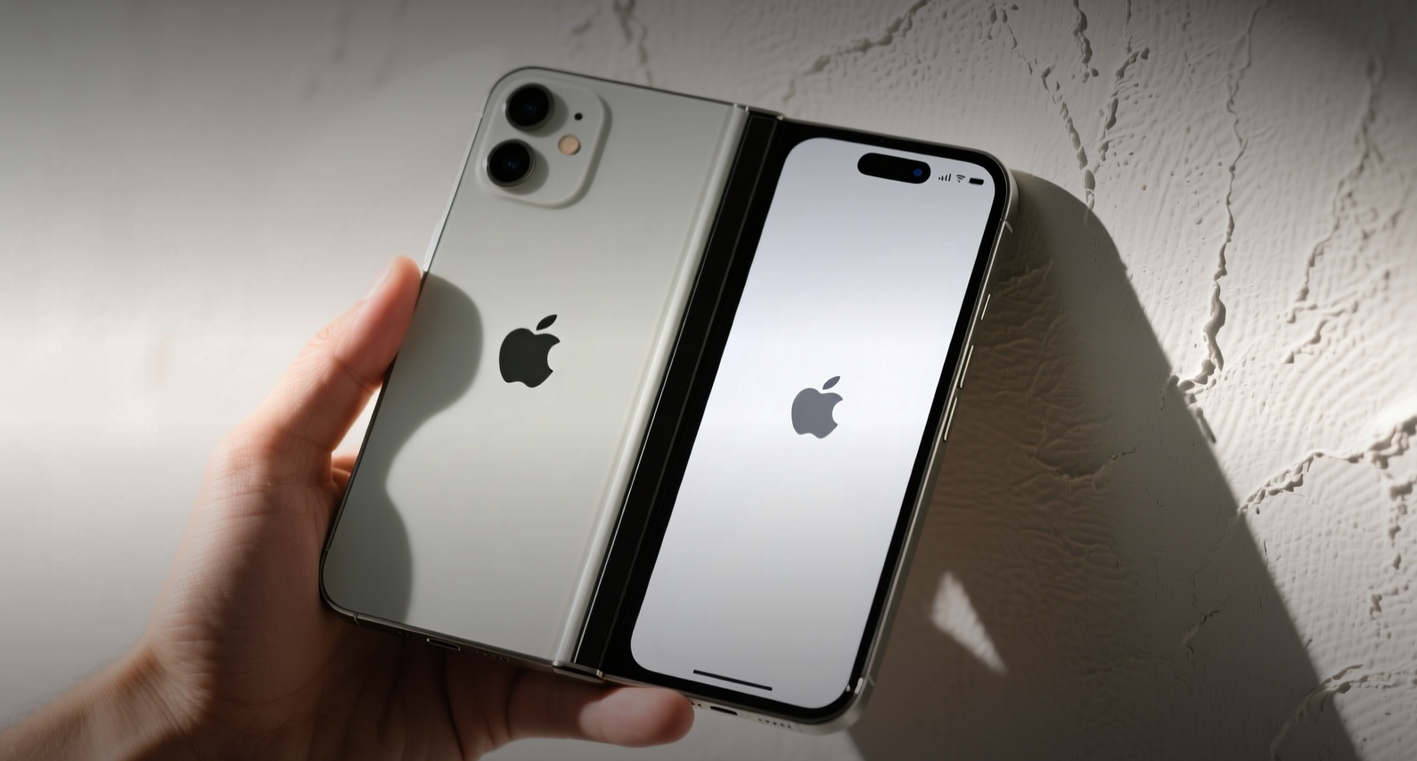
Apple's first foldable iPhone is shaping up to be its most ambitious hardware launch in years, with suppliers now preparing for 10 million units this year — roughly 30% above earlier estimates.
Apple has instructed suppliers to prepare production of approximately 10 million foldable iPhones in 2026, up from an earlier target of 7 million to 8 million units, according to supply chain sources. The increase signals stronger-than-expected confidence in demand for the device, which is expected to debut alongside the iPhone 18 Pro series in September with a starting price of $2,500.
"The production target upgrade suggests Apple sees this as a volume product, not a niche experiment," said Samik Chatterjee, an analyst at JPMorgan who raised his Apple price target to $345 earlier this month. "Supply chain readiness at this scale — 10 million units in year one — is unprecedented for a first-generation foldable."
The device, internally referred to as the iPhone Ultra Fold, uses a book-style design with a 5.5-inch cover display that opens to a roughly 7.8-inch inner screen — comparable to a small iPad. Apple has developed a new display material to minimize the crease, a persistent issue on competing foldables from Samsung. The chassis is titanium, the hinge uses liquid metal for durability, and the phone measures about 4.5 millimeters thick when unfolded.
Under the hood, the foldable runs Apple's A20 Pro chip built on TSMC's 2-nanometer process, which is expected to deliver up to 15% faster performance and 30% better energy efficiency than the A19. A dual-cell battery with a combined capacity of roughly 4,883 mAh powers the device — larger than the battery in Samsung's Galaxy Z Fold series. The camera system includes two 48-megapixel rear lenses (wide and ultra-wide) and an 18-megapixel front-facing sensor. Because the thin form factor leaves no room for the TrueDepth sensor array, the device uses Touch ID built into the power button instead of Face ID.
Why 10 million units matters
The production target puts Apple's first-year foldable volume roughly in line with Samsung's entire Galaxy Z Fold series run rate after multiple generations. Samsung shipped about 11 million foldable phones across all models in 2025, according to industry estimates. Apple is effectively matching that with a single product at a price point roughly double the Galaxy Z Fold 7's $1,899 starting price.
The higher volume also has implications for Apple's supply chain partners. TSMC, which manufactures the A20 Pro chip on its N2 process, stands to gain incremental wafer starts. Lens suppliers, hinge component makers, and display panel manufacturers — including LG Display and Samsung Display, both rumored to be in the supply chain — will see higher utilization rates. Foxconn and Luxshare, Apple's primary assembly partners, are expected to handle final device assembly.
Apple's stock has already priced in some of the optimism. Shares closed at $317.31 on Monday, pushing Apple's market capitalization to $4.66 trillion — a $650 billion increase from its late-June low. The stock trades at 34 times forward earnings, the highest multiple among the Magnificent Seven excluding Tesla. Citi reiterated its buy rating with a $365 price target on Monday, calling the September iPhone launch "an important catalyst that could further strengthen investor sentiment."
The foldable also arrives at a strategic inflection point for Apple. The company has largely sat out the AI infrastructure spending race that has consumed Microsoft, Alphabet, Amazon and Meta, a restraint that investors initially viewed as a weakness but now see as a competitive advantage. Apple's free cash flow is projected to reach a record $140 billion this fiscal year, up more than 40% from 2025, giving it ample resources to absorb the higher component costs associated with foldable displays and hinges.
The biggest risk is whether consumers will pay $2,500 to $3,000 for a first-generation product. Samsung's foldable lineup took three years to reach meaningful scale, and early models suffered from durability complaints. Apple's near-invisible crease technology and titanium build address some of those concerns, but the premium pricing limits the addressable market to early adopters and loyalists. If demand falls short of the 10 million target, Apple could be left with excess inventory and margin pressure from the expensive bill of materials — the foldable display and hinge mechanism alone are estimated to cost several times more than a standard iPhone screen assembly.
This article is for informational purposes only and does not constitute investment advice.