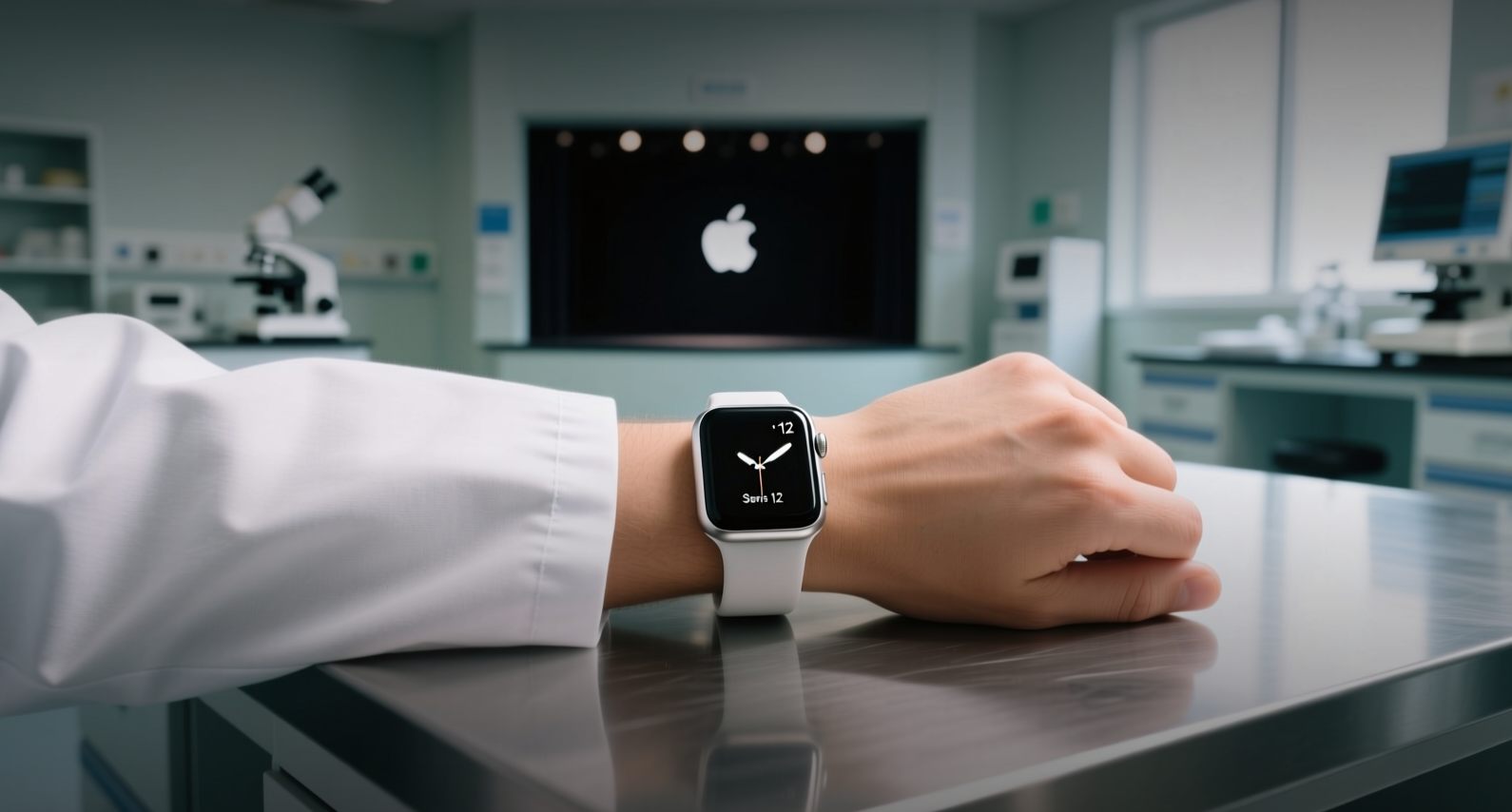
Apple's Series 12 samples heart rate every five seconds — 60 times more often than its predecessor — pressing its edge in a wearables market where Oura and Garmin have pushed deeper into health tracking.
"By combining breakthrough sensing on Apple Watch with Apple Intelligence in the Health app, we're able to translate complex biometric data into clear guidance for users," Sumbul Desai, M.D., Apple's vice president of Health and Fitness, said in a statement.
The $399 watch, unveiled Sept. 9 and shipping Sept. 18, pairs a new S11 chip with redesigned optical and electrical heart sensors. Heart-rate variability, a marker of stress and recovery, is now sampled as often as every five minutes — 24 times more frequently than before. A new readiness score from zero to 10 tells users whether to recover, pace themselves or push hard, drawing on recent activity, vitals and sleep. Apple said a study of more than 1,000 participants found the Series 12 delivered the most accurate heart-rate sensing in a wearable.
The launch anchors Apple's effort to keep its wearables business growing as iPhone sales mature, and it escalates a health-tracking contest with Oura, whose ring already offers a readiness score, plus Garmin and Samsung's Galaxy Watch line. Apple does not break out Watch revenue, but the segment feeds its services and accessory attach.
The higher-frequency readings flow into a redesigned Health app, due later this year in U.S. English, that leans on Apple Intelligence. A new Longevity tab computes a "Health Age" from metrics including VO2 max, resting heart rate, sleep and HRV, while an Insights tab surfaces daily summaries. Users can schedule blood panels covering more than 50 biomarkers for $119 through roughly 2,000 Quest Diagnostics locations in the U.S., and run at-home movement assessments using the iPhone camera to gauge flexibility, strength and balance.
The Series 12 also introduces Audio Intelligence, powered by the always-on processor in the S11 chip. Sound Recognition listens for alarms, doorbells and crying babies; Live Rewind lets users replay the last 15 seconds of a conversation; and Siri Recap drafts meeting notes. Apple said the features run on device, with no audio recorded or stored.
The Ultra 4, priced at £749 in the U.K., extends battery life beyond two days, with a Max workout mode stretching to 45 hours — enough for a 100-mile race. The Series 12 keeps a 24-hour battery and adds Ceramic Shield 2, which Apple says makes the front glass 60 percent tougher.
The health push is a differentiation play against rivals that undercut Apple on price. Oura's ring starts well below the Watch's $399 entry point, and Garmin's Forerunner and Venu lines target serious athletes. Apple's answer is a closed loop: higher-frequency sensors feed the Health app, which now sells Quest lab tests and personalized guidance, deepening the software and services that keep users inside iOS. The open question for investors is whether the features drive upgrade cycles, since watchOS 27 will bring some Health app tools to older Series 9 and later models, potentially slowing the pull to buy a Series 12.
This article is for informational purposes only and does not constitute investment advice.