

Wall Street expects John Ternus to shift Apple's AI strategy toward bigger spending and potential acquisitions when he takes over as CEO in September.
Wall Street expects John Ternus to shift Apple's AI strategy toward bigger spending and potential acquisitions when he takes over as CEO in September.
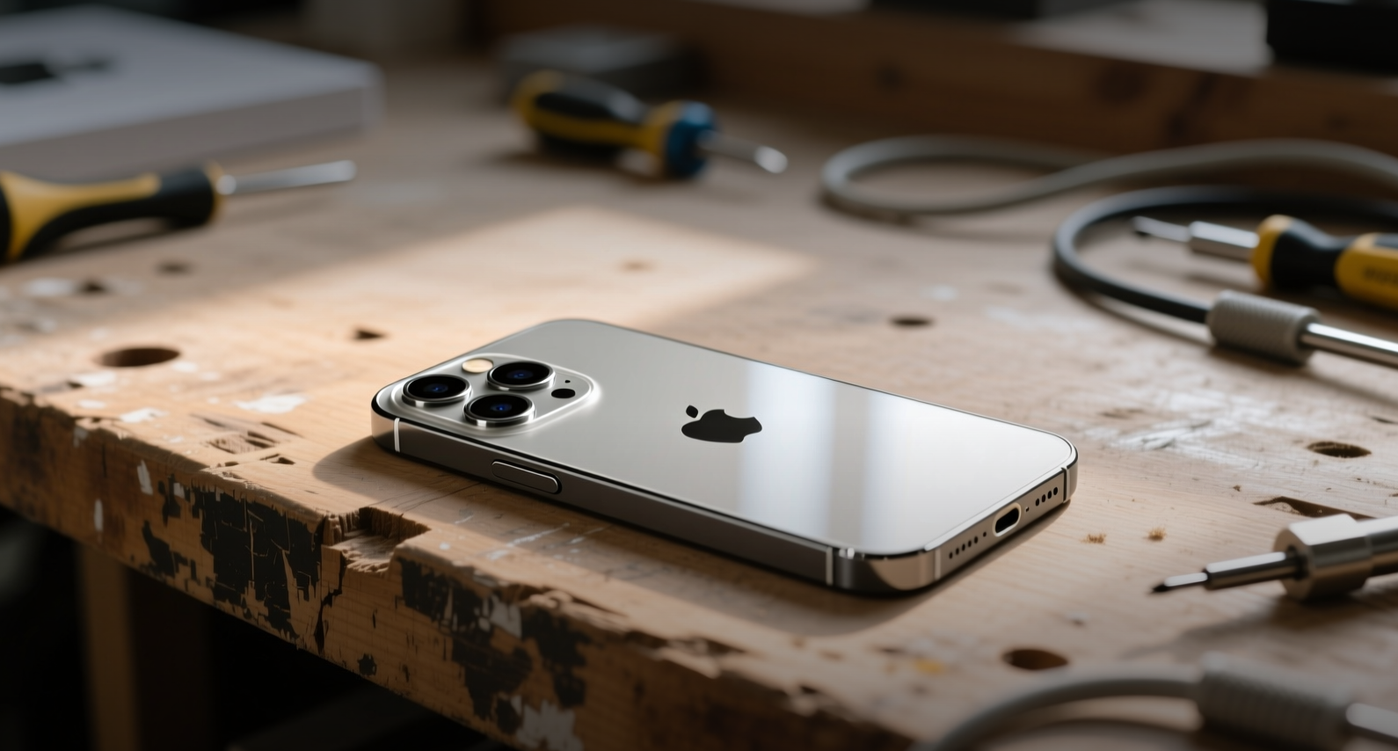
Wall Street expects Apple's incoming CEO John Ternus to shift the company's AI strategy toward aggressive spending and possible mega-acquisitions, betting he can justify a 35x earnings multiple on a 2.5 billion-device base.
"Will Apple move from a scale and execution era to one driven by AI innovation?" Wamsi Mohan, a Bank of America analyst, wrote in a Thursday note.
Apple's shift away from its historic net-cash neutral position earlier this year could mean a period of higher research and development investment and even sizable mergers, Mohan wrote. The company's Apple Intelligence features and revamped Siri arrive this fall, two years after their initial announcement.
Apple trades at roughly 35 times forward earnings, a premium normally reserved for subscription software companies. Ternus must justify that valuation by proving Apple's on-device AI approach keeps users loyal while competitors including Google and Samsung spend aggressively on their own AI capabilities.
Cook's 15-year run built a 1,900% stock gain
Tim Cook took over from Steve Jobs in 2011 when Apple had roughly 200 million active devices. That base has grown twelvefold to 2.5 billion, generating a Services business that now produces more annual revenue than most S&P 500 companies generate in total. In Q3 fiscal 2026, Apple posted revenue of $109.42 billion, beating the $108.65 billion consensus, with EPS of $2.02 versus the $1.89 estimate. Full-year fiscal 2025 revenue reached $416.16 billion with $112.01 billion in net income.
Jim Cramer, on a recent Mad Money episode, called Cook's tenure "the greatest consumer-based enterprise in history." Cramer's argument: Apple achieved the same customer stickiness that enterprise software companies get through contracts, but through emotional attachment instead. No switching penalty, no contractual lock-in, just products people refuse to give up.
Apple shares rose roughly 1,900 percent during Cook's tenure, and the P/E multiple expanded from the low-to-mid teens to approximately 35 times forward earnings. Cook also returned more capital to shareholders than any other company in history during his tenure, spending hundreds of billions on buybacks and dividends.
Ternus's test: AI spending without breaking the profit machine
Mohan expects "much of the core of Apple to remain unchanged" under Ternus, but the hardware engineering chief faces pressure that Cook never confronted directly. While Google, Microsoft, and Amazon have poured hundreds of billions into AI infrastructure, Apple has chosen a more deliberate path. Some investors criticize this as falling behind; others view it as a diversified alternative to Big Tech peers chasing uncertain returns.
"Apple is already so large, profitable, and deeply embedded in its customers' lives that incremental excellence may no longer be enough to redefine the company," Mohan cautioned. "Ternus's challenge will be to preserve the profitable machine Cook built while restoring a stronger sense of technological surprise."
The revamped Siri, launching this fall, must go beyond basic chatbot capabilities to retrieve personalized context from devices and execute multistep workflows. Apple's on-device processing approach, combined with its custom silicon and privacy architecture, could differentiate it from cloud-dependent rivals. But the two-year delay between announcement and delivery has tested investor patience.
Apple has historically avoided large acquisitions, a contrast with tech peers that have used deals to accelerate AI capabilities. The company's decision to abandon its net-cash neutral stance earlier this year has been read by some analysts as preparation for a strategic shift. Mohan noted that large-scale R&D investment and major mergers "have not been emphasized in the Tim Cook era but AI could require Apple to move with a higher rate of change."
For investors, whether Ternus pursues a historic AI acquisition will be the clearest test of the new management's strategic ambition. Apple's 2.5 billion devices provide a distribution advantage no competitor can match, but the question is whether AI features can convert that base into meaningful growth.
Apple shares trade at $305.48 with a consensus analyst price target of $328.60, implying roughly 7 percent upside. Twenty-one analysts rate the stock a Buy against four Sells. At 35 times forward earnings, the valuation leaves little room for execution missteps.
This article is for informational purposes only and does not constitute investment advice.
