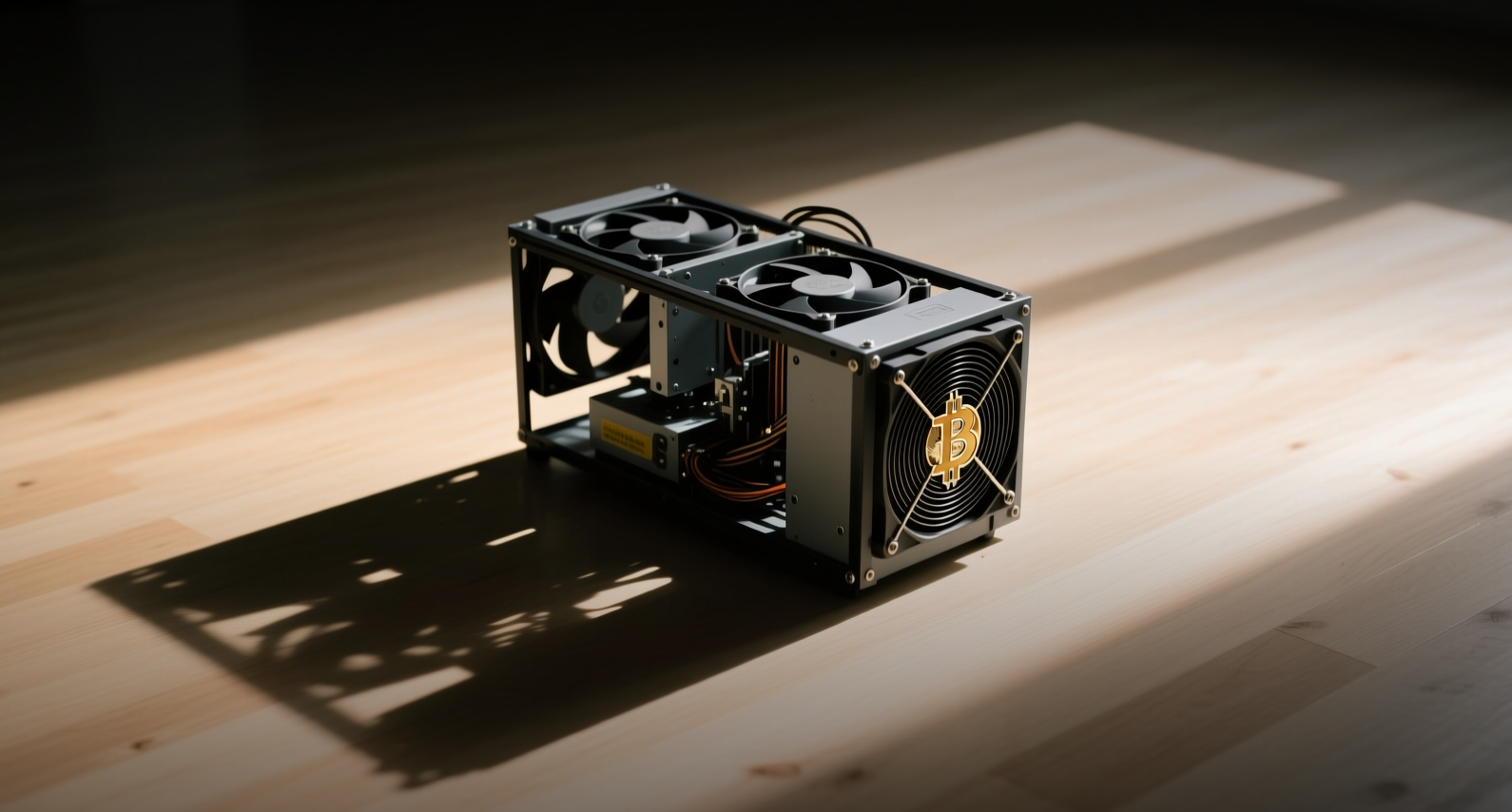
Bitcoin's network hashrate has fallen 17 percent from its record high as public miners redirect power toward AI data centers instead of expanding mining capacity.
CryptoQuant analyst Maartunn estimated the pullback at 17 percent below the all-time high, while BlocksBridge Consulting's Miner Weekly showed realized hashrate among public miners fell 13.4 percent from 368.3 EH/s in the fourth quarter of 2025 to 319 EH/s in the second quarter of 2026. Hashrate estimates vary between data providers depending on the averaging window used, since the metric is inferred from block timing rather than measured directly.
Mining difficulty has moved in the same direction, down as much as 19.9 percent from its own record as of early August, per one analysis. Public miners sold a record 32,000 BTC in the first quarter, more than across all four quarters of 2025 combined, as mining became unprofitable at current difficulty and power costs. Listed miners were losing an estimated $19,000 on every bitcoin produced as of late March, with a weighted average cash cost near $80,000 per coin against a spot price well below that level at the time.
The pivot is reshaping the sector. Hut 8's contracted AI infrastructure portfolio has grown to $26.6 billion, and cumulative AI and HPC contracts across public miners now exceed $70 billion. CoinShares projects AI and HPC work could generate as much as 70 percent of listed miners' revenue by the end of 2026, up from roughly 30 percent. The firm still projects hashrate could climb back toward 1.8 zettahash per second by end of 2026, but that forecast is conditional on bitcoin recovering toward $100,000.
The Power Is the Product
Core Scientific generated $136.7 million in colocation revenue in the second quarter against $21.5 million from digital asset self-mining, according to its July 28 results. The company said its AMD partnership could support up to 2.5 gigawatts of leasable capacity, with 15-year agreements covering about 530 megawatts across five sites and more than $14 billion of potential base contracted revenue.
TeraWulf reported $21.0 million in HPC lease revenue and $13.0 million from mining in its first-quarter 2026 report. On July 6, the company disclosed a 20-year lease with Anthropic for about 401 megawatts of critical IT load at its Justified Data Campus in Hawesville, Kentucky.
Bitdeer is the exception that proves the shift is not uniform. The company reported $146.9 million of self-mining revenue in the first quarter and expanded realized hashrate 44 percent to 63 EH/s, per BlocksBridge. But even Bitdeer is converting its Tydal Data Center in Norway into an AI facility designed around Nvidia's Vera Rubin technology, targeting 180 megawatts of gross installed capacity as early as December 2026.
What the Numbers Say About the Shift
Investors appear to be rewarding the pivot even as bitcoin mining economics stay weak. A basket of mining stocks gained roughly 56 percent in early 2026 while bitcoin's price fell about 17 percent over the same stretch. Bitcoin traded near $64,882 as of Aug. 8, per CoinGecko.
The 7-day average hashrate rose 6.2 percent from 878 EH/s to 932 EH/s as of Aug. 3, per Hashrate Index, but hashprice of $32 per PH/s per day sits at or below the break-even point for many miners. The network's average hashrate declined 10.6 percent over the same six-month period that public miners cut capacity 13.4 percent, per BlocksBridge.
CoinShares still projects hashrate could climb back toward 1.8 zettahash per second by the end of 2026, but that forecast is conditional on bitcoin's price recovering toward $100,000, which would restore mining profitability and give companies a reason to reinvest in hashrate rather than AI hosting. The structural shift means the scarce asset is no longer hashrate but power contracts, and the customer has changed from the network to AI tenants.
This article is for informational purposes only and does not constitute investment advice.