

BYD has moved flash charging from its ultra-luxury Yangwang line into the 100,000-yuan family sedan segment, raising the entry bar for every EV maker in China.
BYD has moved flash charging from its ultra-luxury Yangwang line into the 100,000-yuan family sedan segment, raising the entry bar for every EV maker in China.
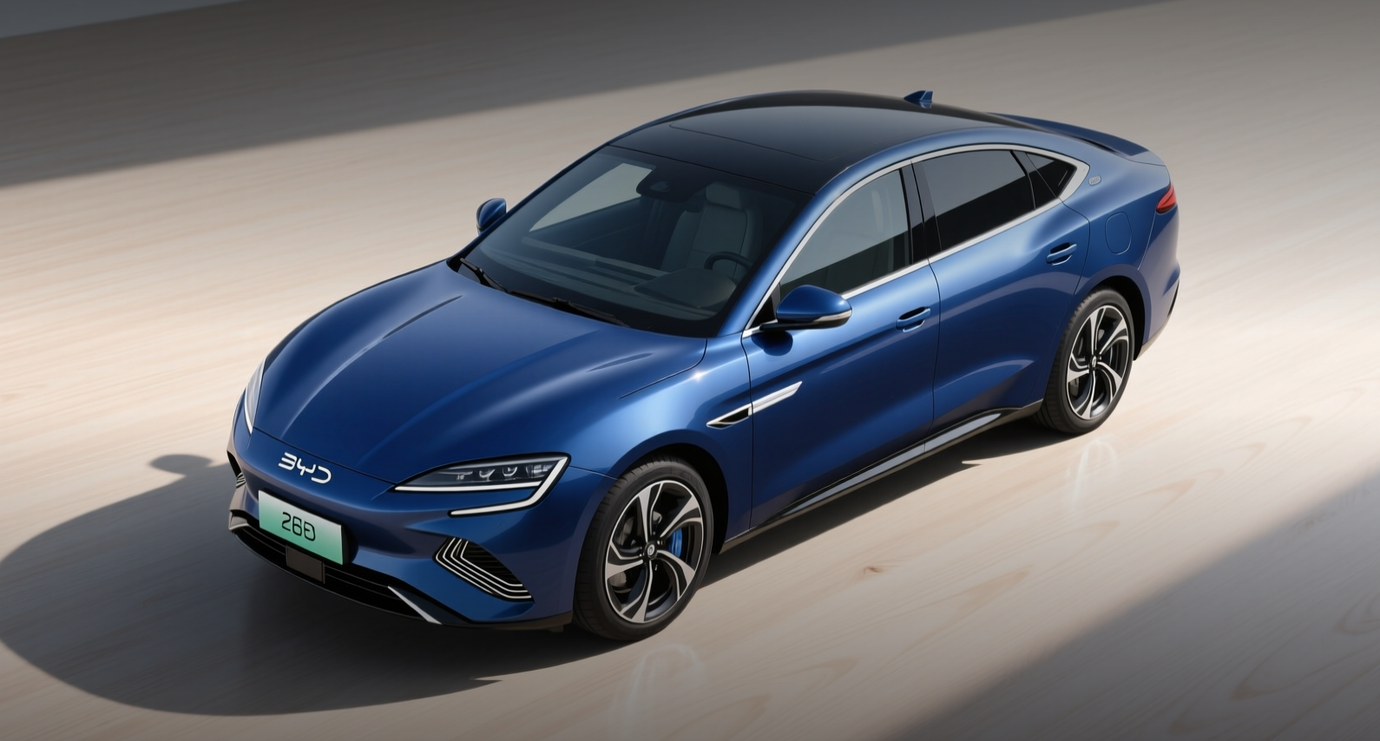
BYD pushed flash charging into China's mass-market family sedan segment, launching the 2027 Seal 06 EV from 109,900 yuan ($15,400) with a second-generation Blade battery that takes five minutes to charge from 10 percent to 70 percent.
"The second-generation Blade battery is still in its capacity ramp-up phase," BYD told Wall Street CN, a reminder that supply, not demand, will decide whether the technology advantage converts into sustained deliveries.
The Seal 06 arrives in 12 models across EV and DM-i powertrains priced 99,900 to 155,900 yuan. The EV version, from 109,900 yuan, delivers up to 630 kilometers of range, while high-end trims add lidar-assisted driving and DiSus-C adaptive suspension. BYD has installed 7,018 flash charging stations across 325 cities as of June.
The launch targets the 100,000-150,000 yuan band, where July data from the China Passenger Car Association shows B-class EV wholesale sales rose 35 percent year on year to 299,000 units while A00-class sales fell 50 percent. BYD's domestic retail slipped 18.6 percent in July to about 223,000 units, making product differentiation urgent.
The shift reflects a structural change in China's pure-electric market. Growth no longer comes from cheap micro-cars; demand is concentrating in larger, family-oriented models. That makes the 100,000-150,000 yuan band the new center of gravity — the largest base of family buyers, and the most price-sensitive.
For years, automakers competed there on price cuts, bigger batteries, and comfort features. Now fast charging, driver assistance, and chassis technology have entered the comparison table. XPeng, Leapmotor, and Geely have already brought longer range and smart-driving features to this segment. BYD's answer is to pair flash charging with its cost advantage, attacking the one metric that most discourages family buyers from going electric: refueling time.
The economics favor BYD. Adding battery capacity raises cost and weight; raising charge speed offers an alternative path. BYD's Blade battery uses LFP chemistry (lithium iron phosphate, cheaper but lower energy density than NMC), which keeps pack costs down even as charging infrastructure scales. The company's vertical integration — from cells to charging stations — lets it absorb the cost of high-voltage platforms and thermal management that thinner-margined rivals cannot.
The competitive cost of this segment is rising. Automakers must now control vehicle price while absorbing investment in high-voltage platforms, battery thermal management, charging equipment, and driver-assistance hardware. Brands with weaker supply-chain integration face a choice: compress margins to keep pace, or leave a visible gap in specifications. The price war has not disappeared — it has moved into configuration and technology costs.
BYD also needs the Seal 06 to defend its home market. Its July retail decline of 18.6 percent was slightly better than the industry average, but it shows the company faces the same weak demand and rising competition as its peers. Flash charging, rather than another few thousand yuan off the price, is the differentiation BYD is betting on.
The company is hedging across powertrains. The DM-i version, from 99,900 yuan, serves buyers without reliable charging access who prioritize long-distance travel; the EV version, from 109,900 yuan, enters the stronger-performing pure-electric market. The 10,000-yuan gap between the two lets consumers choose while limiting BYD's exposure to a single technology bet.
The real test is supply. If the second-generation Blade battery ramps as planned, flash charging could become a standard feature across the 100,000-150,000 yuan segment, forcing XPeng, Leapmotor, and Geely to match it or lose share. If production lags, BYD's advantage stalls at the showroom. Either way, the cost of competing in China's mainstream EV market has just gone up.
This article is for informational purposes only and does not constitute investment advice.
