
Chime Financial's $590 million cash purchase of Stride Bank hands the fintech its own national charter, cutting sponsor-bank fees and opening direct lending to challenge traditional banks.
Chime Financial's $590 million cash purchase of Stride Bank hands the fintech its own national charter, cutting sponsor-bank fees and opening direct lending to challenge traditional banks.
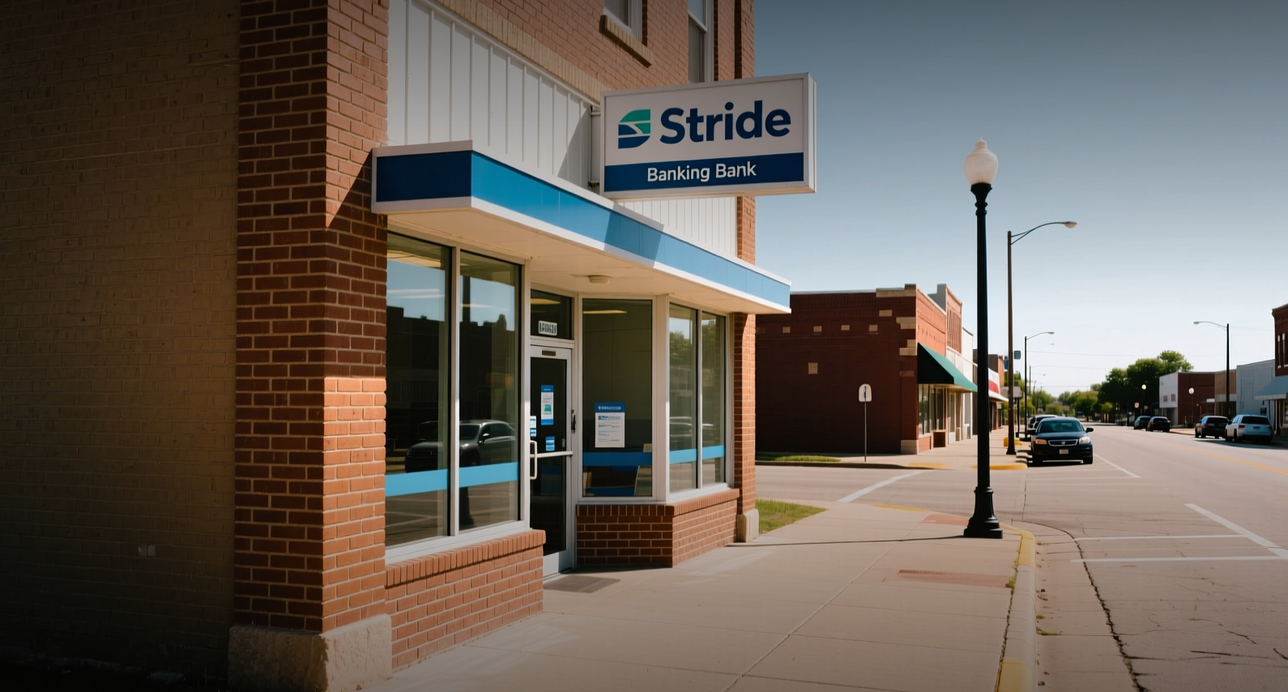
Most neobanks rent their banking licenses; Chime Financial is buying one outright, agreeing to pay $590 million in cash for Stride Bank and the national charter that underpins its roughly 10 million-member platform.
"The acquisition of Stride Bank provides Chime with a faster and more proven path to full-stack ownership versus pursuing a de novo bank charter," the company said in a statement. Chief Executive Officer Chris Britt called the deal an extension of its "member-aligned, technology-driven strategy," with Stride Chairman and CEO Brud Baker set to keep leading the combined bank.
The all-cash transaction values Enid, Oklahoma-based Stride, founded in 1913, at about 1.5 times tangible book value. Chime expects more than $100 million in annual savings from removing sponsor-bank fees, cheaper funding and expanded lending, with the deal adding to earnings per share immediately after closing. The company plans to keep Chime Bank's assets below $10 billion for the foreseeable future, a threshold tied to the Durbin Amendment that caps debit interchange fees for larger banks.
CHYM shares, up more than 28 percent this year, closed at $32.31 before jumping 10.38 percent after hours to $35.67, and analysts see as much as 40 percent further upside. Chime also raised its full-year 2026 revenue forecast to $2.76 billion to $2.77 billion, growth of 26 percent to 27 percent, with adjusted EBITDA of $481 million to $489 million.
Buying Stride beats a de novo application
Chime has relied on Stride as a sponsor bank for more than seven years, meaning the Oklahoma lender has technically held customer deposits and issued Chime-branded debit cards all along. Buying the charter outright removes the partner fees Chime pays a third party and gives it direct control over the regulatory plumbing behind its accounts. The Bancorp Bank, N.A. will keep supporting Chime for now, so the shift to in-house banking unfolds gradually rather than as a single cutover.
The build-versus-buy math favors acquisition. A de novo national charter application typically takes years and carries no guarantee of approval, while Stride arrives with established compliance and banking capabilities and a deposit base already weighted toward Chime accounts. Morgan Stanley advised Chime on the deal, and Piper Sandler & Co. advised Stride. For a sector where most digital banks still depend on sponsor partners to move money and issue cards, Chime's move gives it a structural edge that rivals weighing similar exposure will study closely.
The $10 billion Durbin line and the lending payoff
Keeping Chime Bank's assets under $10 billion is not arbitrary. The Durbin Amendment, a Dodd-Frank provision, caps debit interchange fees for banks holding more than $10 billion in assets. Staying below that line lets Chime keep collecting higher per-swipe fees than larger, Durbin-regulated banks can charge, a structural margin advantage the acquisition preserves.
The larger payoff sits in lending. Direct ownership of a national charter lets Chime underwrite and fund loans on its own balance sheet rather than through a partner, lowering funding costs and shortening the path from product idea to launch. Chime says it will connect its ChimeCore technology stack to Stride's banking infrastructure to speed product development and simplify regulatory reporting.
The deal positions Chime to compete more directly with traditional banks and with fintech peers that have pursued charters of their own, such as SoFi Technologies. Raised guidance — third-quarter revenue of $705 million, up about 30 percent year over year, with adjusted EBITDA of $117 million to $120 million — underpins the after-hours rally. The transaction still needs approval from the Office of the Comptroller of the Currency and the Federal Reserve, with closing expected in the first half of 2027.
This article is for informational purposes only and does not constitute investment advice.
