
Key Takeaways: China's decade-long stockpiling campaign has turned oil dependence into a strategic shield, letting Beijing slash imports by 23 percent during the Iran war while keeping global prices in check.
Key Takeaways: China's decade-long stockpiling campaign has turned oil dependence into a strategic shield, letting Beijing slash imports by 23 percent during the Iran war while keeping global prices in check.
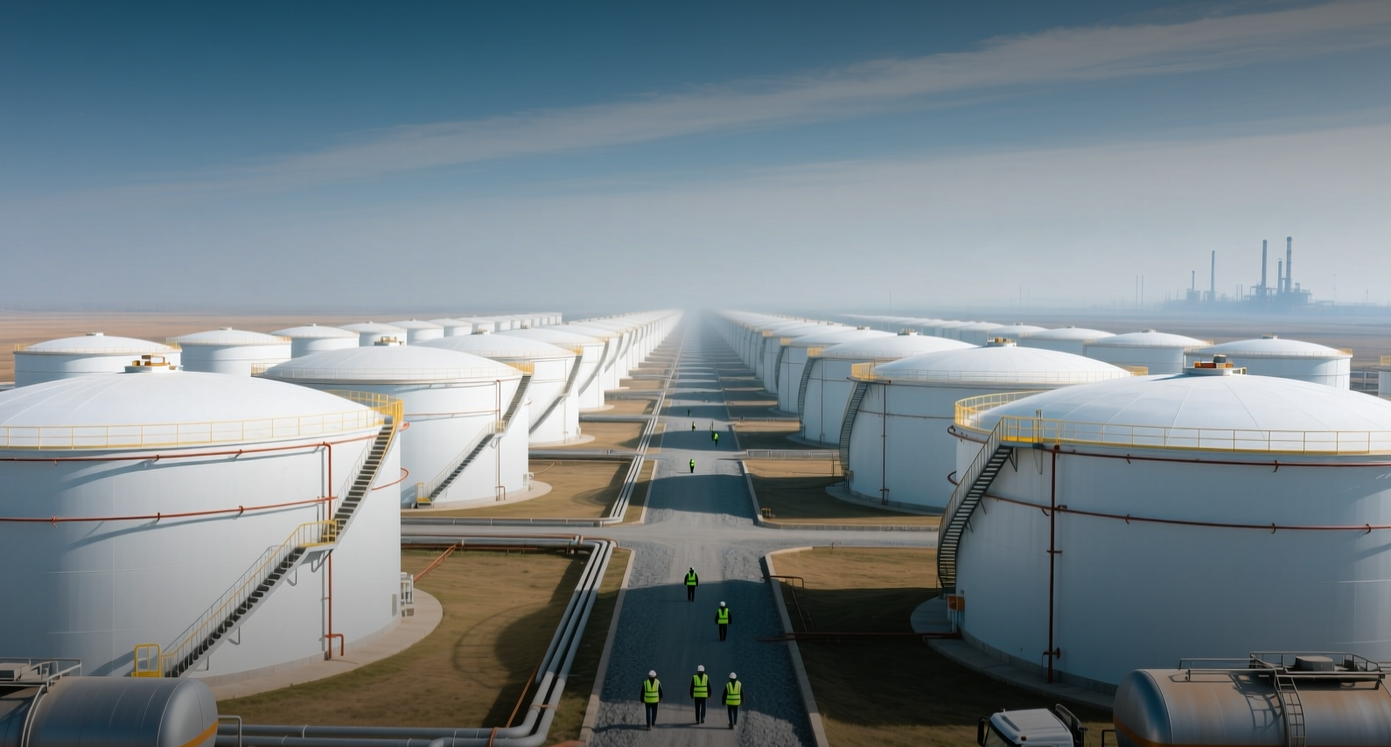
China's estimated 1.4 billion barrel strategic oil reserve — roughly 600 million barrels larger than the U.S. stockpile — has allowed Beijing to cut crude imports by 23 percent since March, suppressing global prices and converting its biggest economic vulnerability into a geopolitical asset.
"Oil is not the Achilles' heel we thought it was," said Michal Meidan, head of China energy research at the Oxford Institute for Energy Studies. "A lot of people thought China was very, very vulnerable to oil supply disruptions. It's not."
Chinese crude imports fell from about 12 million barrels a day in February to roughly 7 million by June, a reduction of approximately 400 million barrels versus the prior-year period. Refinery runs dropped to about 12.5 million barrels a day from more than 15 million before the war, while gasoline exports plunged 93 percent in the second quarter and diesel exports fell a quarter. The country drew down commercial inventories at roughly 700,000 barrels a day from May to mid-August while keeping its aboveground strategic reserves largely intact, according to Vortexa data.
The stockpile gives Beijing a tool it could deploy in a Taiwan conflict, where the U.S. and allies might attempt to block energy shipments through the Strait of Malacca. With reserves equivalent to roughly 120 days of imports, China can sustain reduced purchases for months — a capability that reshapes the balance of power in any future confrontation.
China began prioritizing energy security as early as 2014, and accelerated stockpiling in 2024 at roughly 1 million to 1.2 million barrels a day. From 2022 to 2025, imports of Russian crude jumped 26 percent and Iranian crude more than doubled, according to Vortexa data, as both countries used a "shadow fleet" to circumvent sanctions and sell at steep discounts. Government support for renewables has also reduced oil's share of electricity generation — about two-fifths of China's power now comes from clean sources, and half of new cars sold this year are new energy vehicles.
The shift is visible in consumer behavior. Road traffic fell about 2 percent from January to July versus a year earlier, while rail passenger numbers rose 4 percent. Cheap electric vehicles, a large charging network, and a high-speed rail system spanning tens of thousands of miles gave Chinese households alternatives when fuel prices rose. "Almost from day one there was this sense that, 'We are able to manage this. We don't need to panic,'" said Erica Downs, a scholar at Columbia University's Center on Global Energy Policy.
The strategy has not been painless. China relied on imports for 70 percent of its crude supply before the war, and the export restrictions have hammered refinery margins. Larry Hu, chief China economist at Macquarie, estimates that 90 percent of the slowdown in industrial production in the second quarter was tied to the oil and petrochemicals chain. Higher oil prices and subsequent demand destruction pushed economic growth to its slowest level since late 2022.
Analysts disagree on how long China can sustain reduced imports. The longer Hormuz flows remain constrained, the more officials must balance economic growth against preserving stockpile levels. Tom Reed, head of oil market analysis at Argus Media, said restricting exports "is indeed a lever China can pull anytime, but it still entails economic costs."
The market impact extends beyond crude. OPEC+'s share of global oil production has fallen from more than 48 percent before the conflict to around 40 percent in July, according to Reuters, as war damage and shipping constraints limit the group's ability to deliver barrels even when it announces output increases. Brent crude traded around $86.77 a barrel on Thursday with West Texas Intermediate near $81.10, as markets priced in the combined effect of China's demand reduction and potential Hormuz negotiations involving Iran, Oman, and Qatar. If Chinese demand returns before Gulf supply normalizes, one of the biggest cushions protecting the world from higher crude prices disappears.
China's ability to wield its stockpile as a geopolitical instrument marks a fundamental shift in global energy dynamics. For decades, analysts measured energy security by reserves and production capacity — who has the oil and how fast can they produce it. The Iran war has added a new question: who can choose not to buy? Beijing's answer, backed by 1.4 billion barrels of stored crude, is reshaping how the world's largest oil importers approach supply disruptions.
This article is for informational purposes only and does not constitute investment advice.
