


Key Takeaways: Dan Bin's Orient Securities overseas fund cut Apple, Tesla and Google-A while adding seven AI hardware names, making Intel its second-largest US holding.
Key Takeaways: Dan Bin's Orient Securities overseas fund cut Apple, Tesla and Google-A while adding seven AI hardware names, making Intel its second-largest US holding.
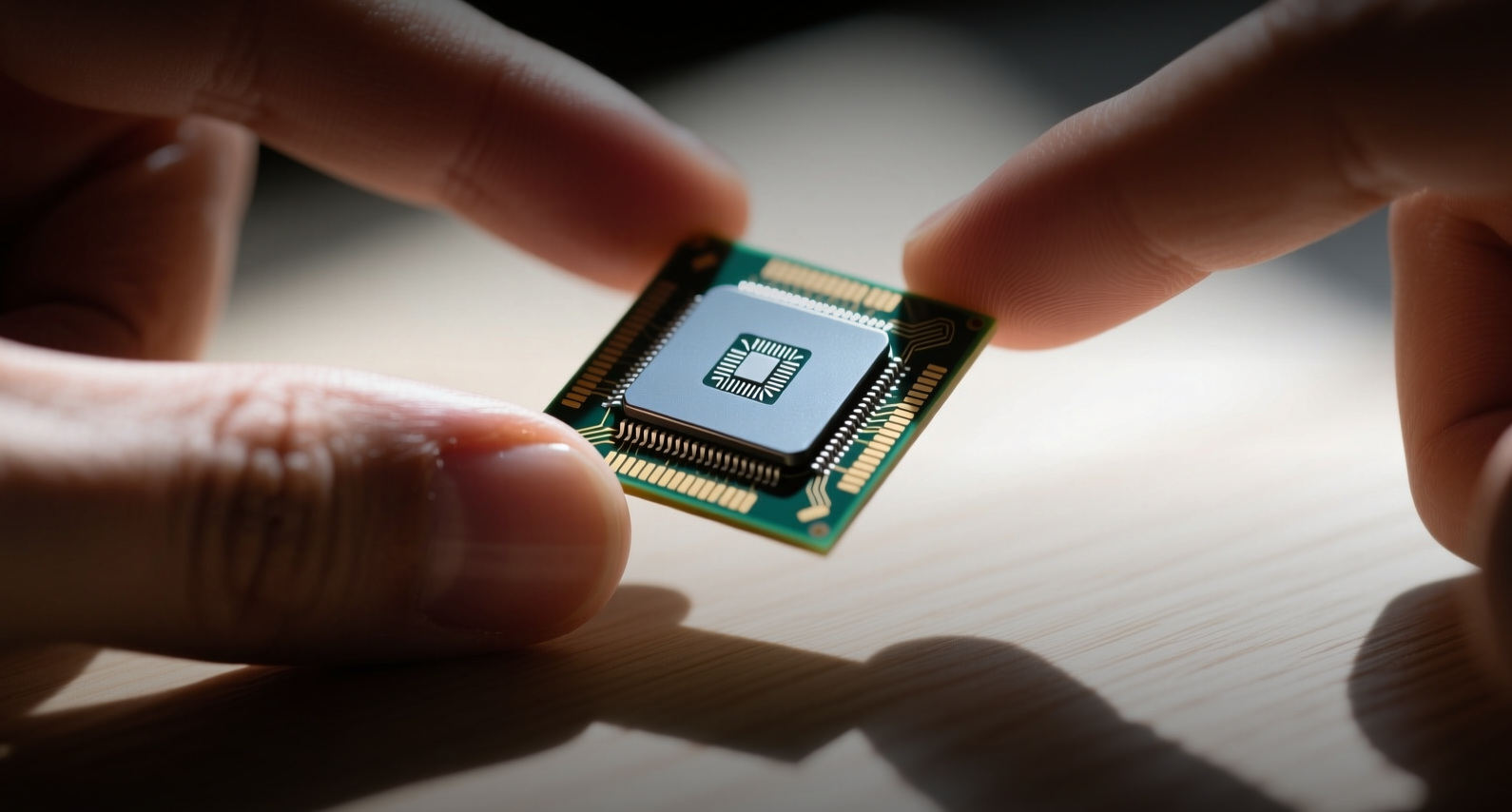
Dan Bin's Orient Securities overseas fund rotated its US portfolio into AI hardware, clearing Apple and Tesla and making Intel its second-largest holding in a $1.65 billion bet on the chip supply chain.
"We have not panic-sold or cut positions," Dan Bin, founder of Orient Securities' investment arm, said on Weibo, adding that he remains fully invested in AI, which he called "the super trend of the next decade."
The fund held 13 US stocks worth about $1.65 billion (111 billion RMB) at the end of Q2, up 45.63% from $1.133 billion three months earlier, according to private fund data provider PaiPaiWang. It cleared six positions — Apple, a 3x Nasdaq 100 ETF, Tesla, Circle Internet Group, Google-A and a 2x Google ETF — and added seven AI hardware names: Intel, SanDisk, AMD, Marvell, Arm ADR, Broadcom and Lumentum. Intel overtook Nvidia as the second-largest holding, with Nvidia slipping to third. SanDisk became the fourth-largest, and Micron's position rose about 102%. Google-C remains the top holding at about 23% of the portfolio, though reduced.
The shift reflects conviction that AI infrastructure demand — hyperscale cloud expansion and proprietary silicon — will reward the semiconductor supply chain over consumer mega-caps. The S&P 500 returned 15.2% in Q2, its strongest quarter since 2020, with AI infrastructure names such as Nebius Group and Astera Labs leading.
The new positions cluster around compute and networking silicon. Intel, added as the fund's second-largest holding, is chasing Nvidia's data center dominance with its Gaudi accelerators, while AMD's MI-series competes directly with Nvidia's H100 and Blackwell lines. Marvell supplies custom ASICs and optical interconnects for hyperscalers, and Arm's architecture underpins both Nvidia's Grace CPUs and the custom chips from Amazon and Google. Broadcom's networking and custom accelerator business ties it to the same hyperscale buildout.
The fund's storage bets — a 102% increase in Micron and a new SanDisk position — track the memory cycle tied to AI training. High-bandwidth memory (HBM), the fast memory stacked beside AI accelerators, is in short supply as hyperscalers expand capacity. Micron is one of three HBM suppliers alongside SK Hynix and Samsung, and SanDisk's NAND flash feeds the data centers that store training data.
For investors, the rotation is a bet that AI capital spending flows to the silicon supply chain rather than consumer hardware. Nvidia, still the fund's third-largest holding, trades at a premium to the newly added names, and the move into Intel, AMD and Marvell suggests the fund sees value in challengers to Nvidia's data center franchise. The fund's 45.63% value growth in one quarter shows the AI hardware trade has momentum, but the July pullback in AI storage names — which Dan Bin attributed to sentiment, not fundamentals — is a reminder the sector remains volatile.
This article is for informational purposes only and does not constitute investment advice.
