
Eos Energy shares jumped 18.75 percent to $3.61 after Google and MN8 Energy selected the company's zinc-based Z3 storage system for a $350 million West Virginia solar project serving Google data centers.
Eos Energy shares jumped 18.75 percent to $3.61 after Google and MN8 Energy selected the company's zinc-based Z3 storage system for a $350 million West Virginia solar project serving Google data centers.
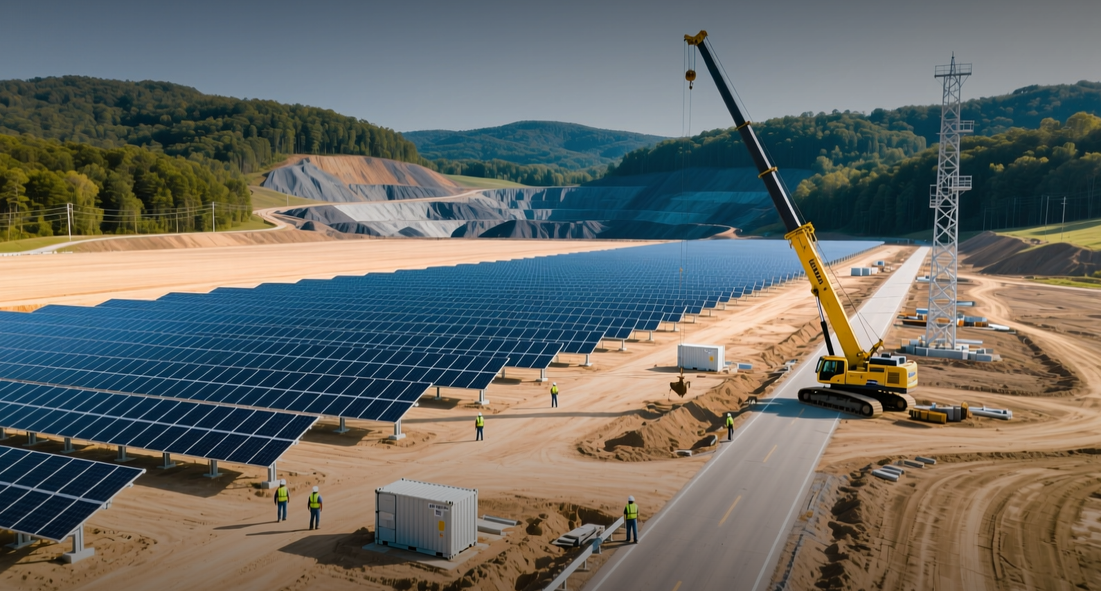
A three-party collaboration with Google and renewable developer MN8 Energy sent Eos Energy Enterprises shares climbing 18.75 percent to $3.61 on Wednesday, as the battery maker secured its first hyperscale customer for its zinc-based Z3 storage technology.
"Z3 extends the value of clean generation across more hours, strengthens the overall portfolio, and delivers more dependable capacity when it's needed most," Nathan Kroeker, Eos chief commercial officer, said.
The Mammoth Solar project in Kanawha County combines 86 MW of utility-scale solar with a 10 MW/100 MWh Eos Z3 long-duration storage system and 70 MW/280 MWh of lithium-ion batteries. Solar generation is expected to begin commercial operations in 2028, with lithium-ion storage following in 2029 and the Z3 system coming online in 2030. Google will purchase the project's energy, capacity, and clean-energy attributes to support its computing facilities in the region, including a planned data center in West Virginia.
The deal marks Google's first deployment of Eos's U.S.-manufactured Z3 technology and the first project executed under the master supply agreement between MN8 Energy and Eos. The project is being constructed on reclaimed coal mine land and is expected to generate about $4 million in property tax revenue for Kanawha County and local schools over its first 20 years of operation, while creating roughly 200 construction jobs.
The announcement came just 24 hours after EOSE touched a 52-week low of $3.10 on Sept. 1. The stock had fallen 57 percent over the previous twelve months and was trading 72 percent lower year-to-date before Wednesday's recovery.
Google's First Z3 Deployment Opens Data-Center Pipeline
The partnership gives Eos a marquee customer reference in the hyperscale data-center segment, where power demand is straining grid capacity across the United States. The Z3 system's 10-hour discharge capability positions it as a complement to lithium-ion batteries, which typically provide four hours or less of storage. The combined project will deliver dispatchable capacity to the PJM electricity grid, the largest wholesale power market in the country.
For Eos, the deal arrives against a backdrop of financial strain. The company posted an adjusted Q2 loss of $1.20 per share versus analyst expectations of a 16-cent shortfall. Revenue reached $68.77 million, up 351 percent year-over-year from $15.2 million and 21 percent sequentially. Eos narrowed its full-year 2026 revenue guidance to $300 million to $350 million, down from a prior range of $300 million to $400 million, following a decision to consolidate battery production into a single facility in Warrendale, Pennsylvania.
B.Riley responded to the guidance revision by cutting its price target on EOSE from $8.00 to $5.00 while maintaining a Neutral rating, citing the manufacturing consolidation as the primary driver. The firm said the restructuring will not affect existing customer delivery schedules.
The financial terms of Eos's portion of the Mammoth project have not been disclosed, leaving investors to gauge the revenue contribution from the Z3 deployment. The 2029-2030 timeline for the battery systems means meaningful revenue recognition sits several quarters out, but the Google association could accelerate pipeline discussions with other data-center operators facing similar power constraints.
Eos shares, trading near $3.61 with a market capitalization below $1 billion, remain well below the $5.00 B.Riley target. The partnership provides a concrete revenue pathway, but the company must still execute on its manufacturing consolidation and narrow its losses before the market fully prices in the data-center storage opportunity.
This article is for informational purposes only and does not constitute investment advice.
