
Eurozone business activity hit a nine-month high in August as a manufacturing rebound offset persistent services weakness, keeping the bloc on track for growth.
Eurozone business activity hit a nine-month high in August as a manufacturing rebound offset persistent services weakness, keeping the bloc on track for growth.
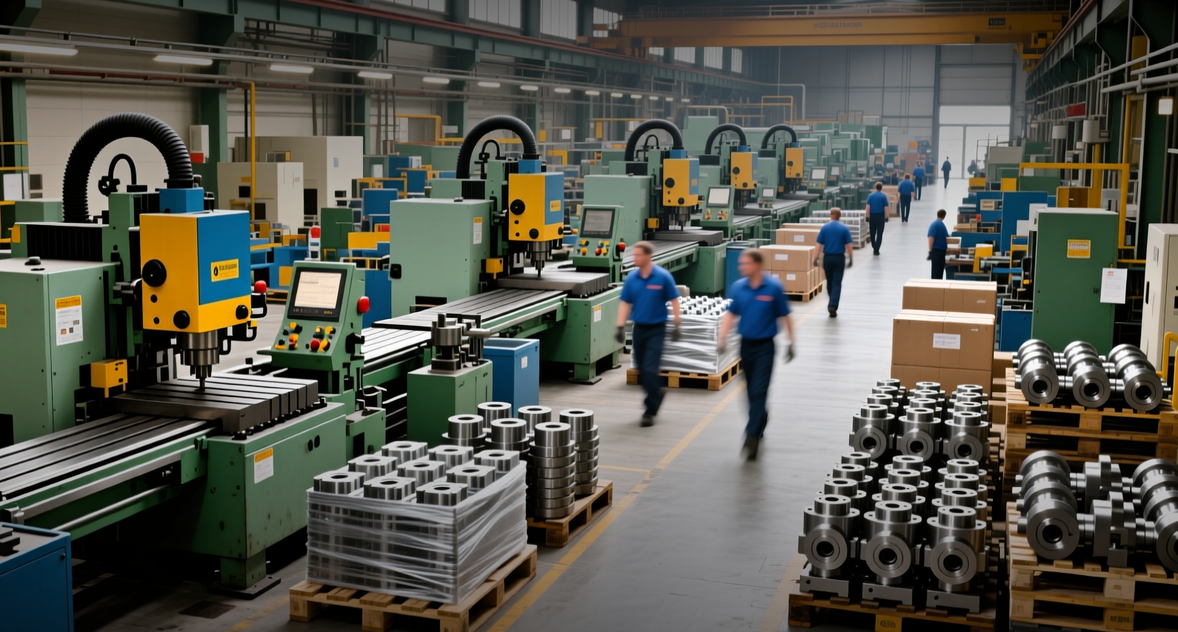
The eurozone composite PMI rose to 52.1 in August, beating the 51.7 consensus and hitting a nine-month high, as manufacturing surged to 52.8 — the strongest since May 2022. The manufacturing output index reached 53.4, a 54-month high, while new orders grew at the fastest pace in 40 months and export orders increased for the first time since Russia's invasion of Ukraine in February 2022.
"The manufacturing sector acts as the star performer again, enjoying its strongest growth in four and a half years," said Chris Williamson, chief business economist at S&P Global Market Intelligence.
The data pushed European bond markets slightly higher, with traders trimming bets on cumulative ECB rate hikes for next year, while EURUSD approached 1.17. European equities opened higher, with the Euro Stoxx 600 gaining around 0.4 percent. Services held steady at 51.7, but the divergence within the bloc is stark: Germany's manufacturing PMI jumped to 54.1 from 52.2, while its services reading fell to 48.5, back in contraction. France's manufacturing PMI climbed to 51.5 from 49.8, but its composite slipped to 48.8 as services weakened to 48.4.
The stronger-than-expected data complicates the ECB's policy path. Inflation at 2.9 percent remains well above the 2 percent target, and with oil above $90 a barrel, markets still price a 25-basis-point hike in September as near-certain. The question is whether the manufacturing-led recovery can offset the drag from elevated energy costs and record government bond issuance.
Williamson attributed the manufacturing strength to preventive inventory restocking, recovering demand for AI-related technology products, and increased defense spending. The improvement is particularly significant for Germany, where equipment demand is finally gaining traction after a prolonged industrial downturn. German manufacturing output grew at its fastest pace since January 2022.
Employment also turned positive for the first time this year, with manufacturers ending a 38-month stretch of job cuts. Services hiring accelerated to its fastest pace in eight months. However, business confidence remains fragile — the year-ahead output expectations index fell to a three-month low, below its long-run average, even as manufacturing sentiment reached a six-month high.
Price pressures continued to ease. Input cost inflation slowed to its weakest since February, while output price inflation fell to a five-month low. Eurozone one-year inflation expectations dropped to 2.9 percent in July from 3.0 percent, and three-year expectations eased to 2.7 percent from 2.8 percent, according to the ECB's consumer expectations survey.
The data presents a mixed picture for the ECB. The manufacturing-led recovery, combined with the first employment increase of the year, supports the case for continued tightening. But the persistent services weakness in France and Germany, alongside easing price pressures, gives the central bank room to pause after September.
"Near-term risks are tilted towards headline inflation surging past 3 percent and reaching just under 4 percent by the end of the year," said Claus Vistesen, economist at Pantheon Macroeconomics. "The net result for the ECB, we think, is that the Bank will stay the course and hike by 25bp in September before pausing."
The last time the composite PMI reached this level was in November 2025, when the eurozone was expanding at a similar pace before a winter slowdown. The current trajectory suggests third-quarter GDP growth of around 0.3 percent, according to Williamson, following the 0.4 percent expansion in the second quarter.
The key risk remains external. Oil above $90 a barrel, driven by the stalemate around the Strait of Hormuz and tougher U.S. rhetoric toward Iran, is pushing up input costs and bond yields. Germany's 30-year Bund yield has reached around 3.8 percent, the highest since 2011, while record government issuance — Commerzbank estimates gross German issuance will rise to EUR 400 billion in 2027 — adds further upward pressure on long-term rates.
This article is for informational purposes only and does not constitute investment advice.
