

Garmin's $199 screenless Cirqa band undercuts Whoop's $199-$359 annual subscription while offering deeper metrics than Google's $99 Fitbit Air.
Garmin's $199 screenless Cirqa band undercuts Whoop's $199-$359 annual subscription while offering deeper metrics than Google's $99 Fitbit Air.
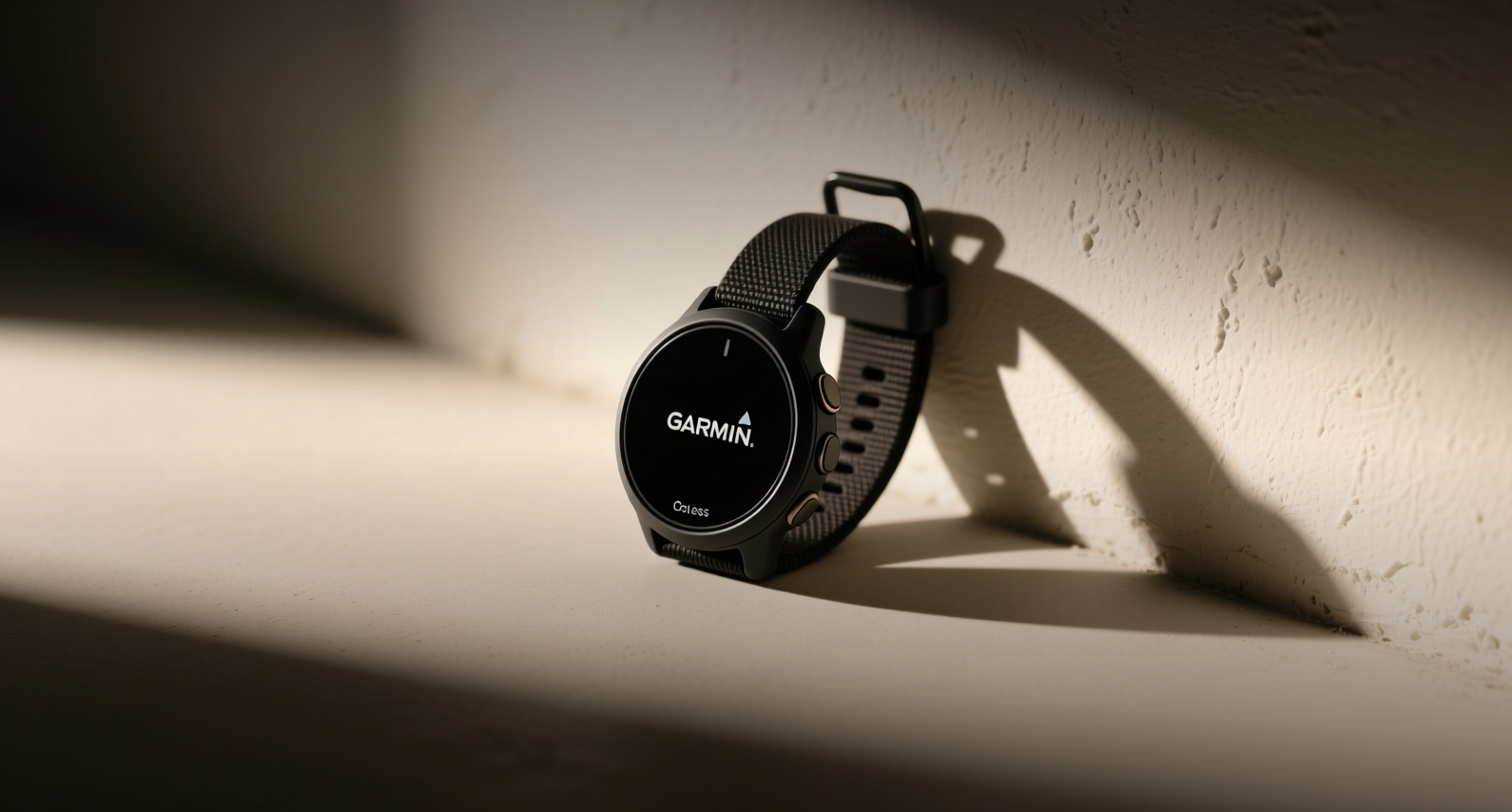
Garmin's $199 Cirqa screenless fitness band enters a market where Whoop charges $199-$359 annually and Google's Fitbit Air costs $99, offering a middle-ground option with no mandatory subscription.
"The Cirqa is good at what it does: being a discreet screenless fitness tracker that interfaces with the full Garmin Connect app," Matt Evans, senior fitness and wearables editor at TechRadar, said in his review.
The Cirqa weighs 14.8 grams excluding the strap, runs about 10 days per charge, and uses Garmin's Elevate V4 optical heart rate sensor. It tracks sleep stages, heart rate variability, pulse ox, and provides Training Readiness and Body Battery scores. A single tactile button starts and stops workouts across 80+ supported activity types. The device is compatible with Natural Cycles women's health tracking.
The screenless tracker market is small but growing as consumers seek distraction-free health monitoring. Garmin's entry threatens Whoop's subscription model — two years of Whoop's cheapest tier costs $398, enough to buy a Cirqa plus a Garmin Forerunner 165 running watch. Garmin's Cirqa also undercuts the Whoop 5.0's 26.5-gram weight while offering a physical button the Whoop lacks.
The Cirqa sits between the Fitbit Air and Whoop 5.0 on nearly every axis. It costs twice the Air's $99 price but avoids Whoop's recurring subscription. It weighs more than the Air's 5.2 grams but less than the Whoop 5.0's 26.5 grams. Battery life splits the difference: about 10 days versus roughly one week for the Air and two weeks for the Whoop 5.0.
The device's key differentiator is a physical button on the side of the puck, used to start and stop workouts with a haptic confirmation. This addresses a common complaint with screenless trackers: auto-detection can miss activities. Independent testing by DC Rainmaker found the Cirqa's automatic workout detection frequently misses bike commutes and strength training sessions, though the manual button compensates.
Heart rate accuracy during steady-state exercise was within 1-2 beats per minute of a Polar H10 chest strap in most tests, though one strength session showed a 10-bpm deviation. The Cirqa's bicep band, sold separately, improves accuracy during running and cycling. Sleep tracking was reliable, with start and wake times typically accurate within 5-10 minutes, though occasional misclassifications occur during periods of inactivity.
Garmin Connect as the software moat
The Cirqa's real value proposition is Garmin Connect, the company's fitness data platform. The free tier includes sleep stages, HRV, Training Readiness, Body Battery, Fitness Age, and recovery time suggestions. Garmin Coach features and AI-powered training insights sit behind the Connect+ paywall at $6.99 per month.
This creates a two-tier strategy: the $199 hardware purchase gets users into Garmin's product family, and the optional $6.99 monthly subscription upsells coaching features. Garmin initially locked live heart rate broadcasting behind Connect+ but reversed course after user backlash. The free tier of Connect is notably less stripped-back than the free tier of Google Health, the app used with the Fitbit Air.
For Garmin, the Cirqa expands its addressable market beyond existing watch owners. Cyclists using Garmin Edge computers can now add wellness tracking without buying a $500+ watch. The screenless tracker segment remains niche compared to the broader smartwatch market, but Garmin's brand recognition in fitness tracking gives it a distribution advantage. The Cirqa's success will depend on whether consumers see value in a $199 tracker that requires a phone for all data viewing.
This article is for informational purposes only and does not constitute investment advice.
