
Google announced a €13 billion ($15.1 billion) investment in Finnish AI data centers and energy infrastructure, its largest single European capital deployment, as the hyperscaler capex race intensifies.
Google announced a €13 billion ($15.1 billion) investment in Finnish AI data centers and energy infrastructure, its largest single European capital deployment, as the hyperscaler capex race intensifies.
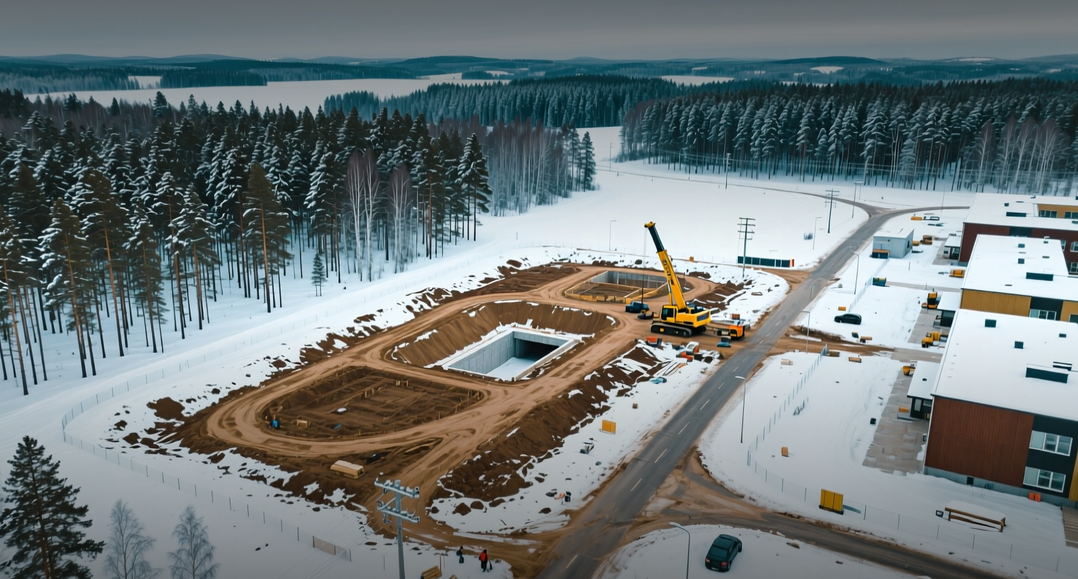
Alphabet's €13 billion Finnish data center commitment — its largest single European investment — extends the hyperscaler capex race into the Nordics, where clean energy and grid access give Google a cost edge for Gemini workloads.
"Google is proud to deepen our roots in Finland with the company's largest single investment in Europe," Ruth Porat, president and chief investment officer at Alphabet and Google, said.
The spending, scheduled for 2027 and 2028, funds three new data center campuses in Kajaani, Muhos, and Vaala plus an expansion of the existing Hamina site. Alphabet raised its 2026 capital expenditure target to between $195 billion and $205 billion in July as it races Microsoft and Amazon to build compute capacity for generative AI. The Finnish buildout is expected to contribute roughly $3.6 billion to the country's GDP during construction and support about 7,000 permanent jobs annually once operational.
The investment arrives as Alphabet reported negative free cash flow in the second quarter of 2026, a metric investors watch to gauge how much cash remains after capital spending. GOOGL shares closed nearly flat at $338.36, with Wall Street maintaining a Strong Buy consensus and a $426.04 average price target implying roughly 26 percent upside.
Finland has emerged as a preferred destination for hyperscale computing, with its cold climate cutting server cooling costs and abundant low-carbon electricity helping companies meet sustainability targets. Microsoft and TikTok parent ByteDance have also established or expanded operations there, drawn by available land and power that remain scarce across much of Europe. Tech circles have begun calling Finland the "Texas of Europe" for its energy surplus.
Google secured a 22-year power purchase agreement with Finnish energy firm Fortum, guaranteeing access to up to 50 percent of the output from the Loviisa nuclear power plant. Fortum's shares jumped roughly 10 percent on European markets following the announcement. Google also finalized separate wind power contracts and committed to deploying a 94-megawatt battery storage system to stabilize electricity demand across its Finnish data center network.
National grid operator Fingrid Oyj will connect the new sites, with Chief Executive Asta Sihvonen-Punkka noting that placing facilities near strong grid points keeps power costs low. Finnish telecom firm Elisa Oyj and network equipment supplier Nokia Oyj will handle line setups, while heat recovery systems will channel excess warmth into residential heating networks in surrounding communities.
The Finnish commitment fits Alphabet's broader strategy of outspending rivals on AI infrastructure. The company raised its full-year capex guidance to $195-205 billion in July, up from earlier levels, as it competes with Microsoft and Amazon for data center capacity. But the pace of spending has financial consequences — Alphabet posted negative free cash flow in the second quarter of 2026, and investors will watch whether AI revenue growth justifies the record-level outlays.
For Finland, the deal delivers a much-needed economic boost. Prime Minister Petteri Orpo called the investment "a clear testament to our strengths," noting the value of the data economy extends beyond direct investment into innovation and research. The construction phase alone is projected to support more than 37,000 jobs, including 16,000 direct building roles.
Wall Street remains bullish on GOOGL despite the heavy spending. Analysts hold a Strong Buy consensus with 24 Buy ratings and four Holds over the past three months, with the average price target of $426.04 suggesting about 26 percent upside from current levels. The key question for investors is whether Alphabet can convert its infrastructure lead into durable AI revenue growth before the capex burden erodes financial flexibility.
This article is for informational purposes only and does not constitute investment advice.
