
Iran exported roughly 90 million barrels of crude during the interim agreement window, adding fresh supply to a market already watching OPEC+ output decisions.
Iran exported roughly 90 million barrels of crude during the interim agreement window, adding fresh supply to a market already watching OPEC+ output decisions.
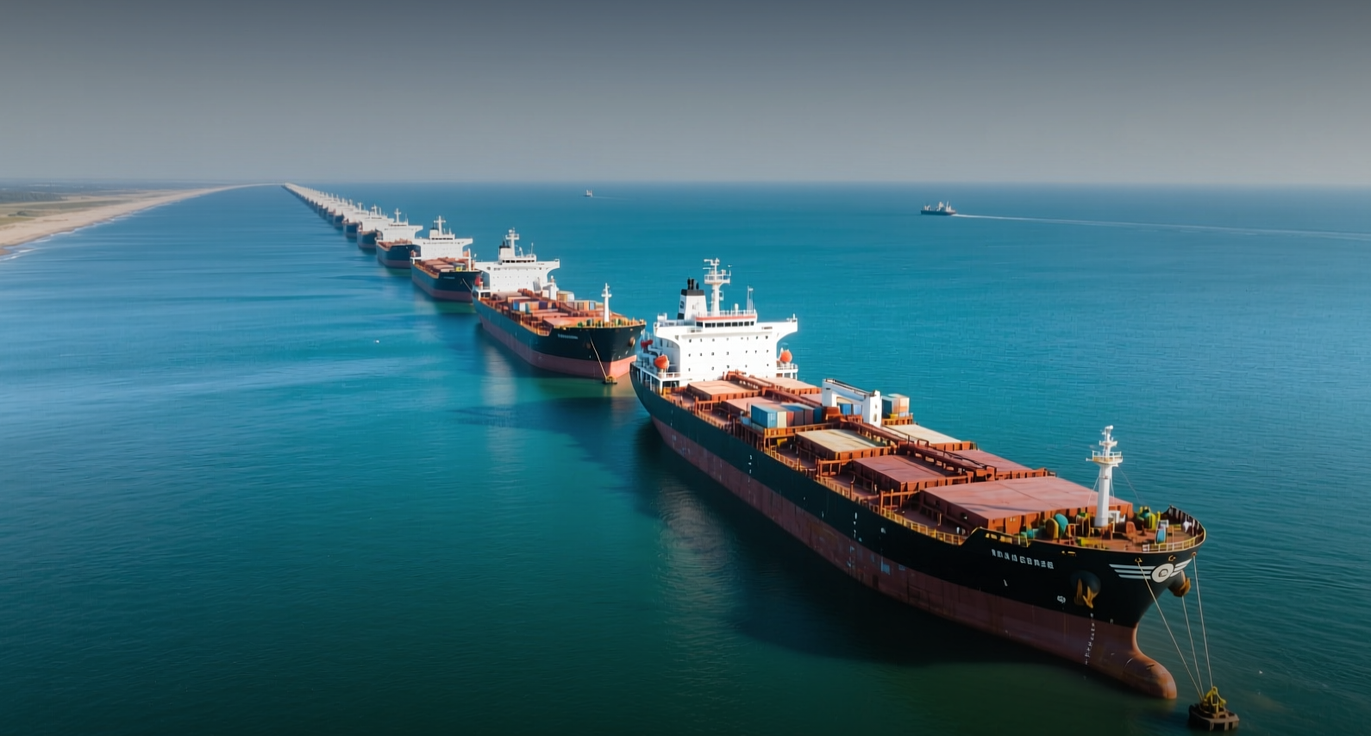
Iranian President Masoud Pezeshkian said Iran sold approximately 90 million barrels of oil during the execution of an interim agreement, a volume that shows Tehran's capacity to re-enter global crude markets at scale.
"Iran sold about 90 million barrels of oil during the interim agreement execution period," Pezeshkian said. The disclosure provides rare visibility into Iranian export volumes, which have been largely opaque since international sanctions were reimposed on the country's energy sector in 2018.
The 90 million barrel figure represents a substantial addition to global crude supply over the agreement's execution window. Iran, an OPEC member, was exporting roughly 2.5 million barrels per day before the 2018 sanctions reimposition, according to data from the International Energy Agency. The interim arrangement appears to have enabled a significant recovery in shipments, with the disclosed volume suggesting average daily exports well above the sanctioned-era baseline.
The announcement carries direct implications for Brent crude and WTI prices. Increased Iranian supply entering the market could exert downward pressure on both benchmarks, potentially benefiting oil-importing nations while squeezing producers that gained market share during Iran's sanctioned period. The interim agreement's broader diplomatic context — including whether it represents a step toward a more permanent arrangement — will determine whether this supply increase is temporary or structural.
For energy markets, the key question is whether the 90 million barrels represent a one-time release or the beginning of sustained Iranian export growth. If the interim agreement leads to a permanent easing of sanctions, Iran's full production capacity could add significantly more supply to an already well-supplied market. The last time Iranian exports expanded at this scale was before the 2018 sanctions, when the country shipped roughly 2.5 million barrels per day.
The disclosure also carries geopolitical weight. Iran's ability to sell 90 million barrels during the interim period suggests the diplomatic arrangement is functioning on the economic front, even as broader tensions in the region persist. The volume disclosed by Pezeshkian provides a baseline for what Iran could export under a more permanent agreement, giving market participants a clearer picture of the supply overhang that could materialize.
The market reaction to the announcement will depend on how traders interpret the interim agreement's durability. If the arrangement is viewed as a precursor to broader sanctions relief, the supply implications could be priced into crude futures over the coming weeks. If it is seen as a limited window, the impact on benchmarks may be more contained. Currency markets could also respond, with the Iranian rial and Gulf petro-state currencies potentially affected by shifts in the regional oil supply balance.
The interim agreement's trajectory will be closely watched by crude traders. If the arrangement is extended or formalized, Iranian supply could become a structural factor in global oil markets, reshaping the supply-demand balance that OPEC+ has managed through coordinated production cuts. Conversely, if the agreement lapses and sanctions are reimposed, the 90 million barrels could represent a temporary surge rather than a lasting shift.
For oil-importing nations, particularly in Asia, the prospect of sustained Iranian supply offers a potential buffer against price spikes. For producers that have invested in capacity expansion during Iran's sanctioned period, the return of Iranian barrels could compress margins and force adjustments to production plans.
The broader geopolitical context adds another layer. Economic pressure has been testing Iran where it is weakest, and the interim agreement appears to be part of a larger diplomatic calculus. The 90 million barrel disclosure gives both market participants and policymakers a concrete data point for assessing Iran's economic position and its leverage in ongoing negotiations. Energy equities, particularly those of companies with exposure to Middle East production, may face renewed scrutiny as investors reassess the supply outlook.
This article is for informational purposes only and does not constitute investment advice.
