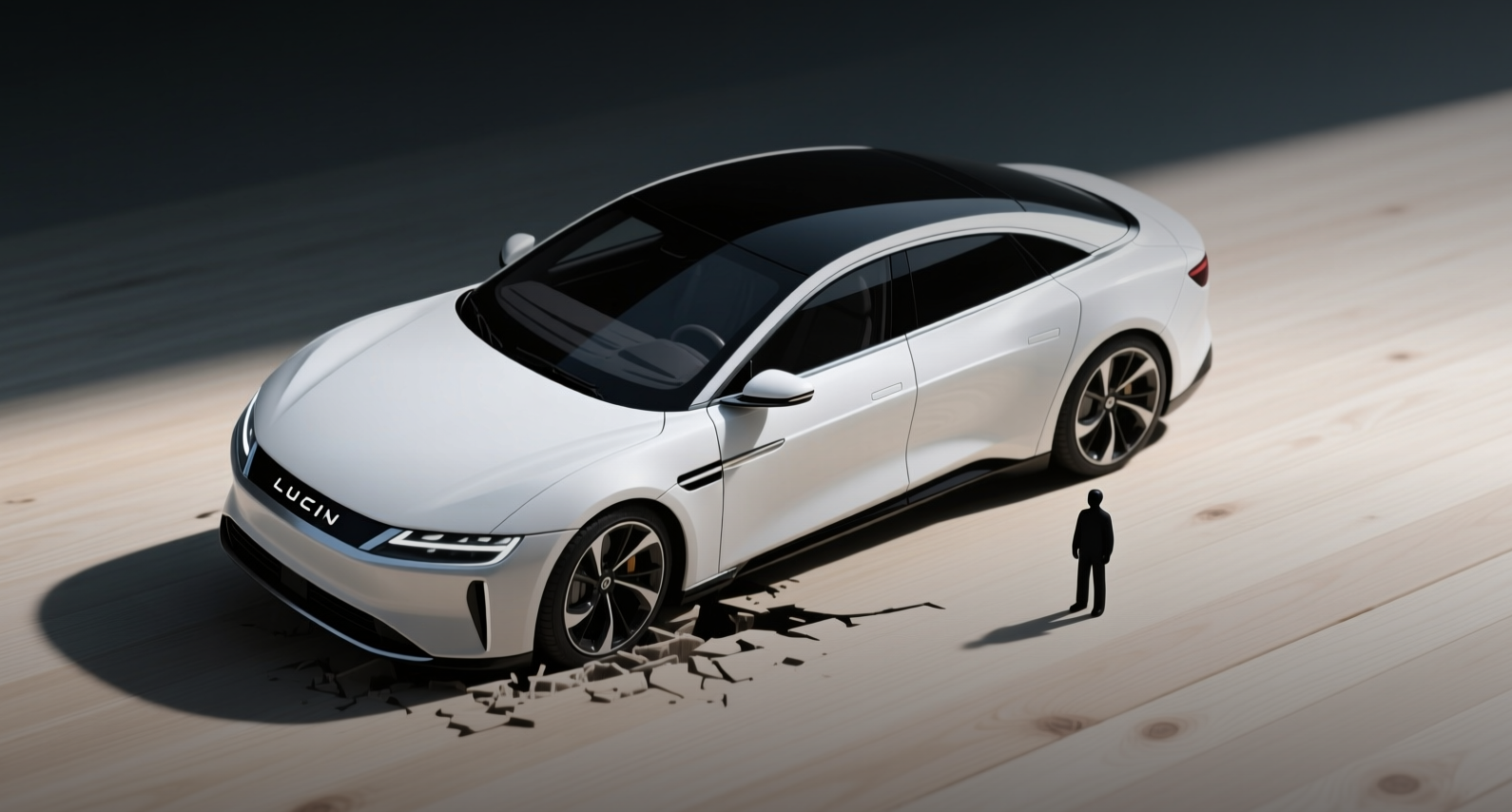
Lucid reported a wider Q2 net loss of $1.26 billion as it unveiled a $1.4 billion cash-savings plan.
"The way we operate has to change," Silvio Napoli, chief executive at Lucid, said. "We have not executed consistently, we miss commitments, launched products before they were ready, underinvested in service, responded too slowly to quality issues, and allowed complexity to slow decisions down."
Revenue rose 56% to $405 million, missing the $416 million consensus, while the loss of $3.30 a share came in wider than the $2.46 expected, according to LSEG estimates. The company produced 4,774 vehicles, up 24% year over year, and delivered 3,953, up 19%, as it deliberately cut output to lower inventory.
The turnaround, led by Napoli who took over June 1, aims to pull the EV maker out of a spiral of growing inventory and unchecked spending. Lucid ended the quarter with $3 billion in total liquidity, which it said, combined with recent financing, provides runway well into 2027.
The $1.4 billion in cash savings breaks down to roughly $500 million in reduced capital expenditures, $600 million to $800 million in inventory, and $200 million in operating expenses. The operating-expense actions include $158 million in annualized savings from the June workforce reduction of 18%, or about 1,500 employees, and the elimination of the second production shift at its Casa Grande, Arizona, factory.
Napoli has reshaped leadership, hiring new chief financial, technology, customer, digital and transformation officers, and halved the number of direct reports to the CEO. He also dismissed speculation that the company had hired AlixPartners to weigh bankruptcy, saying the consulting firm's engagement was limited to the cost-savings plan and would wrap up this month.
Beyond cost cuts, Napoli flagged three "must-win" projects: the robotaxi program with Uber and Nuro, the AMP-2 factory in Saudi Arabia, and the midsize EV known as Cosmos. The robotaxi program, which integrates Nuro's self-driving technology into Lucid Gravity SUVs operated by Uber, is testing nearly 100 vehicles across the San Francisco Bay Area and Houston. Production-validation vehicles began deliveries last month, with regular production starting in the fourth quarter and a launch expected in late 2026.
Lucid created a new business unit, Lucid Technologies, led by chief digital officer Kai Stepper, to house AI, advanced driver-assistance and digital capabilities. Napoli projected robotaxi margins "vastly exceeding those of the traditional retail model."
The AMP-2 factory in Saudi Arabia has moved from construction to industrialization, with manufacturing systems being installed ahead of production trials. The midsize Cosmos, the first model from Lucid's mid-sized platform, continues through validation, including cold-weather testing in New Zealand.
The plan bets that robotaxis and a lower-cost midsize vehicle can diversify revenue beyond premium retail sales, where Lucid's Air sedan and Gravity SUV start near $70,000 and $80,000. Investors will watch the robotaxi launch in late 2026 and progress at AMP-2 as tests of whether the cash-savings plan can translate into profitability.
This article is for informational purposes only and does not constitute investment advice.