


Key Takeaways: NVIDIA's $2 billion investment in Marvell Technology marks a strategic bet that could redraw the competitive map of AI infrastructure silicon.
Key Takeaways: NVIDIA's $2 billion investment in Marvell Technology marks a strategic bet that could redraw the competitive map of AI infrastructure silicon.
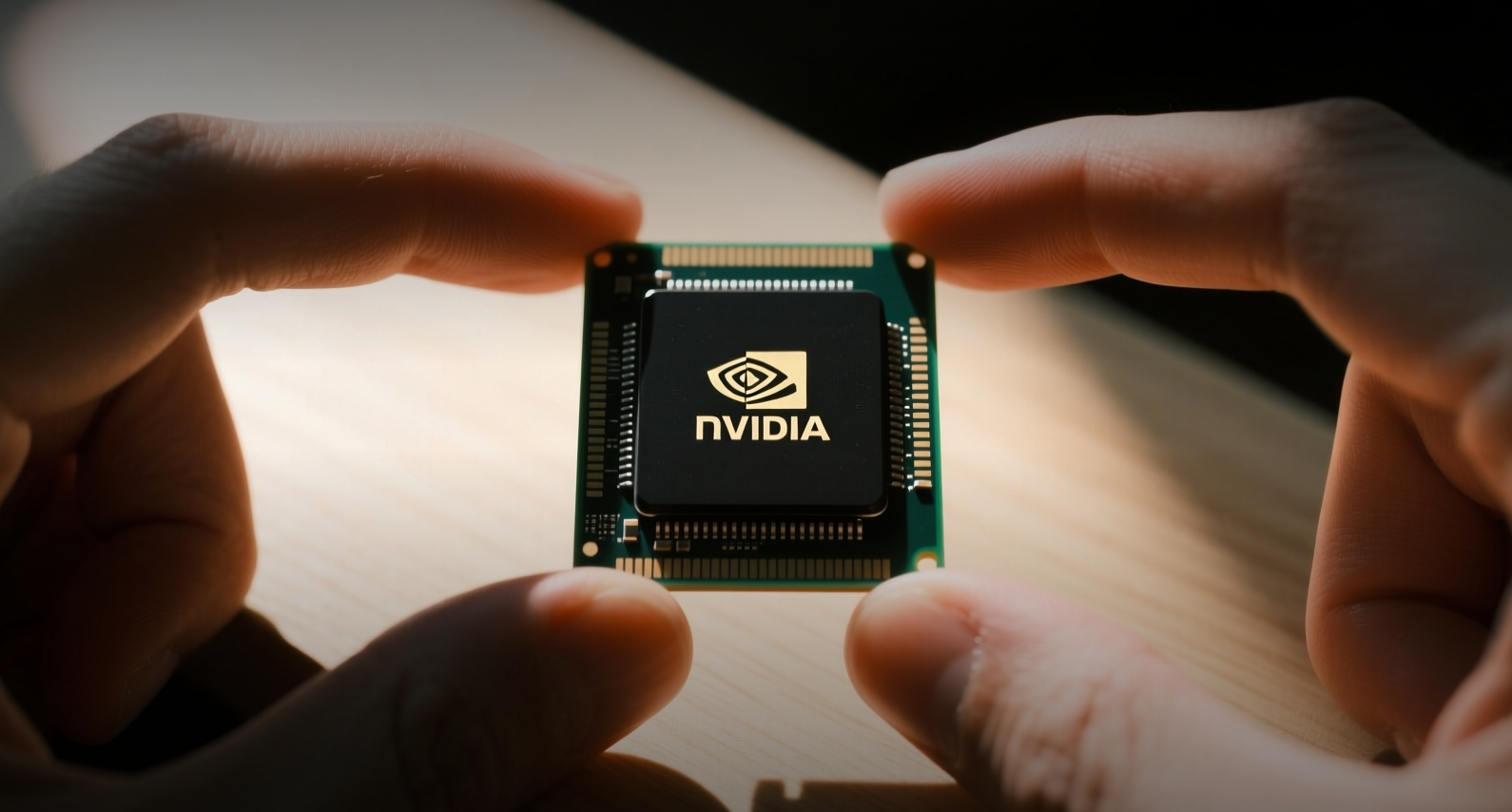
NVIDIA's $2 billion investment in Marvell Technology marks a strategic bet that could redraw the competitive map of AI infrastructure silicon.
NVIDIA's $2 billion investment in Marvell Technology, paired with an expanded NVLink Fusion partnership, strengthens the custom silicon maker's hand against Broadcom and Astera Labs in AI infrastructure.
Under the expanded arrangement announced in March 2026, Marvell will supply custom XPUs and NVLink Fusion-compatible scale-up networking, while NVIDIA provides Vera CPUs, ConnectX NICs, BlueField DPUs, NVLink interconnects, Spectrum-X switches, and rack-scale AI compute, the companies said.
The partnership builds on an initial 2025 collaboration that gave hyperscalers flexibility in building custom AI infrastructure while staying connected to NVIDIA's broader platform. Marvell contributes optical DSPs, silicon photonics, and high-speed connectivity technologies, while NVIDIA brings its rack-scale architecture, networking, and software stack. The combination lets hyperscalers build specialized AI systems without abandoning compatibility with NVIDIA's platform.
The deal intensifies competition in a market where Astera Labs grew revenue 115 percent to $852.5 million in fiscal 2025, and Broadcom continues to expand custom XPU and AI networking traction. Marvell's expanded role within NVIDIA's AI factory and AI-RAN buildout could shift procurement decisions among hyperscalers evaluating custom silicon options.
Marvell's custom XPU capabilities, combined with NVIDIA's NVLink Fusion interconnect, give hyperscalers a path to differentiated AI compute without sacrificing rack-scale compatibility. The arrangement mirrors what Broadcom has built through its own custom silicon partnerships, but with a critical difference: NVIDIA's $2 billion equity stake creates a financial alignment that Broadcom lacks with any single partner.
Broadcom has pursued a multi-partner strategy, integrating AI infrastructure from AMD, Intel, and NVIDIA into its VMware Cloud Foundation 9.1 platform. The platform supports NVIDIA ConnectX-7 and BlueField-3 networking, with CrowdStrike providing security and Arista Networks handling networking interoperability. This breadth gives Broadcom optionality but also fragments its focus across competing architectures.
Astera Labs, meanwhile, is benefiting from rising demand for PCIe 6 signal conditioning and AI fabric switching as hyperscalers expand rack-scale deployments. The company's revenue reached $852.5 million in fiscal 2025, up 115 percent year over year, with net income of $219.1 million — a turnaround from the prior year's loss. But its top three clients account for roughly 86 percent of revenue, a concentration risk that Marvell's NVIDIA-backed diversification does not carry.
Marvell shares could see a valuation re-rating as the NVIDIA relationship provides revenue visibility and strategic backing. The company's optical DSP and silicon photonics capabilities are central to NVIDIA's NVLink Fusion roadmap, which requires high-bandwidth optical interconnect at scale. This makes Marvell a key technology partner for customers seeking customized AI infrastructure while remaining connected to NVIDIA's platform.
Astera Labs trades at 84.3 times forward earnings and 66.7 times sales, according to Financial Modeling Prep data, reflecting the market's premium for AI connectivity pure-plays. Broadcom's diversified portfolio across custom XPUs, AI networking, and VMware infrastructure software provides a different risk profile. Marvell's NVIDIA partnership could narrow the valuation gap between MRVL and its connectivity peers if the expanded collaboration translates into sustained revenue growth.
The competitive dynamics will play out over the next several quarters as hyperscalers finalize their 2027 infrastructure roadmaps. NVIDIA's investment reflects a long-term commitment to Marvell's role in the AI factory buildout, but execution on custom XPU delivery and NVLink Fusion integration will determine whether the partnership translates into market share gains against Broadcom and Astera Labs.
This article is for informational purposes only and does not constitute investment advice.
