


Key Takeaways:
- Micron and SanDisk each fell about 4% in pre-market trading Monday
- The decline partially reverses last week's rally when SOXX surged 3.5%
- Insider selling at Micron is at its highest level since 2010, per Oppenheimer
Key Takeaways:
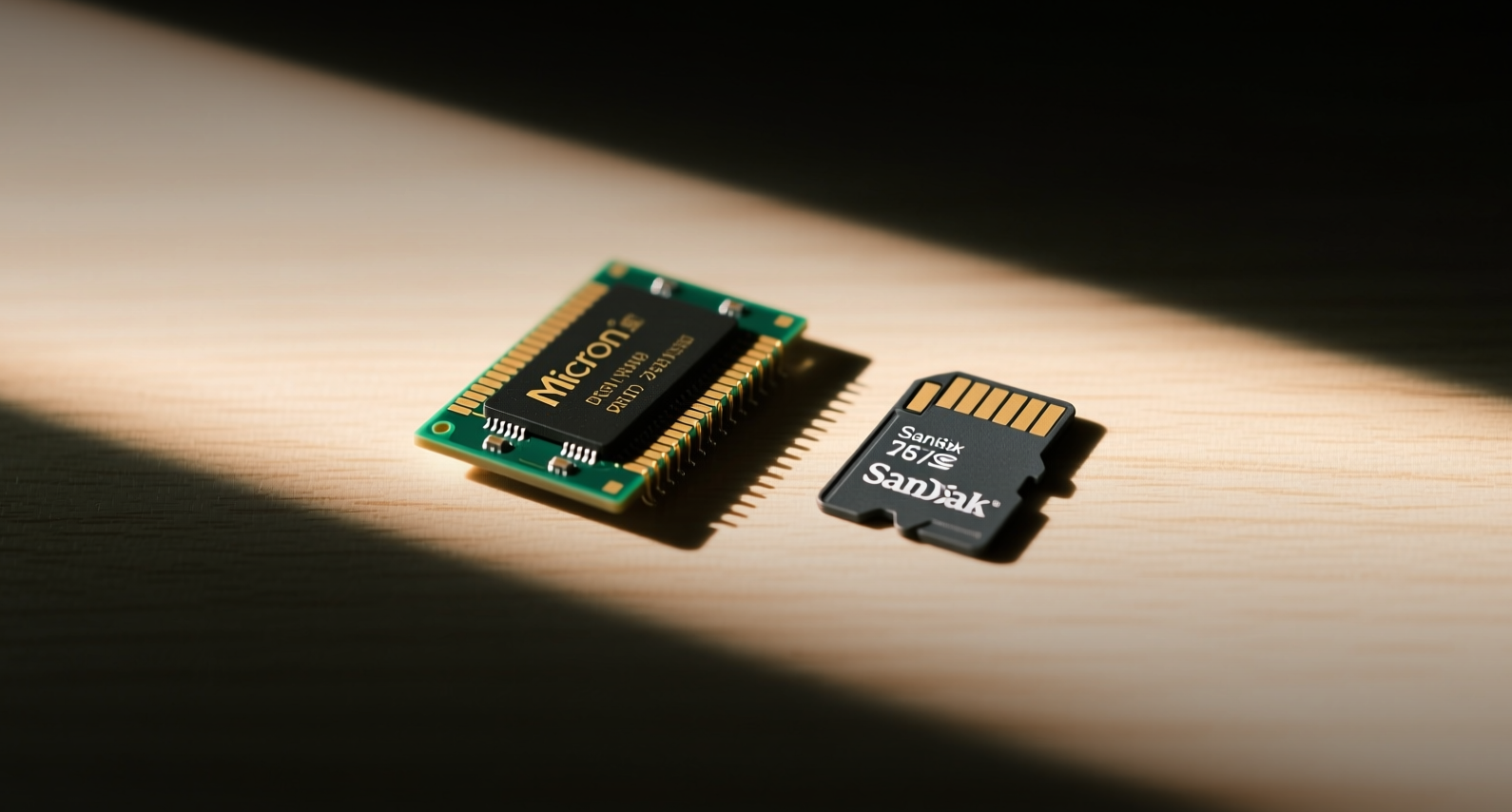
Micron Technology and SanDisk each fell about 4% in pre-market trading Monday, giving back some of last week's gains as a confluence of company-specific pressures interrupted the broader semiconductor recovery.
"The pullback reflects a mix of profit-taking after last week's strong rally and lingering concerns around the SK Hynix ADR listing and insider selling," analysts at Oppenheimer said in a note, citing the highest insider selling at Micron since 2010.
The declines come after a volatile stretch for memory stocks. Micron shares surged more than 6% on July 9 as the iShares Semiconductor ETF (SOXX) jumped 3.5% and the Roundhill Memory ETF (DRAM) added 3.7%, with the broader chip sector rebounding on renewed AI infrastructure demand. Monday's pre-market slide partially unwinds those gains, with both stocks recovering from an intraday decline of nearly 7% earlier in the session.
The selloff is compounded by several overlapping headwinds. SK Hynix's Nasdaq ADR debut on July 10 — the largest foreign listing in US stock market history — has raised concerns about institutional capital reallocation away from Micron toward its primary high-bandwidth memory rival, which commands roughly 60% of the HBM market. Separately, SEC filings show Micron Chief Executive Officer Sanjay Mehrotra sold more than $45 million in shares through a Rule 10b5-1 plan in June, while a federal class-action antitrust lawsuit filed in late June alleging DRAM supply coordination among Micron, Samsung, and SK Hynix continues to overhang the sector.
On the bullish side, UBS reiterated a Buy rating on Micron last week, arguing the pullback is likely temporary and raising its DRAM contract pricing forecasts for the second half of 2026. Citi also issued a 90-day upside catalyst watch on the stock. The broader market was mixed Monday, with S&P 500 futures pointing to a flat open, suggesting the weakness is sector-specific rather than macro-driven.
For investors, the question is whether the current selloff represents a buying opportunity in a structurally growing AI memory market or the beginning of a deeper correction. Micron shares, even after a roughly 25% decline from their all-time high, still trade at a forward price-to-earnings multiple of about 7 — a discount to the broader semiconductor sector that reflects the market's uncertainty about memory cyclicality and competitive dynamics.
This article is for informational purposes only and does not constitute investment advice.
