
Micron's $100 billion contracted backlog and 85 percent gross margins make it the overlooked AI bet that could outpace NVIDIA by 2027.
Micron's $100 billion contracted backlog and 85 percent gross margins make it the overlooked AI bet that could outpace NVIDIA by 2027.
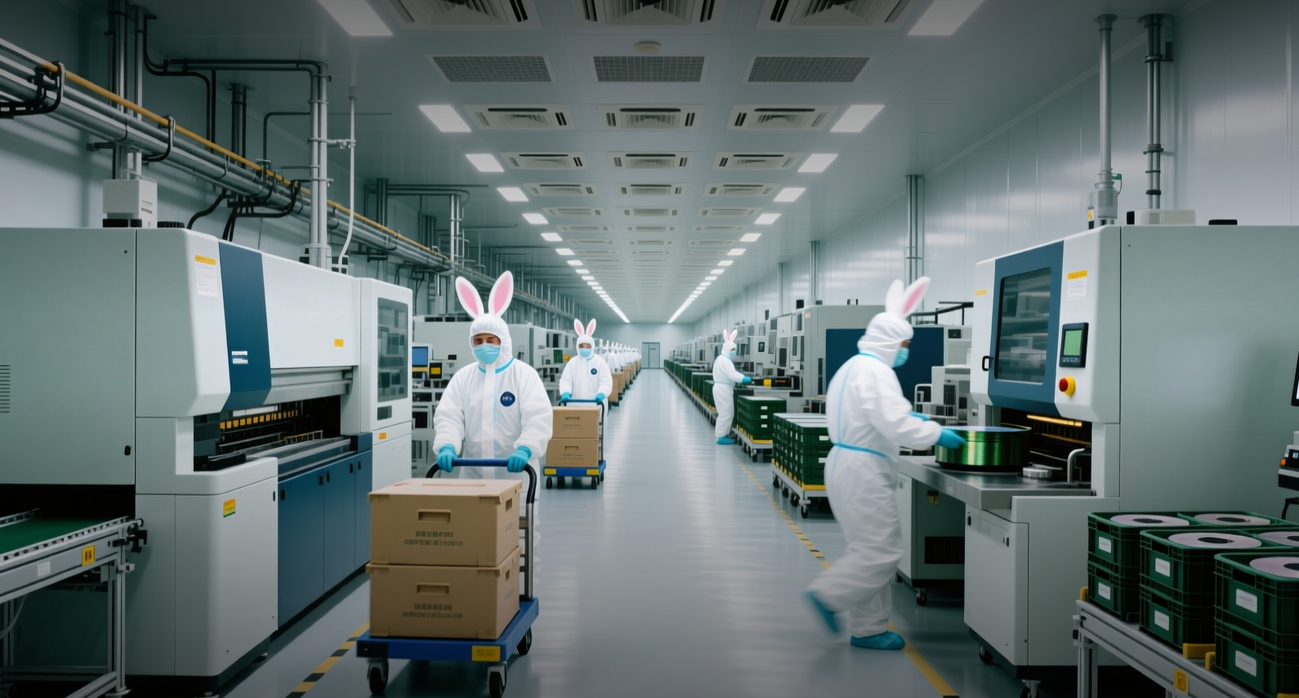
Micron Technology's $100 billion contracted backlog and 85 percent gross margins position the memory chipmaker to outpace NVIDIA in the AI trade, even as insider selling hits a decade high.
"The memory industry has been structurally transformed by the proliferation of AI," Sanjay Mehrotra, chief executive officer at Micron, said. "We see tightness persisting beyond 2027."
Micron's fiscal Q3 revenue landed at $41.5 billion, up 346 percent year over year, with non-GAAP EPS of $25.11 beating consensus by 23.79 percent. The company has signed 16 Strategic Customer Agreements covering roughly 20 percent of DRAM volume and a third of NAND volume, with take-or-pay floors that CFO Mark Murphy said produce margins "significantly above prior peak margins." HBM4 12-high shipments are ramping twice as fast as HBM3E, with over $1 billion in HBM4 revenue already booked. Fiscal Q4 guidance calls for $50 billion in revenue and $31 in EPS at the midpoint, with gross margin near 86 percent.
The stock trades at a forward P/E of 6 against an analyst consensus target of $1,513.41, while NVIDIA trades at 24 times forward earnings. But the setup carries risk: management flagged "a meaningful moderation in the rate of price increases," capex is climbing to roughly $10 billion per quarter, and insiders are selling at a decade-high pace. Micron reports fiscal Q4 on September 30, with Broadcom's September 2 earnings serving as the next check on AI hardware demand.
The 16 Strategic Customer Agreements represent cumulative revenue at minimum price of roughly $100 billion over the term, backed by cash deposits of about $18 billion. Fourteen of those agreements carry take-or-pay floors, meaning hyperscalers must pay for memory capacity even if they don't take delivery. That structure insulates Micron's revenue from the demand swings that typically hit a cyclical memory maker.
The HBM4 ramp is the growth engine. Micron has shipped over $1 billion in HBM4 revenue, with the 12-high version ramping twice as fast as HBM3E. HBM4 units fit directly into NVIDIA's Vera Rubin platform racks, and Micron's backlog extends into 2028. NVIDIA's Q2 FY27 report delivered $96 billion in revenue with data center at $89 billion, and management guided Q3 to $108 billion, confirming the compute demand that feeds Micron's memory orders. Hyperscaler capex is tracking to nearly $800 billion in 2026 and $1.3 trillion in 2027, according to NVIDIA's earnings call. Bank of America's Vivek Arya noted that the four major cloud platforms — Azure, AWS, Google Cloud, and Oracle Cloud — hold a combined backlog of $2.3 trillion.
Micron is one of only three manufacturers qualified to supply NVIDIA with HBM platforms, alongside South Korea's SK Hynix and Samsung. That qualification status, combined with the take-or-pay structure, gives Micron pricing power that memory makers have rarely held. Micron's 85 percent gross margin exceeds NVIDIA's 75 percent and Western Digital's, while the stock trades at a fraction of both peers' multiples.
The risk factors are real. Management flagged "a meaningful moderation in the rate of price increases" in the Q4 guide, suggesting the pricing tailwind may be peaking. Capex is climbing to around $10 billion per quarter as Micron expands fabs in the U.S., Taiwan, Singapore, and Japan. Insider selling has reached a decade-high pace, a signal that some executives are taking profits after the stock's 674.9 percent run over the past year.
The stock has already cooled, falling 10.01 percent in the past week and trading roughly 21 percent below its 52-week high of $1,254.81. The Street consensus sits at $1,515.11 with 9 Strong Buys, 31 Buys, and zero Sells, while 24/7 Wall St.'s model returns a HOLD at 90 percent confidence with a $954.59 target.
Micron's forward P/E of 6 against NVIDIA's 24 makes it the cheapest way to play the AI memory bottleneck. If Broadcom's September 2 report and Micron's September 30 fiscal Q4 confirm the visibility both management teams have laid out, the memory trade extends. If pricing moderates faster than guided, the multiple compression starts with the highest-flying names first. The September earnings calendar will settle which scenario plays out.
This article is for informational purposes only and does not constitute investment advice.
