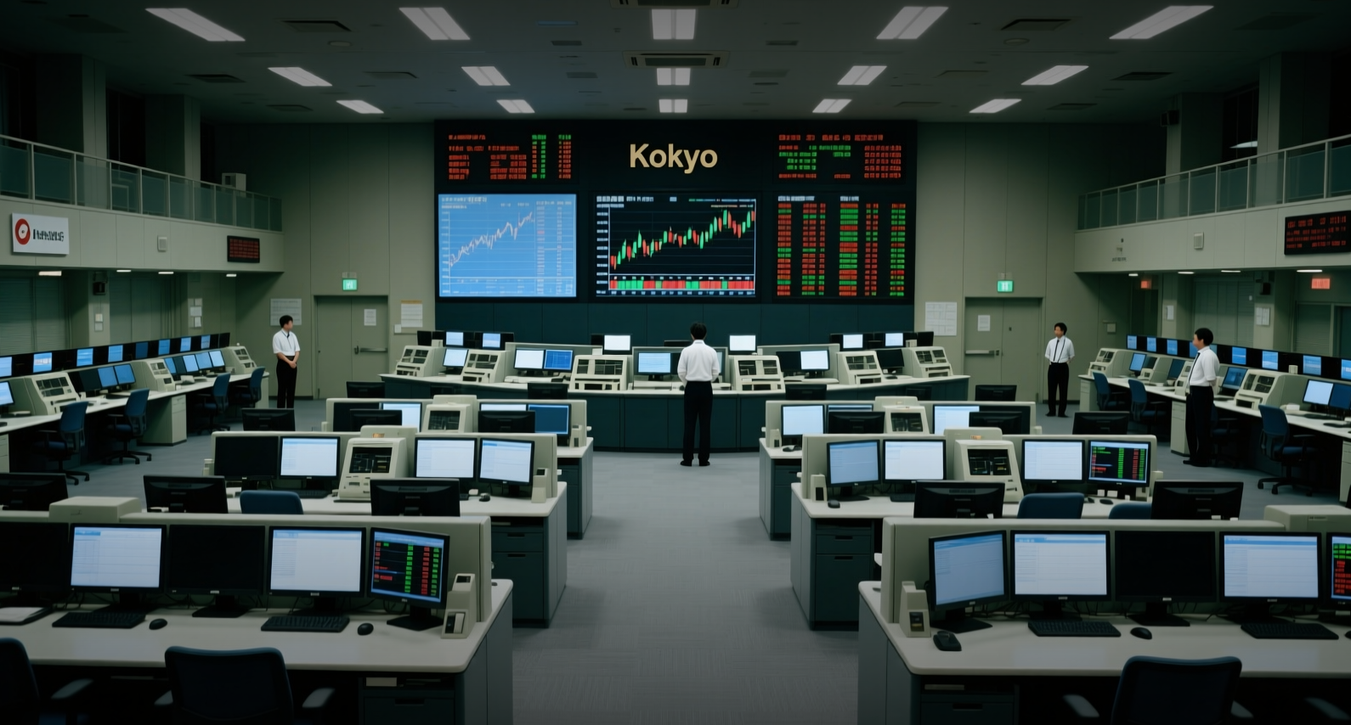
The Nikkei 225 fell 2.2% on Monday, dragged by chip stocks, after Fed Chair Kevin Warsh signaled the central bank may raise rates to cool inflation.
"The question is not if the Fed hikes, but when," Jake Krimmel, senior economist at Realtor.com, said.
Warsh, in his first high-profile speech at the Fed's annual Jackson Hole symposium on Friday, said inflation remains stubbornly above the central bank's two percent target and that policymakers have "work to do" unless price pressures move "clearly and at sufficient speed" toward the objective. The Fed's preferred gauge, the personal consumption expenditures price index, rose 3.7 percent in July, well above target. Semiconductor shares led the Nikkei's decline, tracking a global selloff in technology stocks as investors priced in tighter U.S. monetary policy. Bond markets moved to price in a September hike, with the two-year Treasury yield climbing to 4.30 percent from 4.22 percent and futures putting the odds of a rate increase at the Fed's Sept. 15-16 meeting at 57 percent, up from 35 percent a day earlier.
Higher U.S. rates would strengthen the dollar, pressure the yen and weigh on Japanese exporters and chipmakers that rely on global demand. The Fed has held its benchmark rate at a top range of 3.75 percent since December, with three officials dissenting at last month's meeting in favor of an increase. Warsh, who took over from Jerome Powell in late May, has declined to offer the forward guidance his predecessors used, arguing it limits the Fed's flexibility.
Warsh said 54 percent of goods and services tracked by the government have seen price increases of three percent or higher over the past year, "well above" the 32 percent that saw such increases in the two decades before the pandemic. He also suggested interest rates are not currently restricting economic activity, pointing to strong business investment in AI equipment and infrastructure and solid consumer spending. "Short-term interest rates are the predominant tool to achieve the dual mandate," he said.
The selloff in Tokyo tracked Wall Street's reaction to the speech, where expectations for a hike built in the bond market even as the stock market held steady. For Japanese chipmakers, the prospect of higher U.S. rates compounds existing pressure from a stronger dollar and weaker yen, which raises input costs for imported components even as it boosts the competitiveness of exporters. The Nikkei's decline was led by semiconductor names, mirroring a broader pullback in global technology shares that trade in tandem with the chip cycle.
The Fed's next policy decision is due Sept. 15-16, and Warsh's remarks leave the door open for a hike if inflation data fail to improve. Inflation cooled in June and July after spiking in May from soaring gas prices, yet it remains above the central bank's target. Investors will watch upcoming inflation reports for signs that price pressures are easing enough to keep the central bank on hold.
This article is for informational purposes only and does not constitute investment advice.