
Federal regulators are investigating a fatal Amazon Prime Air cargo crash at Miami International Airport that killed five people on Sept. 6, the second deadly accident involving an Amazon-linked freighter since 2019.
Federal regulators are investigating a fatal Amazon Prime Air cargo crash at Miami International Airport that killed five people on Sept. 6, the second deadly accident involving an Amazon-linked freighter since 2019.
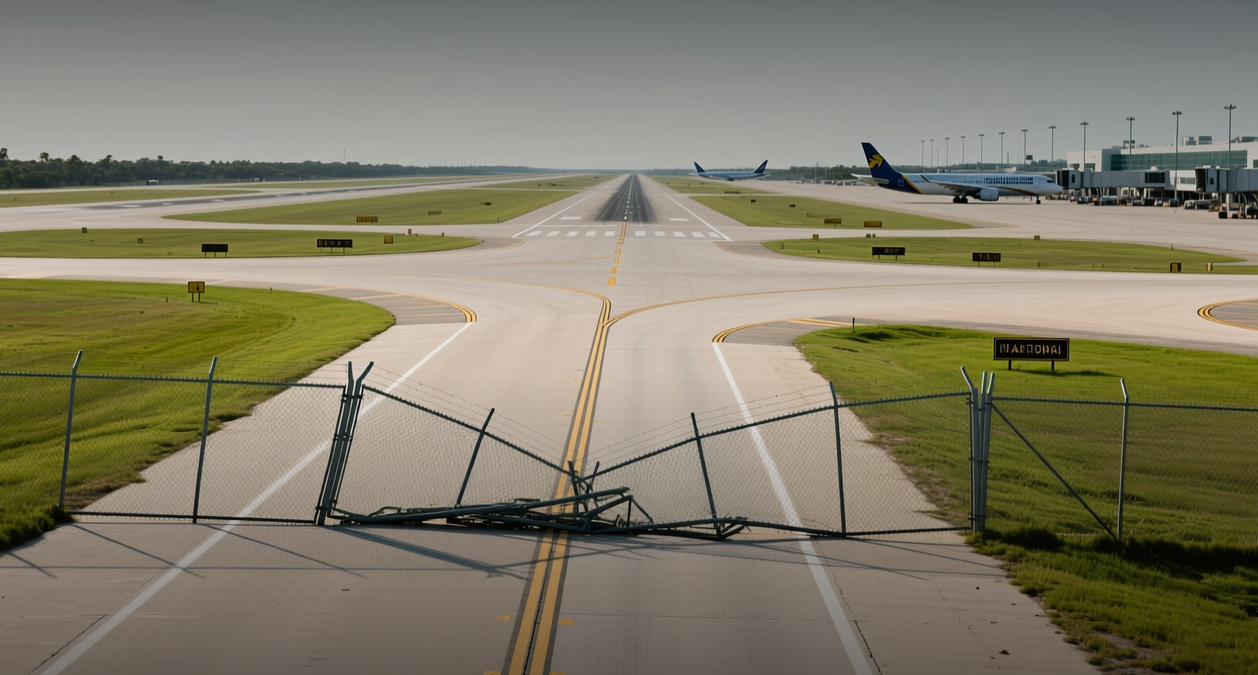
Federal investigators have begun probing the runway overrun of an Amazon Prime Air Boeing 767-300 freighter at Miami International Airport that left five people dead and five injured on Sunday, when the aircraft broke through the airfield perimeter and struck vehicles on a nearby roadway.
"We are devastated by the accident involving one of our aircraft in Miami today," 21 Air, the cargo carrier that operated the flight for Amazon, said in a statement. "Our deepest condolences are with the families and loved ones of those who lost their lives."
The aircraft, operating as Prime Air Flight 7598 from San Juan, Puerto Rico, was traveling at 112 knots (129 mph) when it exited the usable runway shortly before 2:00 p.m. EDT, according to flight-tracking service Flightradar24. Miami-Dade Fire Chief Ray Jadallah said more than 60 rescue units and about 200 emergency personnel responded, with three of the injured in critical condition and two people trapped inside vehicles struck by the jet. The pilot and co-pilot were also trapped in the cockpit following the crash.
The NTSB dispatched a team led by Chairwoman Jennifer Homendy to Miami, with the agency's first media briefing scheduled for Monday. Investigators will focus on the aircraft's flight data and cockpit voice recorders, braking system performance, runway conditions and the effectiveness of engineered safety barriers at the runway end. The 32-year-old Boeing 767-300, which operated as a passenger jet for various airlines from 1994 to 2015 before conversion to freighter configuration, came to rest near Northwest 42nd Avenue after crossing the airfield perimeter.
The crash marks the second fatal accident involving an Amazon Prime Air freighter in seven years. In February 2019, Atlas Air Flight 3591, also a Boeing 767-300 operating for Amazon, crashed into Trinity Bay near Houston, killing all three crew members. That accident prompted scrutiny of pilot training and cockpit resource management at contracted cargo carriers, and the Miami crash is expected to renew questions about how Amazon and its operating partners manage safety oversight across a rapidly expanding air network.
Miami International Airport, one of the busiest cargo gateways in the United States and a critical hub for Amazon's logistics chain serving the Southeast and Latin America, halted all flights immediately after the crash. Two of its four runways had reopened by Sunday evening, though residual delays continued into Monday as airlines rebalanced aircraft and crews. The airport's role as a primary transit point for e-commerce parcels, medical supplies and perishable goods means even a short-term capacity reduction can ripple through regional distribution networks.
The trajectory of the aircraft — beyond the designated runway safety area, through the perimeter fence and onto a public roadway — is likely to draw particular scrutiny from investigators. Aviation safety analysts note that previous runway overrun accidents worldwide have sometimes led to installation of engineered materials arresting systems or changes in land use near runway ends. The proximity of public roads and cargo facilities to the runway end at Miami will be a central focus of the infrastructure review.
Amazon said it was working with local authorities to determine what happened. "Right now, our absolute priority is the safety, well-being and care of everyone involved," company spokesperson Kelly Nantel said. Boeing and 21 Air both said they would support government investigations.
A preliminary NTSB report is typically released within weeks of a major crash, with a full final report often taking a year or longer. Until then, questions around aircraft speed, braking performance, runway surface conditions and crew decision-making on approach to Miami will remain central to understanding how a routine cargo arrival turned into a deadly disaster just beyond the runway end.
This article is for informational purposes only and does not constitute investment advice.
