


SpaceX and NVIDIA are putting data-center-class AI compute into orbit, with each Starmind AI1 satellite carrying a Rubin GPU and Vera CPU.
SpaceX and NVIDIA are putting data-center-class AI compute into orbit, with each Starmind AI1 satellite carrying a Rubin GPU and Vera CPU.
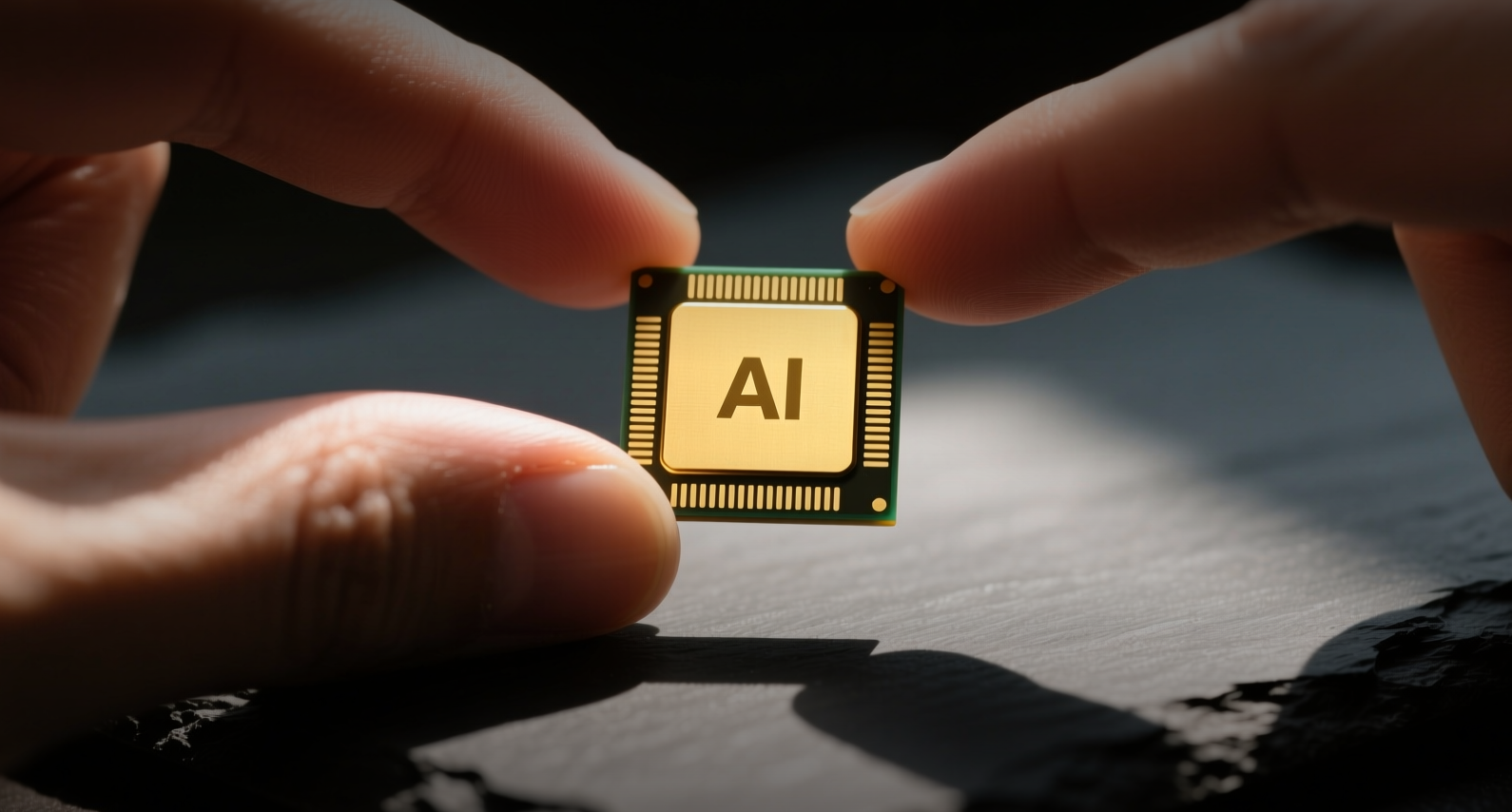
NVIDIA is taking AI compute to orbit, partnering with SpaceX to embed Rubin GPUs and Vera CPUs in Starmind AI1 satellites — up to 25x more inference power than the H100.
"Space computing, the final frontier, has arrived. As we deploy satellite constellations and explore deeper into space, intelligence must live wherever data is generated," Jensen Huang, founder and CEO of NVIDIA, said at GTC.
The Starmind AI1 payload builds on NVIDIA's broader space computing platform announced at GTC. The Space-1 Vera Rubin Module pairs the Rubin GPU — 288 GB of HBM4 memory with 22 TB/s bandwidth — with the Vera CPU for orbital data centers. NVIDIA also offers the IGX Thor and Jetson Orin platforms for edge inference on spacecraft, while the RTX PRO 6000 Blackwell Server Edition GPU accelerates ground-based geospatial processing up to 100x faster than legacy CPU systems.
The partnership extends NVIDIA's AI infrastructure dominance beyond terrestrial data centers into a space computing market that includes Aetherflux, Axiom Space, Kepler Communications, Planet, Sophia Space and Starcloud. For SpaceX, the Starmind AI1 adds a new revenue stream to its satellite services business ahead of its earnings disclosure.
Rubin's Space Specs Close the Gap on Terrestrial AI
The Rubin GPU at the heart of the Starmind AI1 is the same silicon powering NVIDIA's latest data center racks. Each Rubin GPU carries 288 GB of HBM4 memory with up to 22 TB/s of bandwidth, compared with the Blackwell Ultra B300's 8 TB/s. The Vera CPU, Rubin's companion, succeeds NVIDIA's Grace processor and delivers 5x inference and 3.5x training performance versus Blackwell. The Rubin platform reached full production in July, with systems shipping to OpenAI, CoreWeave, Google Cloud, Microsoft Azure, Meta and Dell.
The Space-1 Vera Rubin Module enables large language models and advanced foundation models to operate directly in orbit. Its tightly integrated CPU-GPU architecture and high-bandwidth interconnect process massive data streams from space-based instruments in real time.
For SWaP (size, weight and power)-constrained environments, NVIDIA's IGX Thor provides industrial-grade durability with real-time AI processing, functional safety and secure boot. The Jetson Orin platform delivers high-performance AI inference in an ultra-compact module optimized for satellites, on-orbit servicing vehicles and space-based sensing platforms. Both platforms are available today, with the Space-1 Vera Rubin Module expected at a later date.
Orbital Data Centers Open a New Front in the AI Arms Race
NVIDIA's space push comes as the commercial space industry demands real-time data processing in orbit. Kepler Communications is deploying Jetson Orin to manage and route data across its constellation, while Planet is integrating NVIDIA's accelerated platform from space to ground to index the physical world daily. Sophia Space is embedding Jetson Orin into modular, passively cooled hosted computing platforms, and Starcloud is building purpose-designed orbital data centers to run training and inference workloads in space.
The competitive stakes extend beyond space. AMD's Instinct MI455X, unveiled at its Advancing AI 2026 event, packs 432 GB of HBM4 memory and up to 40 petaflops of FP4 AI compute — 50 percent more memory than Rubin's 288 GB. AMD's Helios rack-scale platform links 72 GPUs into a unified system with up to 31 TB of HBM4 memory and 2.9 exaflops of FP4 compute. While NVIDIA holds the market lead, AMD's hardware gap has narrowed considerably. The Semiconductor Industry Association reported global chip sales of $120.6 billion in May, up 104.1 percent year over year, underscoring the demand wave both companies are riding.
For investors, the SpaceX partnership reinforces NVIDIA's position as the compute backbone for AI infrastructure, now extending into orbit. The Starmind AI1 announcement, made ahead of SpaceX's earnings disclosure, also gives SpaceX a differentiated satellite services offering in a market where real-time orbital processing is becoming a competitive requirement.
This article is for informational purposes only and does not constitute investment advice.
