

NVIDIA's plan to turn AI compute into a bankable asset class rallied asset managers while tech giants slid, exposing a split over who carries the risk.
NVIDIA's plan to turn AI compute into a bankable asset class rallied asset managers while tech giants slid, exposing a split over who carries the risk.
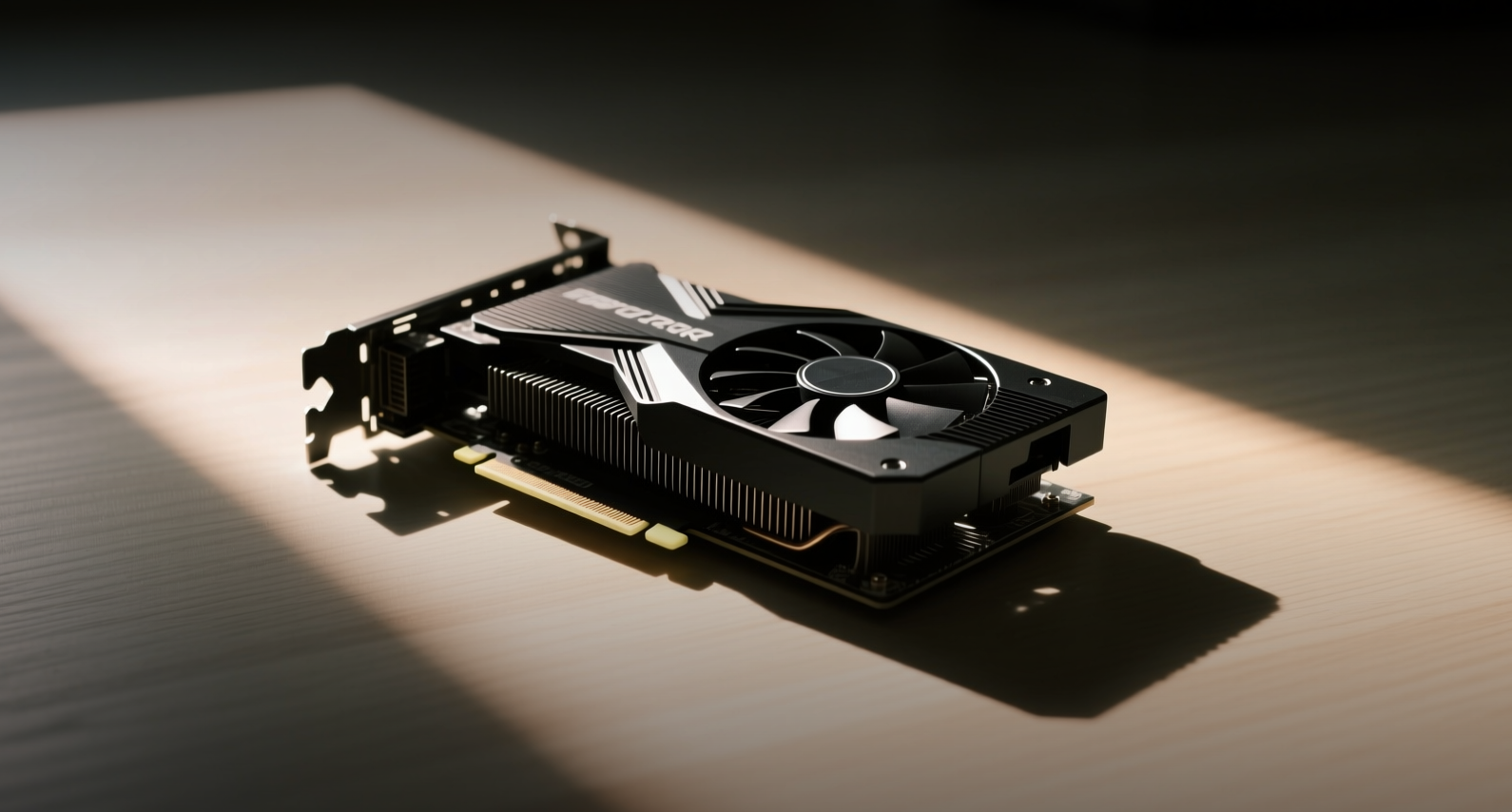
NVIDIA's plan to turn AI compute into a bankable asset class rallied asset managers while tech giants slid, exposing a split over who carries the risk.
NVIDIA signed memorandums of understanding with six Wall Street asset managers to mobilize more than $500 billion for AI compute financing, turning GPUs into a securitizable asset class that rallied the lenders and pressured the buyers.
"These systems are not like our PCs, not like our phones," Jensen Huang, founder and CEO of NVIDIA, said in a CNBC interview. "They are now revenue-generating assets, productive, long-lived, fungible and flexible."
The six firms — Apollo, BlackRock, Blackstone, Brookfield, Goldman Sachs and KKR — will each build independent compute financing platforms, making separate lending decisions while NVIDIA connects customers and can back up to 25 percent of each loan based on residual value. KKR rose 6.88 percent and Apollo gained 6.26 percent on Tuesday, while Coreweave, a GPU cloud provider, jumped 2.42 percent in regular trading and surged more than 16 percent after hours.
The plan answers a structural gap: a one-gigawatt AI data center costs about $500 billion, and OpenAI lacks an investment-grade credit rating. But NVIDIA's five-year credit default swap has climbed roughly 90 percent this year to 72.11 basis points, signaling credit markets have not fully absorbed the "circular financing" question — whether demand is organic or manufactured by the financing terms themselves.
The divergence in Tuesday's session captured the market's split. Alternative asset managers — the firms collecting management fees on the new capital pools — led gains, while the large-cap technology names that would be the most direct beneficiaries of strong AI demand fell for a second day. Google dropped 3.84 percent, its steepest one-day decline in six months, Amazon fell 2.09 percent, and Apple, Broadcom and Microsoft each slipped more than 1 percent. NVIDIA itself closed nearly flat, down 0.02 percent.
The financing model rests on a simple premise: AI compute generates revenue, and NVIDIA hardware holds value longer than typical chips because CUDA software updates extend its useful life. Huang pointed to rental pricing that has climbed as chips age — one-year H100 rental rose from about $1.70 per GPU-hour in October 2025 to roughly $2.35 per GPU-hour by March 2026, while six-year-old A100 chips still run in production.
"Compute has become a critical infrastructure asset," Joe Bae and Scott Nuttall, co-chief executive officers of KKR, said in a joint statement. "We've learned that delivery, not ambition, is the hard part."
The structure resembles the early days of mortgage-backed securities, BlackRock CEO Larry Fink said, calling it "the next future of financial engineering." Apollo President Jim Zelter acknowledged the risk — "there will be excess, there will be pullbacks" — while arguing the number of participants spreads concentration risk.
The unresolved question is GPU residual value. NVIDIA's chip cadence has accelerated from two years per generation to one, and each performance leap erodes the prior generation's market value. The financing model's foundation — chip residual value — has not been tested through a full cycle. The announcement is also only a memorandum of understanding, with no binding contracts; the specific borrowers, interest rates, facility locations and start dates remain undisclosed.
Goldman Sachs, one of the six partners, published its own hyperscaler capital expenditure forecasts around the same time, projecting roughly $400 billion in new debt issuance next year and $300 billion in project finance for data centers and chips. The bank's proximity to the deal — arranging the financing while publishing the CapEx math that justifies it — makes those numbers informed rather than neutral.
The last time vendor-arranged financing reached this scale was the 2021 data center buildout, when debt-funded capacity expansion preceded a correction in cloud valuations. Whether this cycle repeats depends on whether GPU rental pricing holds — the signal Huang says matters more than financing headlines.
This article is for informational purposes only and does not constitute investment advice.
