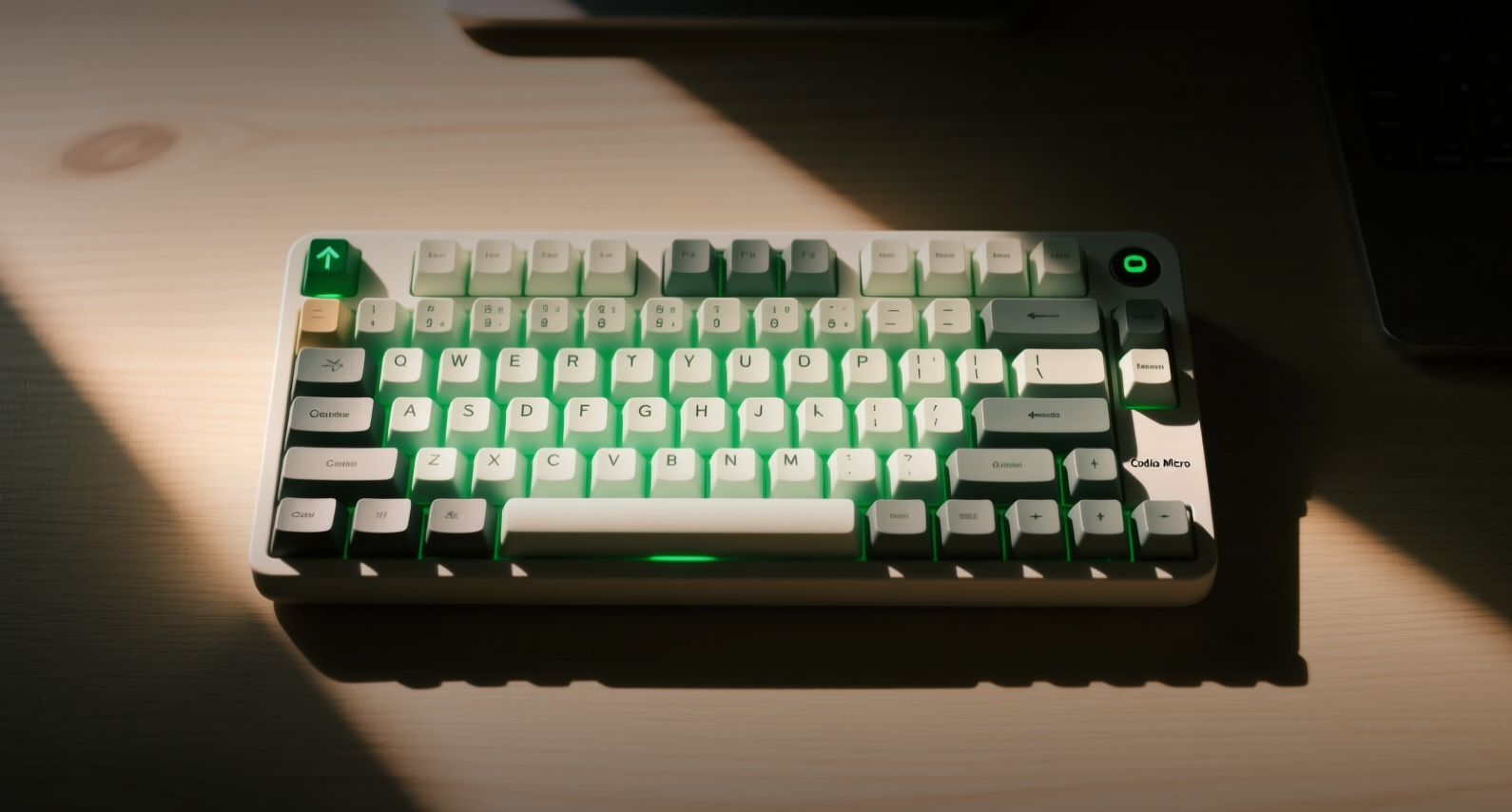
OpenAI's first branded hardware is a $230 shortcut keyboard for its Codex coding platform, not the Jony Ive-designed smart speaker expected next year.
OpenAI entered the hardware market with a $230 mini-keyboard called Codex Micro, a limited-edition device that lets developers monitor and manage multiple AI coding agents through color-coded keys and tactile controls.
"The frosted keys provide a live view of your Codex threads, using different colors to indicate whether a task is complete, needs feedback, or has encountered an error," Mike Di Genova, cofounder of keyboard maker Work Louder, said in a video explaining the device.
The device closely resembles Work Louder's Creator Micro 2 pad, featuring 13 mechanical switches, a joystick, dial, and touch sensor. Six translucent keys at the top cycle through colors — white for idle, blue for thinking, green for complete, amber for feedback needed, and red for errors — giving users at-a-glance status of up to six Codex threads. All controls are configurable through the ChatGPT desktop app, and the device ships with 32 additional keycaps featuring Codex icons. The joystick can start common workflows, while the dial adjusts the agent's reasoning level.
The launch shows OpenAI's deepening commitment to developer tools as Codex and ChatGPT Work have reached 8 million active users, according to Thibault Sottiaux, Codex's engineering lead. The company merged Codex into the ChatGPT desktop app last week, and the Micro keyboard gives power users a dedicated physical interface for a workflow that increasingly runs in the background. For developers running multiple agents simultaneously — a practice that has led some to keep laptops half-open in public to monitor their threads — the color-coded keys eliminate the need to constantly check screens.
The Codex Micro is separate from OpenAI's primary hardware project with former Apple design chief Jony Ive, which Bloomberg reported will be a portable, screenless smart speaker designed as an AI companion for the home. That device, expected to launch in 2027, faces headwinds after Apple sued OpenAI last week, accusing it of stealing trade secrets related to hardware manufacturing. OpenAI has denied the allegations, saying it has "no interest in other companies' trade secrets."
OpenAI acquired Ive's design firm LoveFrom for $6.5 billion last year, and its hardware division is working on about five products, according to reports. The Codex Micro, by contrast, is a far simpler bet — a rebadged version of existing Work Louder hardware with OpenAI branding and Codex-specific software integration. Orders are open "while supplies last" on Supply Co, with shipping expected shortly after purchase. OpenAI did not disclose how many units are available.
For investors, the Micro keyboard is a low-cost experiment in hardware-software bundling. OpenAI's $230 device creates a physical moat around Codex usage — developers who buy the keyboard are likelier to stay within the platform. But the limited-run nature suggests OpenAI is testing demand rather than committing to a product line. Microsoft, which competes with OpenAI through its GitHub Copilot coding assistant, has not announced companion hardware. Nvidia, whose GPUs power the AI models behind both platforms, stands to benefit regardless of which coding assistant wins developer mindshare.
This article is for informational purposes only and does not constitute investment advice.