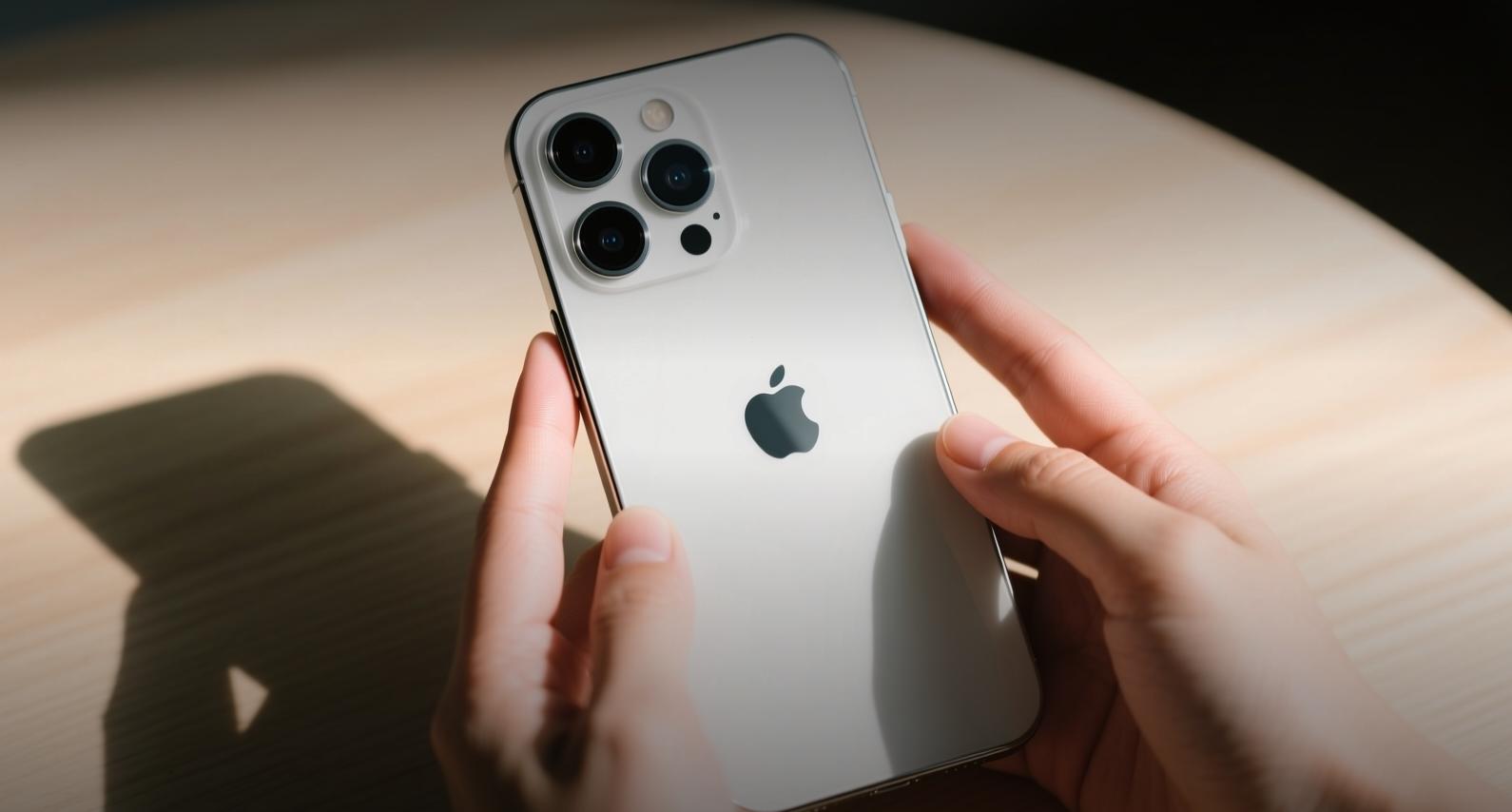
OpenAI is building three devices — a speaker, a phone, and smart glasses — not as a product line but as an escape route from Apple's iOS, where ChatGPT currently lives as one icon among hundreds.
The strategy became clear this week as supply chain reports from analyst Ming-Chi Kuo and Bloomberg filled in the details of a roadmap that has been taking shape since OpenAI's $6.5 billion acquisition of Jony Ive's startup io Products. Every device shares one design principle: a camera pointed at the user's environment, feeding real-time visual context into an AI agent that learns to act without being asked.
"The smartphone is the only device that captures your full real-time state — where you are, what you are doing, who you are talking to," Kuo wrote in April, describing OpenAI's phone as an "AI agent phone" built around continuous context rather than individual apps. "To deliver a proper agent, OpenAI has to control both the operating system and the hardware."
The speaker arrives first. Priced between $200 and $300 and expected in early 2027, the portable, screenless device was developed with Ive and includes a rechargeable battery, a camera for understanding its surroundings, and mechanical elements that move on their own to create the impression it is alive. Powered by ChatGPT with GPT-Live for conversation, it will control smart home accessories, answer questions, play media, and develop a personalized personality over time. OpenAI does not regard Apple's HomePod or HomePod mini as comparable products, according to people familiar with the project. CEO Sam Altman described an early prototype to employees as "the coolest piece of technology that the world will have ever seen."
The phone is the real prize. Kuo revised its mass production timeline to the first half of 2027, pulled forward from an original 2028 target, a shift he linked to OpenAI's planned IPO and intensifying competition. He projects combined 2027 and 2028 shipments could reach around 30 million units — roughly the volume of a second-tier smartphone brand, enough to prove the concept but not to threaten iOS or Android's installed base.
The phone's headline specification is not screen resolution or processor clock speed but an image signal processor with an enhanced HDR pipeline, designed to improve real-world sensing through the camera. Two dedicated AI processors handle vision and language tasks in parallel, reflecting a hardware architecture built for on-device inference rather than photography. The chip is a customized MediaTek Dimensity 9600 built on TSMC's N2P process — the same 2-nanometer-class node feeding Apple's upcoming A20 chips. Luxshare Precision Industry is the exclusive manufacturing partner, and Sunny Optical has secured camera module orders for two OpenAI devices.
The supply chain tells a deeper story. OpenAI has hired more than 400 former Apple employees, including designers Evans Hankey, Tang Tan, and Scott Cannon, along with Paul Meade, who previously led Apple's Vision Products Group. Apple responded with retention bonuses of up to $400,000 in restricted stock for its iPhone Product Design team. On July 10, Apple sued OpenAI for alleged trade secret theft, pointing to a proprietary metal finishing process. Bloomberg's Mark Gurman reported the lawsuit is already deterring Apple engineers from interviewing and making suppliers cautious about working with OpenAI.
Smart glasses, a smart lamp, and potentially earbuds sit further out on the roadmap, some of which could be canceled. Apple's own plans are nearly a mirror image: smart glasses, AirPods with cameras, an AI pendant, and a smart home hub with enhanced Siri capabilities. The two companies are on course to collide across at least four product categories.
The open question is whether consumers will invite a camera-equipped, self-moving AI companion into their homes. OpenAI's entire thesis depends on users accepting a device engineered to feel alive, watching their living spaces, and feeding that visual data into a cloud-based agent. The technology may be the easy part. The harder problem is trust — and that is not something any processor spec can solve.
This article is for informational purposes only and does not constitute investment advice.