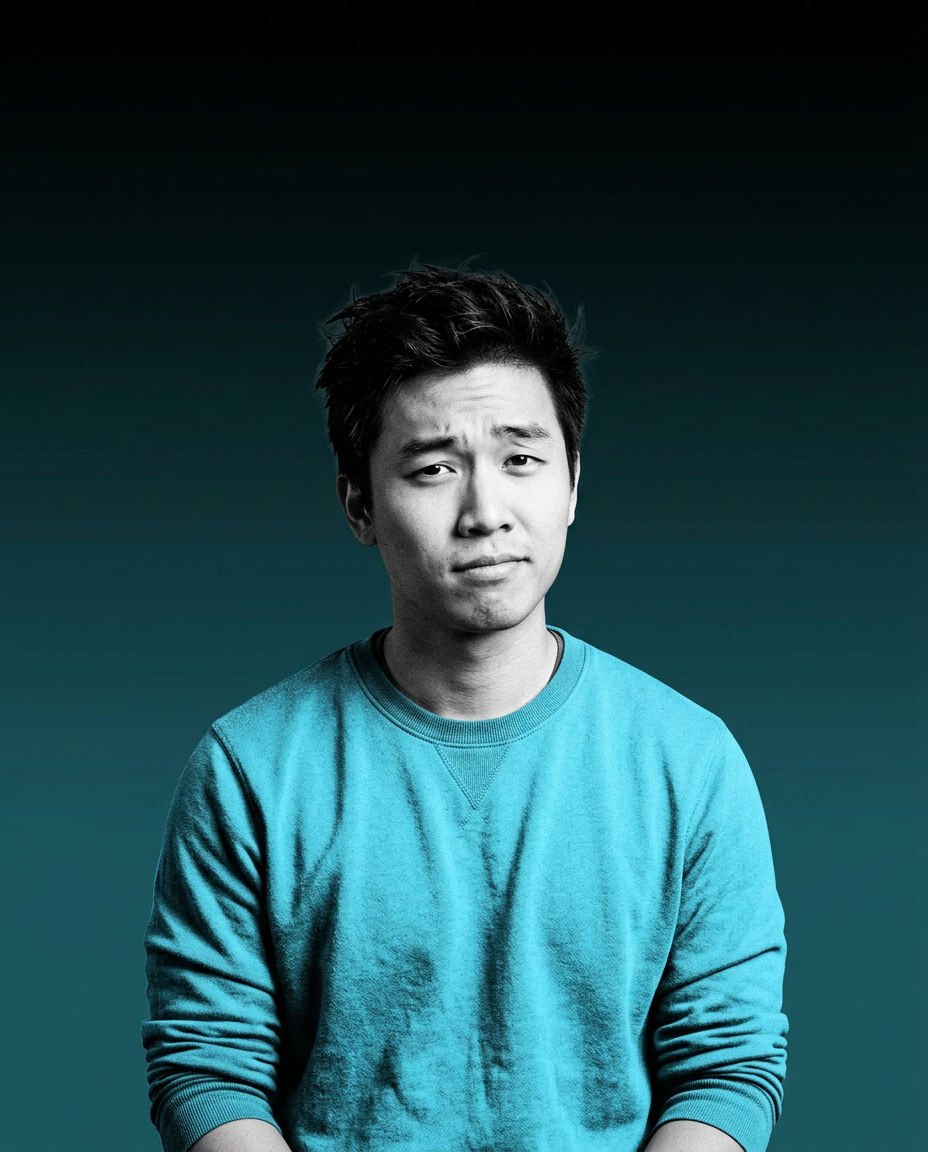
NYU professor Tristan Buckmaster alleges OpenAI copied his unpublished work on the Navier-Stokes problem and that an executive threatened his career over the company's $22.5 million claimed breakthrough.
NYU professor Tristan Buckmaster alleges OpenAI copied his unpublished work on the Navier-Stokes problem and that an executive threatened his career over the company's $22.5 million claimed breakthrough.
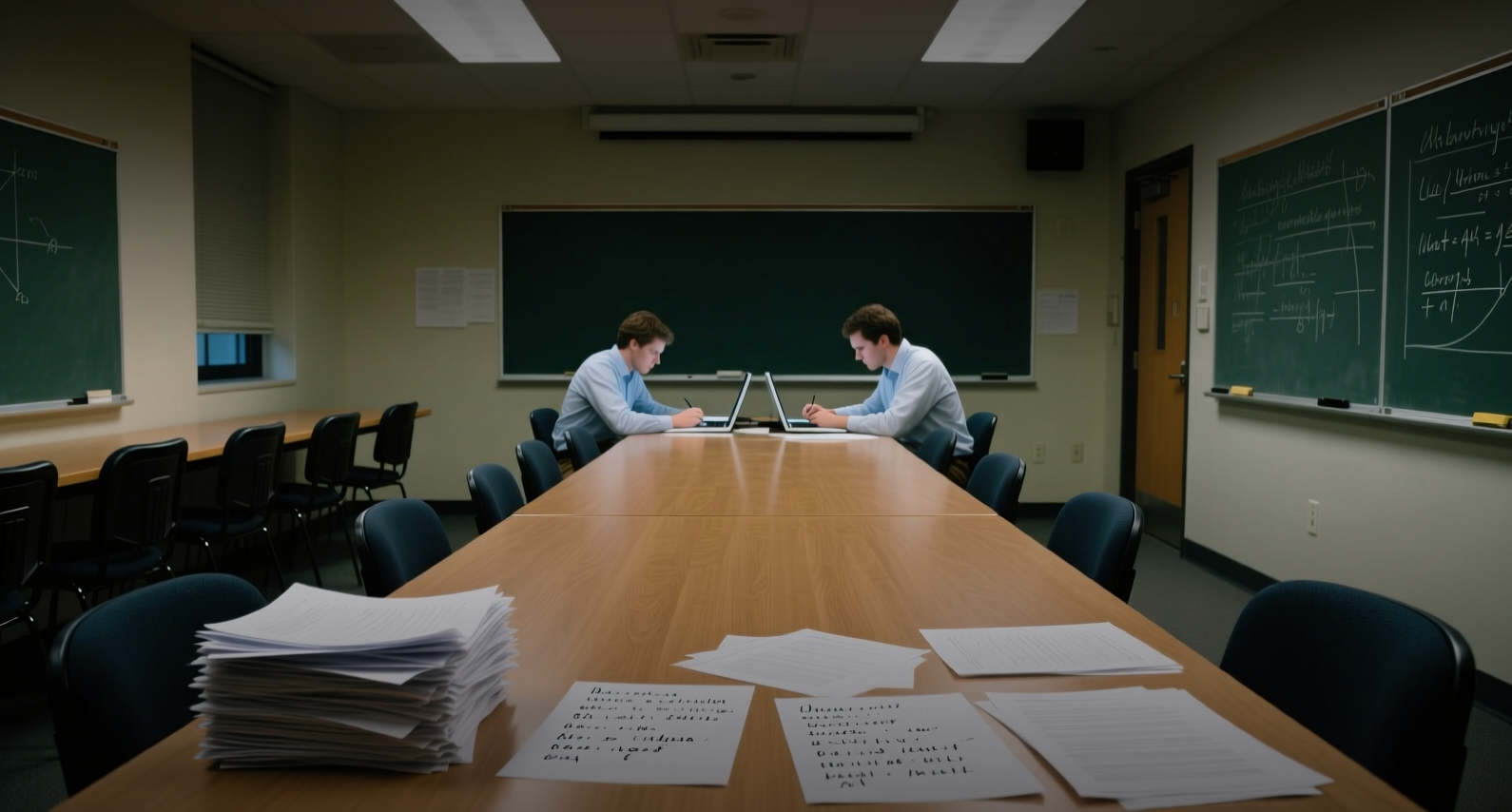
OpenAI's claimed solution to the 90-year-old Navier-Stokes problem — a $22.5 million compute run by an unreleased model — now faces plagiarism and intimidation allegations from a rival mathematician who says the company copied his unpublished work.
"Why would you want to ruin your career?" Sébastien Bubeck, a member of technical staff at OpenAI, told NYU mathematics professor Tristan Buckmaster, according to a statement Buckmaster published Tuesday alongside his own proofs. Buckmaster said Bubeck later added: "If you don't want me to be nice, then I don't have to be nice."
Buckmaster, working with Anthropic mathematician Levent Alpöge, announced findings on the Navier-Stokes existence and smoothness problem — one of seven Millennium Prize Problems carrying a $1 million bounty from the Clay Mathematics Institute. A day later, OpenAI published a full proof it said was discovered by an unreleased model more powerful than the newly released GPT-6 Astra, running 10,000 concurrent agents over a week and consuming 300 billion output tokens.
The dispute tests whether frontier AI labs can claim credit for breakthroughs built on work their own tools helped produce. Buckmaster and Alpöge used OpenAI's Codex and Anthropic's Claude extensively, and Buckmaster said he could not rule out that OpenAI trained on his sessions.
The disputed timeline
Buckmaster said he and Alpöge learned that "information about our progress had been passed to OpenAI" while finalizing their own results. When they contacted the company, OpenAI told them it had already achieved a full proof. But follow-up questions about when the research began and how much human input was involved drew evasive answers, Buckmaster wrote.
"It emerged that an entire team had been working on the problem," he said, "and that an insane amount of compute had been used.... Eventually, it was agreed that [the first prompt] had been sent in the past few days, after information about our work had reached OpenAI."
OpenAI's own post confirms the latest effort began Sept. 1, inspired by rumors that two Millennium Prize problems had been solved. The company said it started training the internal model Aug. 28.
The specific route Buckmaster and Alpöge took — attacking the problem through a smooth force, options c and d in Fefferman's statement of the problem — is uncommon. "Almost nobody else I know of was working on it," Buckmaster wrote. "It is not the direction one arrives at in a few days by giving a model the problem statement."
OpenAI's response
OpenAI downplayed the possibility that model regurgitation played a role. "We (the researchers and the agents) did not see any of their work through any means until they released it publicly," the company's post reads. "While unlikely, we cannot rule out that de-identified data derived from their usage of our products helped improve our models."
Buckmaster countered on Mastodon that OpenAI is "openly admitting they used training data from a period after we found our result." He also alleged that Bubeck asked him to remove Alpöge's credit as part of a proposed compromise, a request tied to Alpöge's employment at rival lab Anthropic. OpenAI said it does not plan to claim the $1 million prize.
What's at stake
The episode may mark a turning point for mathematics, where AI models now appear essential to progress on the field's hardest problems — but where the compute required is available to only a few frontier companies. Buckmaster called it a "Deep Blue–Kasparov moment," comparing the breakthrough to IBM's supercomputer defeating chess champion Garry Kasparov in 1997.
For OpenAI, the reputational risk is immediate. The company, whose valuation and product roadmap depend on claims of frontier capability, now faces questions about whether its most celebrated result rests on another researcher's unpublished work. Anthropic, which employs Alpöge, and the wider academic community will watch how OpenAI handles the credit dispute, and whether the allegations lead to any formal misconduct review.
This article is for informational purposes only and does not constitute investment advice.
