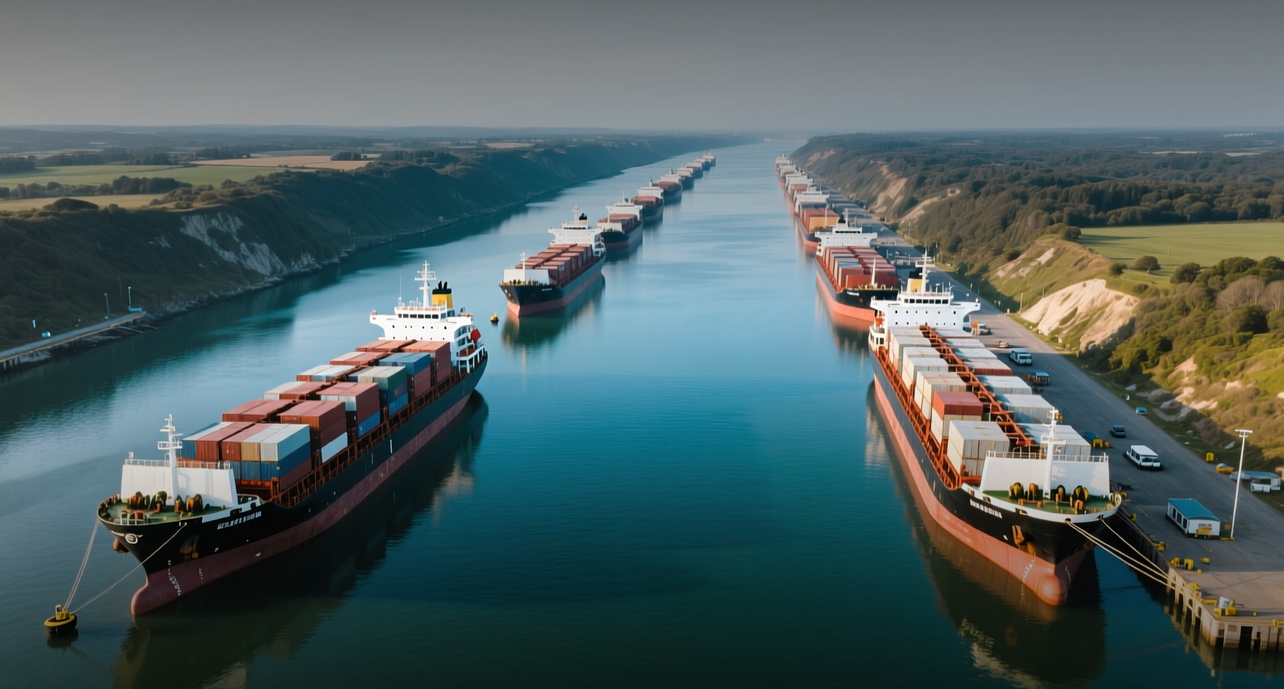
Shipping company shares have climbed to their highest in more than a decade as the prolonged Strait of Hormuz crisis squeezes global vessel supply, pushing freight rates and tanker earnings higher in tandem. The rally is a function of disruption rather than demand, leaving the sector's gains hostage to how long the chokepoint stays closed.
The Strait of Hormuz handles about 21 percent of global oil trade, and the disruption has forced carriers to reroute and compete for scarce capacity across the world's busiest lanes. The pressure is visible beyond the Gulf: FreightWaves reported vessels without Panama Canal reservations faced waits of up to 11 days, with average northbound waits exceeding 10 days over the prior 28 days as geopolitical disruption and water restrictions competed for the same tonnage.
The squeeze is compounding across chokepoints rather than easing. The Panama Canal Authority will cut daily vessel capacity from Sept. 3, limiting Neopanamax locks to nine slots and trimming Panamax availability to 25, then 23 slots on Sept. 15, after below-expected rainfall stressed the watershed. The scarcity is pricing in real money: South Korea's SK Gas paid a record $5.3 million for an auctioned transit slot for the LPG carrier G. Spirit, scheduled to cross Sept. 1. That auction level shattered prior records and shows how aggressively shippers bid when delays become economically critical.
The stakes for the shipping rally are binary. If the Hormuz crisis persists, vessel supply stays constrained, freight rates hold, and the equities levered to them keep climbing. If it resolves, the supply overhang returns and stocks that have run to decade highs face sharp corrections. The canal authority has postponed a planned draft cut to 47.5 feet until Oct. 1, offering temporary relief, but it has warned that vessels arriving without confirmed reservations could face longer waits and is pushing customers toward its reservation system.
Freight Rates Carry the Earnings Story
The transmission from crisis to share price runs through the spot market. Soaring freight rates translate directly into shipping company revenues, and investors have bid the sector up on that flow-through. The record Panama Canal auction is a market signal that capacity at strategic chokepoints is now priced at a premium, and that premium can spread beyond the ships competing directly for auction slots to the broader freight complex.
For U.S. agriculture, the timing compounds the risk. Corn, soybeans and animal feed ingredients moving from the Gulf to Asia depend on canal access, and tighter capacity can weaken export competitiveness just as the 2026 harvest and marketing season deepens. Higher ocean freight raises the cost of moving a bushel to an overseas customer, pressuring basis levels at interior elevators even when yields are strong.
Resolution Risk Hangs Over the Rally
The duration of the Hormuz disruption is the single variable that determines whether the shipping rally is sustainable. A short-lived crisis would primarily produce higher freight premiums and localized basis adjustments; a prolonged one carries greater consequences, potentially pushing exporters toward alternative corridors and South American origins. The last comparable chokepoint squeeze, when canal restrictions and geopolitical disruption overlapped, showed how quickly freight economics can shift when carriers re-evaluate routes.
For investors, the calculus is straightforward: the same disruption that built the decade-high gains can unwind them just as fast. Traders are watching for any sign of de-escalation in the Strait, along with rainfall in the Panama Canal watershed, as the two factors that would restore vessel supply and reset freight rates. Until one of those breaks, the sector's rally rests on a geopolitical timeline no shipping company controls.
This article is for informational purposes only and does not constitute investment advice.