
Tesla's 21% year-to-date decline marks the fifth consecutive year the EV maker has trailed the S&P 500, a stretch that has reshaped how investors value the company.
Tesla's 21% year-to-date decline marks the fifth consecutive year the EV maker has trailed the S&P 500, a stretch that has reshaped how investors value the company.
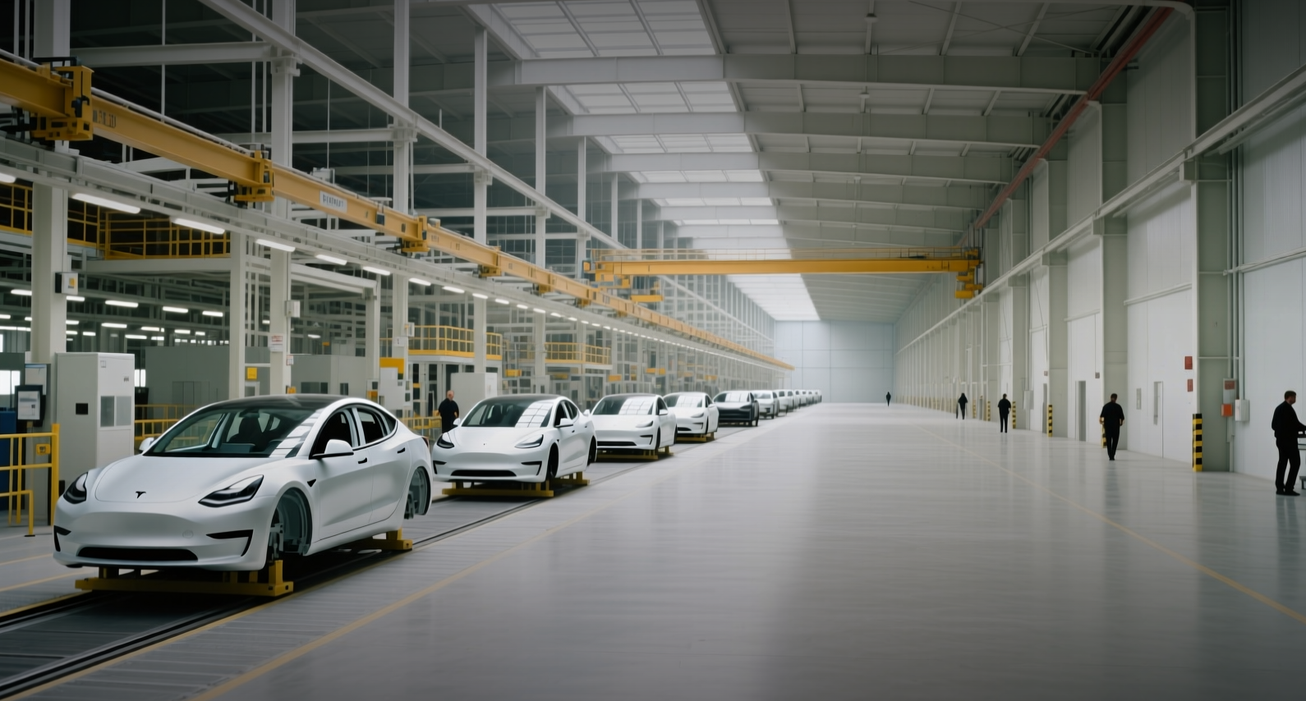
Tesla shares are down 21% this year, extending a five-year run of underperformance versus the S&P 500 that trails every Magnificent Seven peer.
The decline hasn't shaken Cathie Wood's conviction. Ark Investment Management bought an estimated 450,000 Tesla shares worth $170 million to $180 million between June 21 and Aug. 5, according to the firm's trading disclosures, even as the stock fell. Ark held 2.76 million Tesla shares worth approximately $1.16 billion as of June 30.
Tesla's second-quarter results illustrate the tension. Deliveries rose 25% year over year to 480,126 vehicles, the company's strongest second quarter ever, but adjusted earnings of $0.33 per share missed the $0.54 consensus estimate. Operating margin fell to 1.4% as spending on AI, autonomy, and robotics accelerated.
The underperformance has broader implications. Tesla's 21% decline contrasts with a 12% gain for the S&P 500 this year, and the stock's 323 price-to-earnings ratio leaves little room for error. Ark's published valuation model gives Tesla a $2,600 per share target for 2029, with nearly 90% of enterprise value tied to robotaxis.
Three factors explain the sustained lag. The first is a fundamental repricing of Tesla from automaker to autonomy bet. Ark estimates that nearly 90% of Tesla's enterprise value and earnings could come from robotaxis by 2029, a transition that has made the stock more sensitive to AI and autonomy milestones than to vehicle delivery numbers.
The second is deteriorating profitability. Tesla's Q2 operating margin of 1.4% reflects heavy investment in AI infrastructure, autonomous driving, and robotics, even as revenue reached $28.24 billion. Adjusted earnings of $0.33 per share came in nearly 40% below the $0.54 consensus.
The third is a broader market rotation away from mega-cap concentration. The Magnificent Seven were collectively flat during the first half of 2026, compared with a 9.3% gain for the S&P 500, according to CNBC. The Invesco S&P 500 Equal Weight ETF has attracted more than $12 billion this year and pushed past $100 billion in assets as investors seek broader exposure.
Tesla launched its Robotaxi service in June 2025 and says it continued expanding and refining the service during the first half of 2026. The company also began production of its Cybercab model at Gigafactory Texas during Q2, giving the autonomy thesis a tangible foundation.
Tesla trades at roughly 323 times earnings, compared with the S&P 500's average of 29. The Roundhill Magnificent Seven ETF, which holds only the seven mega-cap tech stocks, is up about 2% year to date, dragged down by Tesla and Meta's double-digit declines. The ETF's three-year annualized return of 31% shows the concentration risk that has emerged this year.
For investors, the question is whether Tesla's autonomy narrative can justify its valuation before the stock's underperformance becomes entrenched. UBS Global Wealth Management raised its year-end S&P 500 target to 8,100 from 7,700, citing stronger earnings expectations, but Tesla's path depends on robotaxi adoption metrics and margin recovery — data points that will come into focus in the second half of 2026.
This article is for informational purposes only and does not constitute investment advice.
