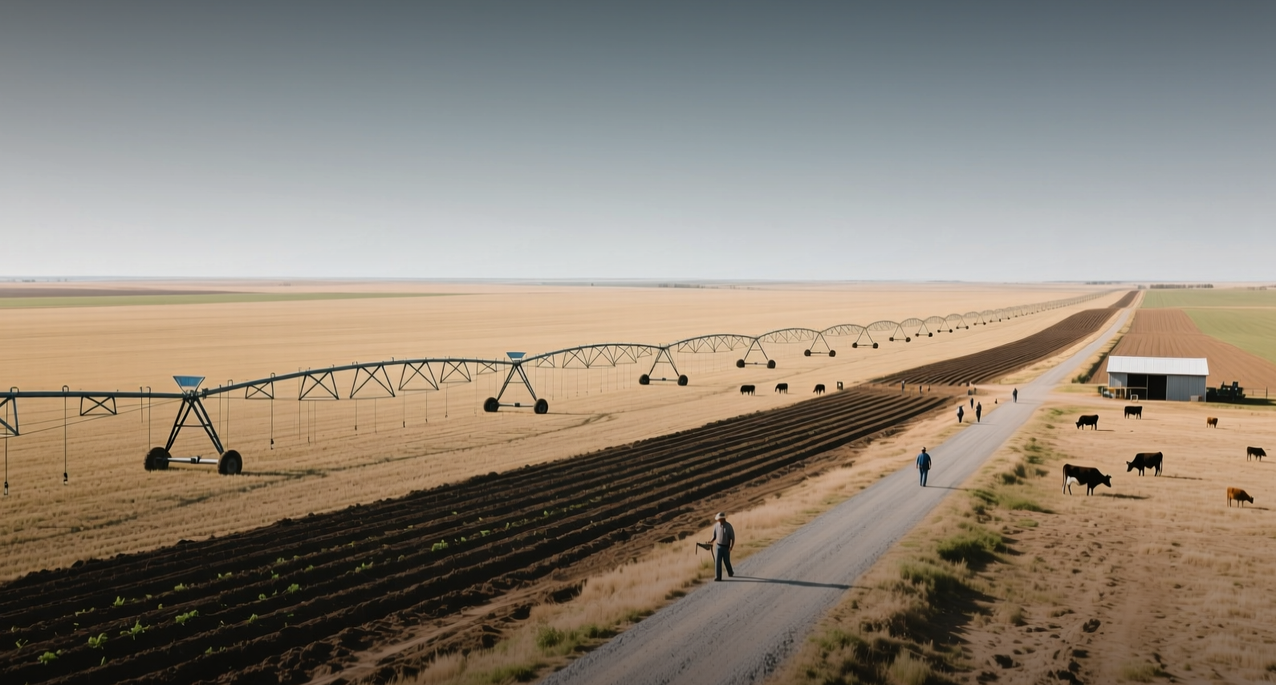
The issuer of the world's largest stablecoin has become one of South America's biggest landowners, spending $600 million to take majority control of an agribusiness that farms more than 200,000 hectares across Argentina, Brazil and Uruguay. Tether's purchase of roughly 70 percent of Nasdaq-listed Adecoagro closed in September 2025, expanding on an initial $100 million stake bought a year earlier and folding agricultural land into a reserve strategy already weighted toward gold and Bitcoin.
"This is when we think about the stability of the world that has to come through real tangible assets," Chief Executive Paolo Ardoino said, describing Tether as "probably the largest owner, land owner in South America." The conglomerate runs hundreds of thousands of sheep and cattle and produces milk and rice, and Tether plans to use its renewable energy to power Bitcoin mining.
The farmland deal is the latest leg of a diversification that has pushed Tether's balance sheet toward scarce assets it frames as hedges against dollar debasement and inflation. Yet the company still anchors most of its reserves to the very currency it hedges against: its US Treasury exposure stood at roughly $141 billion in its first-quarter 2026 attestation, leaving the stablecoin issuer betting on hard assets while remaining one of the largest holders of US government debt.
The question is whether the strategy strengthens Tether's backing or adds risk at a moment when its reserve buffer is shrinking. KPMG's first full audit, one of the Big Four accounting firms, confirmed reserves exceeded liabilities by $6.8 billion at the end of 2025 — an unqualified opinion Ardoino called the strongest an auditor can issue. But Tether's own June attestation, a quarterly snapshot reviewed by BDO, put that same cushion at just $4.1 billion, a drop of roughly 40 percent in six months driven largely by unrealized losses on gold and Bitcoin.
Those are the very assets meant to protect the balance sheet, and farmland complicates the picture further. Land cannot be sold quickly if Tether ever needs cash fast, a liquidity constraint that matters for a company whose USDT token must remain redeemable at $1.0000 on demand. The peg has held, but the reserve mix backing it is becoming less liquid and more concentrated in assets whose prices have already moved against the company.
Tether has not published the underlying audited statements behind KPMG's clean opinion, leaving outside observers unable to verify the composition of the $6.8 billion surplus or how the farmland stake is valued. The full report, once released, could settle whether the scarce-asset strategy ultimately fortifies the stablecoin's backing or exposes it to a slower, harder-to-unwind reserve base. For now, the world's largest stablecoin issuer is betting that owning the land itself is safer than holding the currency its token is pegged to.
This article is for informational purposes only and does not constitute investment advice.