


Key Takeaways: Trump's 50% tariff on Canadian autos and steel, effective Jan. 1, 2027, is pressuring U.S. automakers with cross-border supply chains.
Key Takeaways: Trump's 50% tariff on Canadian autos and steel, effective Jan. 1, 2027, is pressuring U.S. automakers with cross-border supply chains.
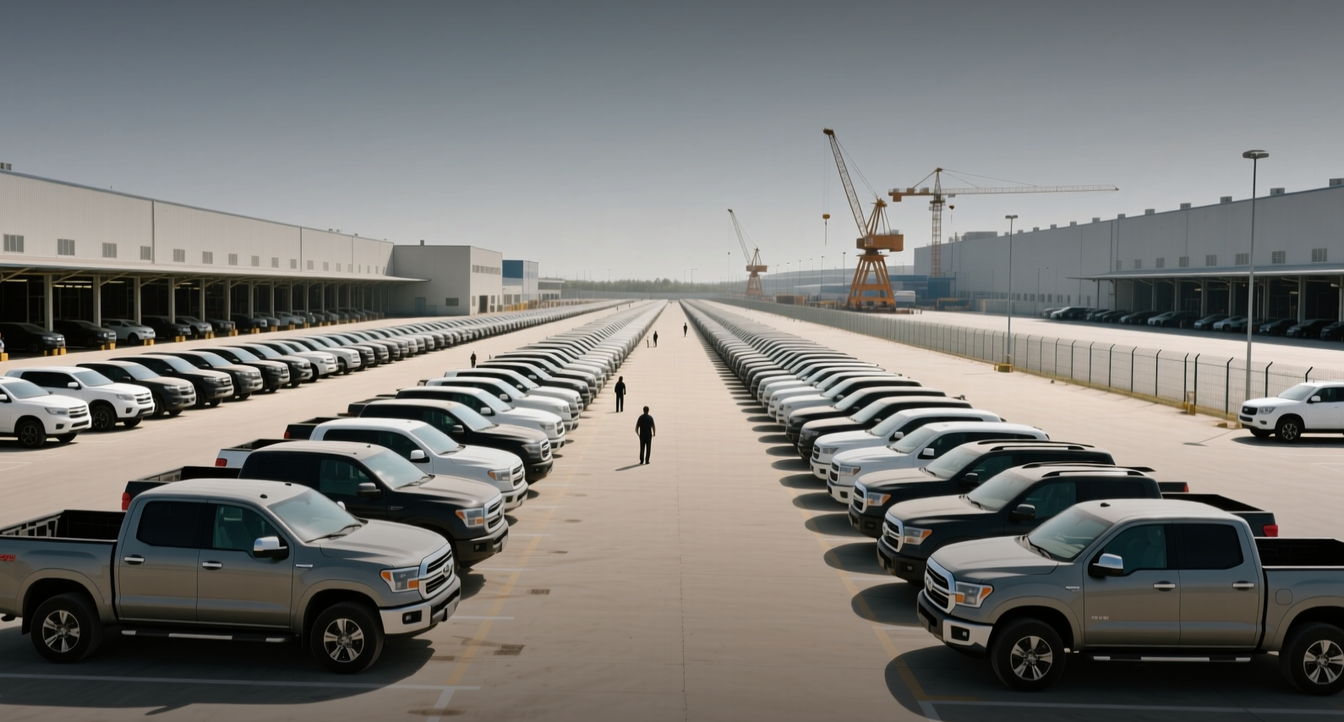
Trump's 50% tariff on Canadian autos and steel, effective Jan. 1, 2027, is pressuring U.S. automakers with cross-border supply chains.
Ford fell 4% to $13.87 in Monday mid-morning trading after President Trump announced 50% tariffs on all Canadian cars, trucks, auto parts, and steel, effective Jan. 1, 2027.
"We don't actually expect a huge impact," Jamieson Greer, U.S. Trade Representative, said, noting the duties cover about 5% of Canadian trade and "only 0.06% of U.S. overall consumption."
Stellantis also dropped 4%, while General Motors slipped in early trading. The new duties follow 50% tariffs on roughly $20 billion in Canadian goods that took effect Saturday after trade negotiations collapsed Friday. Trump cited a $60 billion trade deficit with Canada in his Truth Social post announcing the escalation.
Canadian Prime Minister Mark Carney has pledged "dollar-for-dollar" retaliation starting Sept. 8, targeting U.S. steel, dairy, appliances, agricultural equipment, pulp, paper, and electronics. The U.S. accounts for roughly 70% of Canadian exports, leaving Ottawa more exposed in the standoff.
Trump announced the escalation Monday on Truth Social, writing that "Canada has been ripping off the United States of America for years" and that "Canada will be treated like a State no longer!" Vehicles built in the U.S. would face "ZERO TARIFFS," he said, urging manufacturers to relocate production.
The announcement came two days after 50% tariffs on roughly $20 billion in Canadian imports went into effect, covering products from hockey sticks and fishing rods to wine and dairy. Those duties affect an estimated 5% of Canada's annual exports to the U.S.
For automakers, the stakes are significant. Ford, Stellantis, and General Motors all maintain production facilities in Canada that feed the U.S. market. A 50% tariff on Canadian-built vehicles and components would raise input costs for these manufacturers, potentially forcing price increases or margin compression. The last major U.S.-Canada trade disruption came in 2018 when Trump imposed steel and aluminum tariffs under Section 232, which were later replaced by the USMCA framework that took effect July 1, 2020.
The market's reaction on Monday reflects investor concern about the direct cost impact on automakers with Canadian production footprints. Ford's decline to $13.87 puts the stock at its lowest level in recent weeks, while Stellantis's 4% drop extends a broader slide for the maker of Jeep and Ram vehicles. General Motors, which has significant Canadian assembly operations, also traded lower.
The tariff escalation also raises questions about the broader North American trade framework. Under USMCA, which replaced NAFTA in 2020, automotive content rules require a certain percentage of regional value to qualify for duty-free treatment. A 50% tariff on Canadian-built vehicles would effectively override those provisions for the auto sector, creating uncertainty for manufacturers that have invested billions in cross-border supply chains.
Greer said the administration views the tariffs as leverage to push Canada to restore market access for U.S. wine and spirits and for American dairy farmers, whom he said have had limited access to Canada's market. He added that Canada approached the U.S. about negotiating roughly 30 days earlier, but the talks did not produce an agreement.
After Canada suspended negotiations Friday, Greer said no further meetings with Canadian officials were scheduled. He contrasted Canada's approach with Mexico's, saying Mexico's trade minister is scheduled to meet with him Tuesday and calling Mexican officials "very constructive" on trade issues, including efforts to curb transshipment.
Carney responded defiantly, writing that "Canada has what the world wants" and "we will not allow any nation to determine our future." The Canadian retaliation package, set to take effect Sept. 8, covers steel, dairy, appliances, agricultural equipment, pulp, paper, and electronics.
The escalation marks the sharpest deterioration in U.S.-Canada trade relations since the 2018 steel and aluminum dispute. With deeply integrated automotive supply chains that cross the border multiple times during vehicle assembly, the 50% tariff threatens to disrupt a sector that accounts for a substantial share of bilateral trade. For consumers, the tariffs could translate into higher vehicle prices if automakers pass on the increased costs, though the Jan. 1, 2027 effective date leaves room for negotiations before the duties take hold.
This article is for informational purposes only and does not constitute investment advice.
