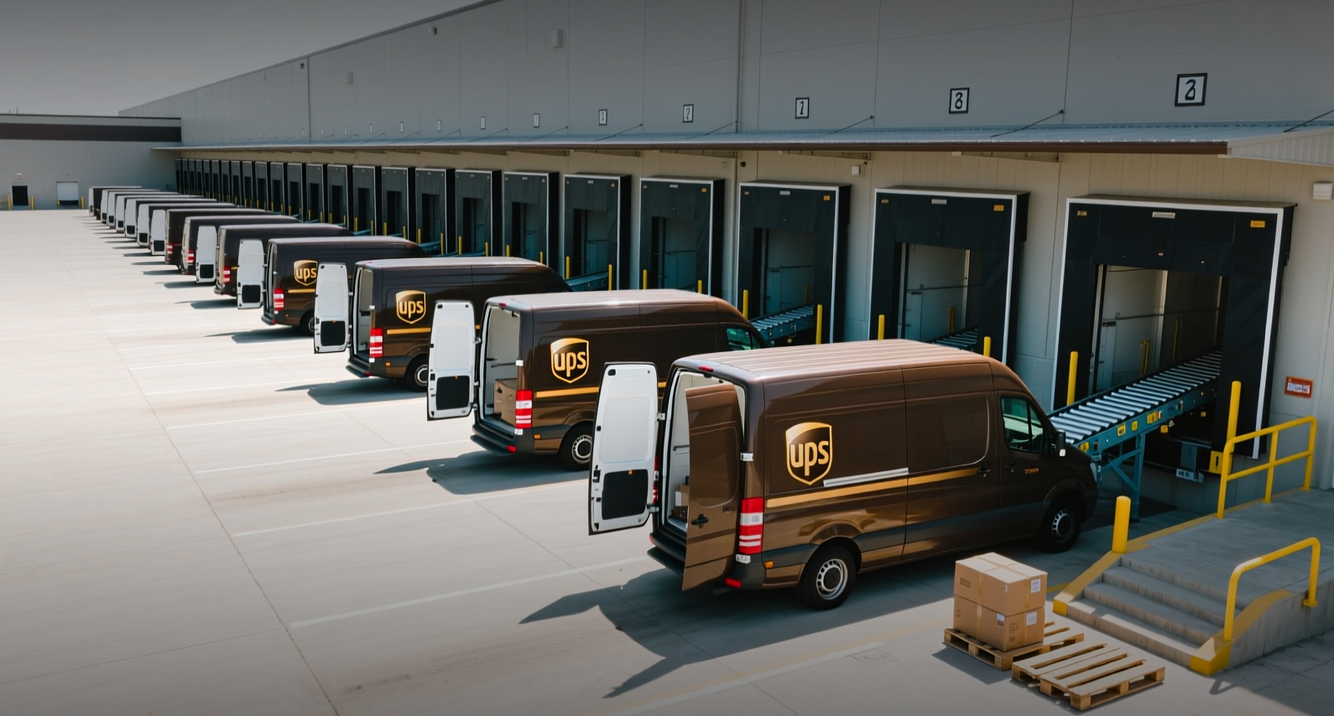
UPS is cutting 50% of Amazon's delivery volume from the start of 2025 through mid-2026, betting higher-margin business will offset the lost revenue.
CEO Carol Tome's "better, not bigger" strategy shifts UPS away from chasing volume toward healthcare, small and medium-sized businesses, and higher-margin B2B e-commerce, she said.
The stock is down 10.5% since the announcement. Management raised full-year revenue guidance to $91.2 billion from $89.7 billion, but implied adjusted operating margin slipped to just under 9.5% from 9.6%.
Fuel surcharges raised $1.173 billion in the first six months, accounting for most of the $1.5 billion increase in full-year revenue expectations, according to SEC filings.
Amazon deliveries often involve bulky, inefficiently packed items to difficult-to-find residential addresses, making them low- or negative-margin. UPS is investing in automation, smart facilities, and technology upgrades to cut cost per piece while raising revenue per piece, with the goal of building a more productive network.
The market is taking a "show me first" approach. Management raised implied full-year adjusted operating profit guidance to $8.65 billion from $8.61 billion, but the improvement is smaller than the margin decline suggests. At the start of the year, UPS guided to full-year revenue of $89.7 billion and an adjusted operating margin of 9.6%, implying $8.61 billion in adjusted operating profit. The second-quarter release now expects $8.65 billion on revenue of $91.2 billion, a margin of just under 9.5%.
Digging into the numbers, UPS raised its fuel surcharge by $1.173 billion in the first six months. Against this, third-party fuel surcharges rose $80 million and fuel expenses increased $664 million, totaling $744 million. If the $429 million difference dropped into operating profit, fuel surcharges account for more than the $400 million implied increase in full-year adjusted operating profit guidance. UPS also cited higher fuel and network costs tied to the Middle East conflict.
Higher fuel surcharges are not a sustainable way to grow revenue and earnings, and even with them, UPS appears to be missing its margin expectations. That's disappointing given an improved margin was a key aim of the Amazon glide-down. The company's dividend yield of 6.43% and market capitalization of $87 billion show the stakes for income investors.
UPS's decision to walk away from Amazon volume is a bet that it can replace low-margin deliveries with more profitable business. Amazon has been building its own logistics network, reducing its reliance on third-party carriers, and the move frees UPS capacity for higher-value customers.
The decision could benefit competitors like FedEx and reshape the broader parcel delivery market. UPS's next test is its third-quarter earnings report, where investors will watch whether margin expansion materializes as Amazon volume declines. If margins fail to improve, the stock's 6.43% dividend yield may not be enough to support the current valuation.
This article is for informational purposes only and does not constitute investment advice.