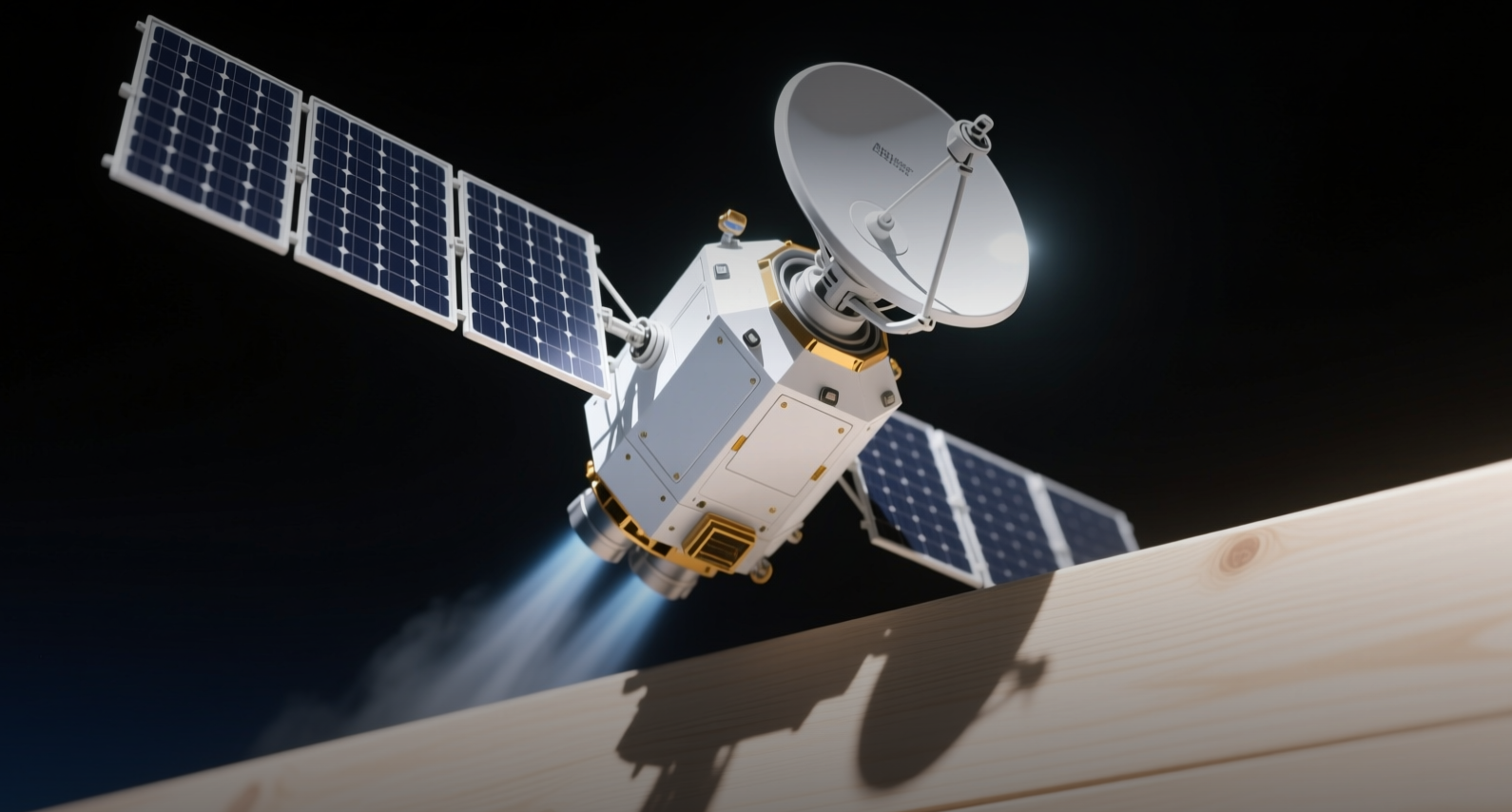
Amazon's plan to orbit 5,105 satellites for direct-to-smartphone service turns its satellite business from a broadband play into a mobile-network competitor.
Amazon's Leo unit filed for U.S. approval to deploy 5,105 low-Earth orbit satellites starting in 2028, aiming to deliver voice and data services directly to unmodified smartphones — bypassing terrestrial cell towers entirely.
"This network will extend mobile connectivity to areas where terrestrial infrastructure doesn't reach," an Amazon Leo spokesperson said in the FCC application submitted Saturday.
The constellation would operate across five orbital shells at altitudes between 510 and 580 kilometers, using L-band and S-band spectrum for mobile device links and Ka-band and V-band frequencies for ground station connections. Each satellite will process communications onboard and route traffic across the network using optical laser inter-satellite links, the company said. The system also incorporates digital beamforming, beam hopping and adaptive modulation technologies to improve spectrum efficiency.
The move positions Amazon against SpaceX's Starlink, AST SpaceMobile and Lynk Global in the race to beam cellular service from space. Amazon's $11.6 billion acquisition of Globalstar, announced in April, provides the licensed mobile satellite spectrum and ground infrastructure needed to make the service operational. Globalstar's network currently powers Apple's Emergency SOS and satellite messaging features on compatible iPhones and Apple Watches.
The Competitive Landscape
SpaceX's Starlink has already launched thousands of satellites and begun testing direct-to-cell service with T-Mobile, while AST SpaceMobile deployed its first five commercial satellites in 2025 and expects to expand coverage this year. Amazon Leo, which currently operates more than 390 first-generation broadband satellites in orbit, is entering the market later but with a spectrum advantage secured through the Globalstar deal.
Amazon Leo has established partnerships with Vodafone, DirecTV, Herotel and Australia's National Broadband Network, and previously announced an agreement with Apple to support satellite-based services on iPhone and Apple Watch devices. The company said commercial fixed broadband services from its existing constellation are expected to begin rolling out across initial coverage areas later this year.
A growing shortage of rocket launch capacity has become one of the biggest constraints to deploying next-generation satellite constellations, according to industry analysts. Amazon has secured launch contracts with Blue Origin, United Launch Alliance and Arianespace to support the deployment.
What's at Stake for Investors
Amazon shares trade at roughly 22 times forward earnings, and the satellite business represents a long-term investment rather than a near-term profit center. The direct-to-device market could unlock hundreds of millions of potential subscribers in areas without reliable cellular coverage, creating a new revenue stream that complements Amazon's AWS cloud and logistics businesses. SpaceX's Starlink has already surpassed 4 million subscribers globally, demonstrating consumer demand for satellite-based connectivity.
If Amazon can deploy its 5,105-satellite constellation on schedule, the combination of Globalstar's licensed spectrum, Amazon's logistics infrastructure and AWS's cloud backbone could give it a structural cost advantage over pure-play satellite competitors. The FCC approval process and launch capacity constraints remain the primary risks to the 2028 timeline.
This article is for informational purposes only and does not constitute investment advice.