
Major U.S. automakers are pressing Congress to pass a permanent statutory ban on Chinese connected vehicles and components before the current session ends Jan. 3, citing national security and market-dumping concerns.
Major U.S. automakers are pressing Congress to pass a permanent statutory ban on Chinese connected vehicles and components before the current session ends Jan. 3, citing national security and market-dumping concerns.
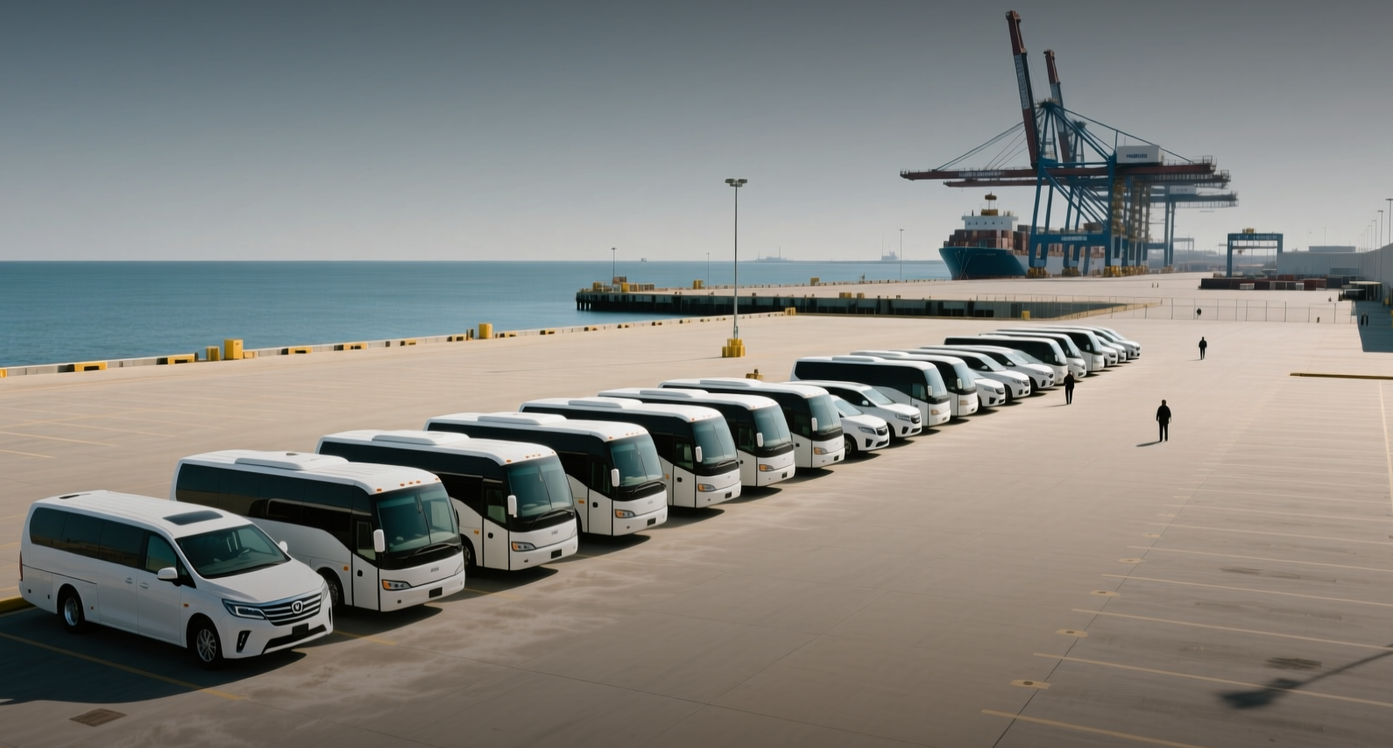
The Alliance for Automotive Innovation, which represents most automakers selling vehicles in the U.S., formally urged congressional leaders Thursday to enact a permanent ban on Chinese connected vehicles, hardware and software before the session adjourns Jan. 3.
"Right now, Chinese automakers are dumping subsidized vehicles with connected software and hardware around the world," John Bozzella, CEO of the Alliance for Automotive Innovation, said in a letter to congressional leaders. "This hasn't happened inside the U.S. yet, but given the scale and urgency of this threat, we urge you to enact a Chinese vehicle, software and hardware ban before adjourning this year and make this policy the law of the land."
The alliance counts General Motors, Ford, Toyota, Volkswagen, Hyundai, Honda and Stellantis among its members. The push arrives as bipartisan legislation targeting Chinese automotive technology advances in both chambers. The Senate Commerce Committee has already advanced a bill that could restrict Mercedes-Benz because Chinese investors hold nearly 20 percent of the German automaker. A House companion measure, the Connected Vehicle Security Act introduced in May by Republican Rep. John Moolenaar and Democratic Rep. Debbie Dingell of Michigan, would ban the import, manufacture and sale of internet-connected vehicles, software and hardware linked to China or other adversaries. A Senate version followed in April from Democratic Sen. Elissa Slotkin of Michigan and Republican Sen. Bernie Moreno of Ohio. In late April, Dingell also led a letter signed by 73 House Democrats urging President Donald Trump to bar Chinese automakers from the U.S. market.
Chinese automakers BYD and Geely have been expanding exports across Europe and Central and South America, undercutting domestic production costs and vehicle prices. Bozzella framed the legislative push as a direct response to what he called China's "strategy to dominate global automotive manufacturing," arguing that a permanent statutory ban would send a bipartisan message that such ambitions will meet a national security policy response.
The political calendar complicates the timeline. Midterm elections in November could shift congressional priorities and membership, narrowing the window for legislative action between the election and the Jan. 3 adjournment. The alliance said it wants to work with lawmakers to "achieve a balanced policy so all our member companies continue to succeed and thrive inside the U.S." — a position that reflects the group's membership, which includes Mercedes-Benz, a company that could face restrictions under the advancing Senate bill because of its Chinese investor base.
A permanent ban would reshape automotive supply chains that currently rely on Chinese components and software for connected vehicle features. Automakers would face the cost of sourcing alternative hardware and software providers, potentially raising vehicle prices at a time when affordability is already a concern for U.S. consumers. For Chinese automakers, the U.S. market remains largely untapped — BYD and Geely have focused their export push on Europe and emerging markets. A permanent ban would formalize what has been an implicit exclusion, cementing the U.S. as the most restrictive major market for Chinese automotive technology.
The legislative path forward is uncertain. Roughly four months remain before adjournment, and the alliance's push for a "balanced policy" will need to reconcile national security imperatives with the commercial interests of its member companies, several of which maintain deep supply chain ties to China. The outcome will also signal how far the broader U.S.-China technology decoupling extends into the automotive sector, where connected vehicle software and data flows have become a central point of contention between Washington and Beijing.
This article is for informational purposes only and does not constitute investment advice.
