
Baidu's conversion to dual-primary status on the Hong Kong Stock Exchange took effect Aug. 31, making the $33 billion AI company eligible for Stock Connect and mainland investor flows.
Baidu's conversion to dual-primary status on the Hong Kong Stock Exchange took effect Aug. 31, making the $33 billion AI company eligible for Stock Connect and mainland investor flows.
Baidu's conversion to dual-primary listing on the Hong Kong Stock Exchange took effect Aug. 31, placing HKEX shares and Nasdaq ADSs on equal regulatory footing and opening Stock Connect eligibility for mainland investors.
"The dual-primary listing will broaden the company's investor base and improve its share liquidity, while marking an important milestone as Baidu's AI strategy enters a period of returns," He Haijian, chief financial officer at Baidu, said, according to Xinhua News Agency.
The conversion makes Baidu the second major US-listed Chinese firm to upgrade its Hong Kong listing this year, following NetEase's dual-primary conversion on June 30. Baidu, which listed on Nasdaq in 2005 and returned to Hong Kong via secondary listing in March 2021, now trades under tickers 9888 (HKD) and 89888 (RMB) on HKEX. The company is preparing to seek Stock Connect inclusion as soon as possible after the conversion, He said.
Stock Connect eligibility would allow mainland investors to trade Baidu's Hong Kong shares in yuan, potentially bringing fresh southbound capital to a stock that has fallen 26.3 percent in 2026 and sits 41.9 percent below its January peak of $165.30. Analysts see an average price target of $150.83, implying 57.1 percent upside from current levels.
Baidu's listing conversion comes at a turbulent moment for the company's stock. The shares have gained just 5.9 percent over the past year but plunged 26.3 percent in 2026, trailing the S&P 500's 18 percent gain over the same period. The stock tumbled 12.73 percent on Aug. 18 after second-quarter results missed Wall Street expectations.
Baidu's total revenue declined 4 percent year-over-year to RMB 31.3 billion ($4.62 billion), falling short of the RMB 31.96 billion consensus. Advertising revenue — historically the company's largest cash generator — plunged 19 percent to RMB 13.1 billion as China's property downturn and soft consumer spending pressured marketing budgets.
Yet beneath the weak headline numbers, Baidu's AI transformation is accelerating. Core AI-powered business generated RMB 12.5 billion, roughly 50 percent of total General Business revenue. AI Cloud Infrastructure revenue jumped 50 percent year-over-year to RMB 7.3 billion, with GPU Cloud rentals surging 283 percent. Net income attributable to Baidu came in at RMB 2.3 billion ($342 million), a 7 percent net margin, while operating cash flow reached RMB 3.4 billion — the fourth consecutive quarter of positive cash flow.
Hong Kong is becoming an increasingly important platform for US-listed Chinese companies, with its transparent institutional framework, deep international investor base and access to mainland capital giving it a distinct advantage, said Liang Haiming, dean of the Hainan University Belt and Road Research Institute.
The HKEX recently implemented new listing rules that lower market-capitalization thresholds, broaden the use of accounting standards and streamline listing procedures, reducing the cost and time for high-quality overseas-listed companies to seek a Hong Kong listing. The lower thresholds extend a channel once geared toward large unicorns to mid-sized growth companies, potentially drawing more Chinese firms back to Hong Kong.
For Baidu, the dual-primary status also reduces delisting risk from the US market and provides a more stable dual-market presence. The company's Hong Kong ordinary shares and Nasdaq-listed ADSs remain fully fungible, with one ADS representing eight Class A ordinary shares. Baidu has continued returning capital to investors, repurchasing $259 million worth of shares since the beginning of Q1 2026.
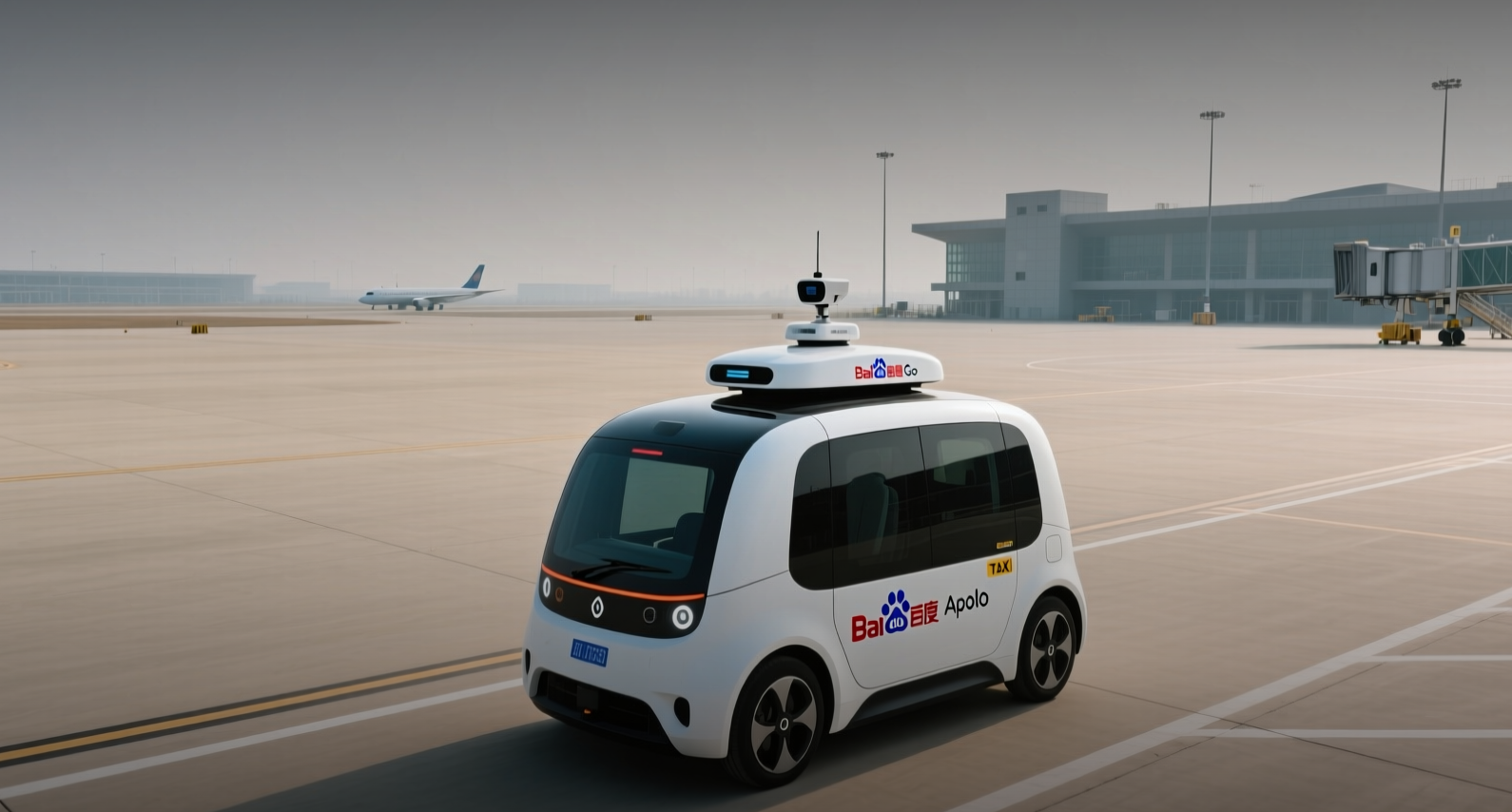
The company's autonomous-driving unit Apollo Go has expanded to 28 cities globally, accumulating more than 350 million autonomous kilometers, including over 240 million fully driverless kilometers. Apollo Go received Hong Kong's first permits for fully driverless testing and began testing on Airport Island, making it the first autonomous ride-hailing service globally to conduct fully driverless testing in a right-hand-drive, left-hand-traffic market.
This article is for informational purposes only and does not constitute investment advice.
