
Key Takeaways: G20 finance ministers opened in Asheville with Bessent pressing Iran sanctions as the FSB warned frontier AI could amplify cyber risk.
Key Takeaways: G20 finance ministers opened in Asheville with Bessent pressing Iran sanctions as the FSB warned frontier AI could amplify cyber risk.
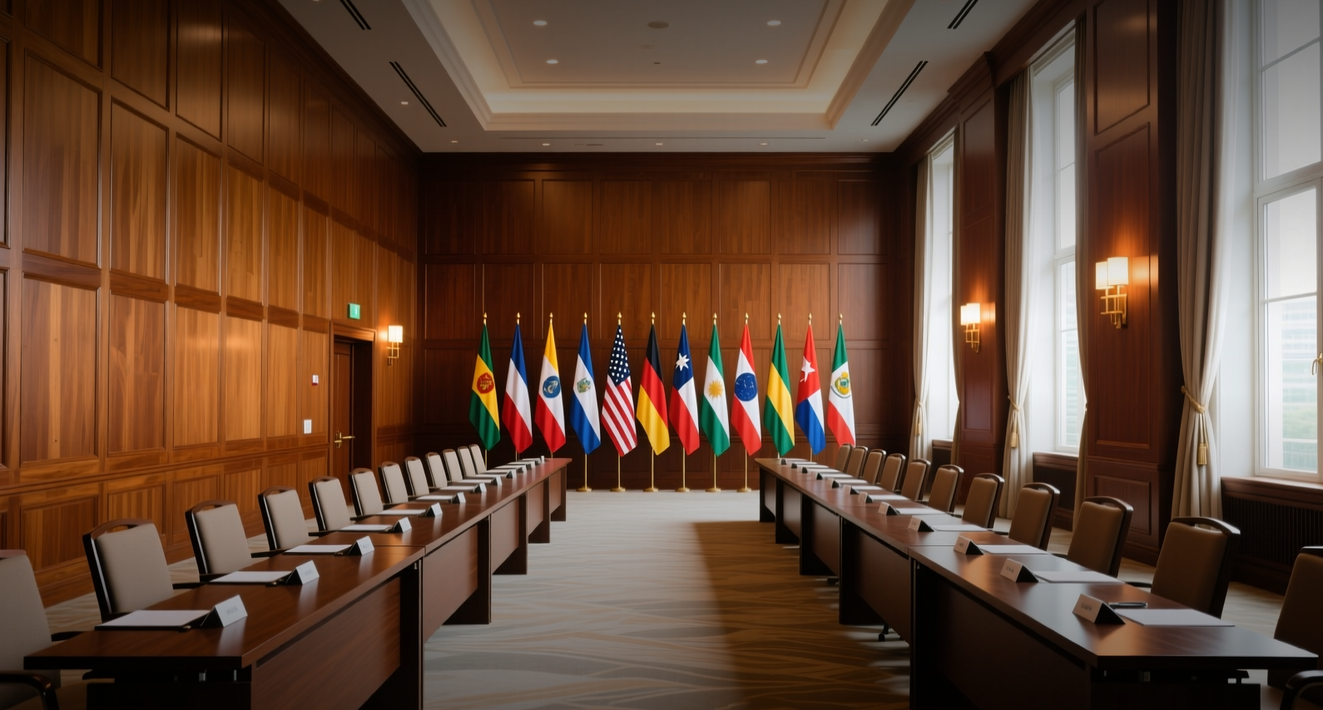
The G20 finance ministers meeting in Asheville opened Monday with Treasury Secretary Scott Bessent pressing allies to join sanctions against Iran, while the FSB warned that frontier AI could amplify cyber risk across the global financial system.
Bessent opened the G20 finance ministers meeting Monday in Asheville, North Carolina, pressing allies to join "Operation Economic Outcast" against Iran as U.S. debt passed $40 trillion and inflation pressures persist.
"We are launching an economic onslaught against Iran's financial connections around the globe," Bessent said at the Aug. 24 announcement. "Any entity that facilitates money laundering on behalf of Iran will be removed from the U.S. dollar system."
The Treasury has sanctioned more than 60 entities, individuals and vessels tied to Iranian nuclear procurement, cyber operations and oil revenue. On Aug. 28, Treasury proposed cutting off UAE operations of Banque Misr from correspondent access to U.S. financial institutions after the bank processed roughly $1.8 billion for companies linked to Iranian shadow-banking networks.
The stakes extend beyond Iran. Bank of England Governor Andrew Bailey, writing as FSB chair, warned G20 members that frontier AI models could amplify cyber risk across the interconnected financial system. The meeting comes as markets remain vulnerable to a disorderly correction given sovereign debt fragilities, private credit vulnerabilities and stretched AI-related valuations.
The G20 gathering, which runs through Tuesday at the Omni Grove Park Inn, brings together finance ministers and central bank governors representing about 85 percent of global GDP. Bessent said the location reflects the administration's commitment to western North Carolina's recovery after Hurricane Helene. India's Finance Minister Nirmala Sitharaman arrived Sunday, meeting with 3M CEO William Brown on the sidelines to discuss deepening the company's manufacturing footprint in India.
The Iran campaign is the centerpiece of Bessent's agenda. Treasury's Aug. 24 action targeted financial channels Iran uses to move money internationally, including digital assets, technology, gold, aviation and shipping. Bessent warned foreign financial institutions that continuing to facilitate Iranian transactions could jeopardize their access to the U.S. dollar system.
"Everyone knows who they are. They know who they are," Bessent said of countries still doing business with Tehran. "So when the hammer of U.S. Treasury actions falls upon them, they will have no one to blame but themselves."
China remains one of Iran's major economic partners, complicating efforts to build consensus among G20 members with significant commercial ties to Tehran. The last time Washington imposed comparable financial pressure on Iran was during the 2018-2020 "maximum pressure" campaign, which cut Iranian oil exports by roughly 80 percent before the pandemic-era easing.
Bessent has also connected economic growth with America's ability to manage its debt. The U.S. national debt recently passed $40 trillion, a milestone Bessent acknowledged in remarks outside the White House. "The 40 trillion is a big number," Bessent said. But he argued that the long-term answer is economic growth combined with efforts to reduce the federal deficit. "And what we're going to do, we have to grow our way out of this," he said.
FSB Warns of AI-Driven Cyber Risk
Bailey's letter, sent ahead of the Asheville meetings, said frontier AI models could "materially alter the speed, scale and economics of cyber risk" and destabilize the highly interconnected global financial system. He noted that cyber disruption can spread across jurisdictions through common technology providers and shared infrastructure, and that many jurisdictions lack protocols to manage the development and deployment of advanced frontier AI models.
The FSB chair also flagged broader market vulnerabilities: fragilities in sovereign debt markets, vulnerabilities in private credit, and stretched asset valuations, particularly AI-related investments. He pointed to the Middle East conflict as exacerbating energy-driven inflationary pressures, with market interest rates rising since the conflict began. Bailey also cited increased leverage in equity markets, including leveraged exchange-traded funds and correlated momentum-driven strategies, which could amplify a future market correction.
Press Access Controversy
The meeting has been shadowed by a dispute over media access. The Treasury denied credentials to individual reporters from The New York Times, The Wall Street Journal and Bloomberg News. Bessent told the Associated Press the decision "has nothing to do with point of view." The Times called the exclusion "an assault on press freedoms."
The G20 heads-of-state summit is scheduled for December at Trump's golf club in Doral, Florida.
This article is for informational purposes only and does not constitute investment advice.
