
Key Takeaways: Bitcoin's network hashrate is closing in on 1 ZH/s, a milestone that is compressing mining margins and pushing the sector's largest operators toward AI data center economics.
Key Takeaways: Bitcoin's network hashrate is closing in on 1 ZH/s, a milestone that is compressing mining margins and pushing the sector's largest operators toward AI data center economics.
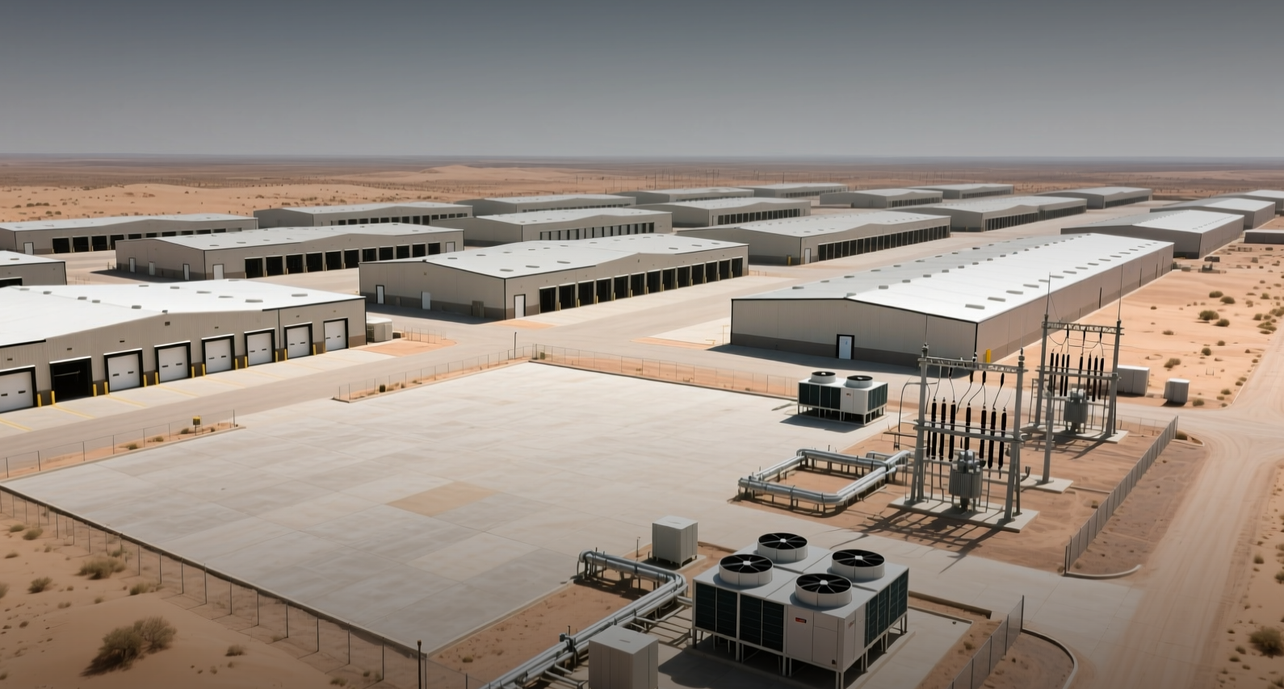
Bitcoin's network hashrate is approaching 1 ZH/s, pushing mining difficulty to record highs and squeezing per-coin profitability across the sector.
MARA Holdings, the largest publicly traded Bitcoin miner, holds more than 4 GW of energy capacity and plans to gradually convert that infrastructure to AI data centers while continuing mining operations during the transition, according to company disclosures. Riot Platforms has already signed a 20-year, $9.1 billion compute agreement with Anthropic, redirecting 191 MW of Bitcoin mining capacity in Texas toward AI workloads.
The economics are straightforward: AI data centers generate significantly more revenue per unit of electricity than Bitcoin mining. As network difficulty climbs with each hashrate record, the revenue per terahash — known as hashprice — continues to compress, making the AI pivot increasingly attractive for miners with large power portfolios.
IREN, formerly Iris Energy, has followed the same path, reallocating power capacity from Bitcoin mining to AI data centers. The shift is structural rather than cyclical: once power contracts are redirected to AI tenants, they are typically locked in for multi-year terms.
The 1 ZH/s threshold represents a doubling of network compute power in roughly two years. Each difficulty adjustment — occurring every 2,016 blocks, approximately every two weeks — ratchets up the computational requirement for the same block reward. For miners without access to cheap power or efficient ASICs, the math becomes increasingly unfavorable.
The sector's response has been to diversify revenue streams. MARA's 4 GW portfolio, if fully converted, would represent one of the largest AI data center pipelines in North America. Riot's Anthropic deal alone is worth more than the company's entire market capitalization at current levels, according to the terms disclosed.
The strategic shift carries implications beyond miner balance sheets. As major operators redirect power from Bitcoin mining to AI, the network's total hashrate growth could slow — or even decline — if the trend accelerates. A lower hashrate would reduce difficulty, potentially improving economics for remaining miners, but it also raises questions about the network's security budget.
For now, the hashrate continues to climb toward the 1 ZH/s milestone. But the composition of who mines Bitcoin — and why — is changing. The miners that survive the difficulty squeeze will increasingly be those that have built AI revenue streams to subsidize their Bitcoin operations.
This article is for informational purposes only and does not constitute investment advice.
