
Two professors spar in WSJ letters over whether campus amenities reflect socialism or free-market two-part pricing.
Two professors spar in WSJ letters over whether campus amenities reflect socialism or free-market two-part pricing.
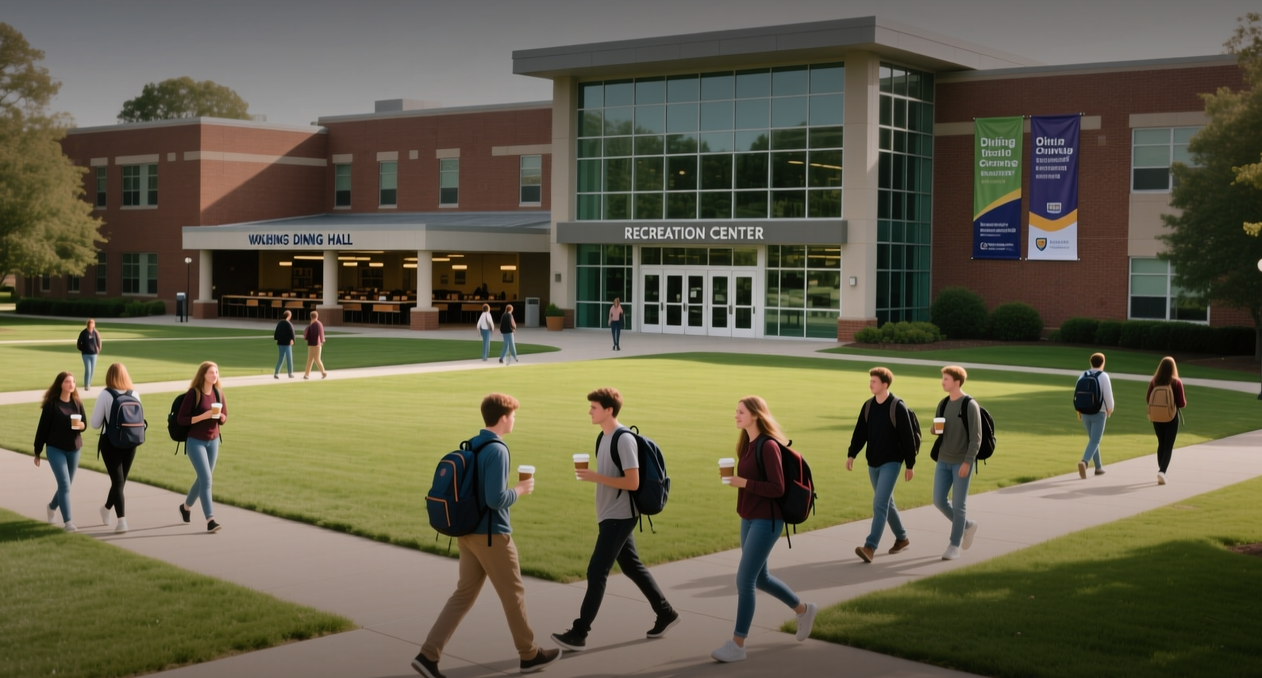
Two professors sparred in Wall Street Journal letters over whether campus pricing reflects socialism or free-market strategy, reviving economist Walter Oi's "Disneyland Dilemma" in higher education.
"Colleges' evolution into 'comprehensive residential and lifestyle providers' has inculcated students with mental models that every personal need should be satisfied by a 'free' program," Ronald P. Seyb, professor emeritus at Skidmore College, wrote in the Aug. 27 print edition.
Seyb cited Max Weber's observation that bureaucracies create a "reduction of friction and of material and personal costs" — costs that don't disappear but materialize in rising tuition and fees, and in the public sphere, rising taxes and debt. He warned that campaigns to make textbooks free or replace them with "digital resources" threaten academic freedom and further solidify graduates' expectations that costs should be borne by "others."
Michael Vaughan, professor at Weber State University, countered that what Josephson describes isn't socialism but two-part pricing — the same strategy Walter Oi called the "Disneyland Dilemma." Universities front-load costs into tuition and fees, then include amenities like dining, recreation facilities, and tutoring. "The choice is a free-market question: Which pricing strategy will allow the organization to maximize revenue?" Vaughan wrote.
The exchange highlights a broader question about how universities allocate costs and what students internalize about the price of services. As tuition continues to rise and campuses expand their amenity offerings, the debate over whether bundled pricing shapes political attitudes — or simply reflects revenue-maximizing strategy — carries implications for how institutions communicate costs to students and families.
The original op-ed by Kimberlee Josephson, published Aug. 15, argued that colleges' expansion into lifestyle services has produced graduates who expect government to satisfy personal needs and preferences through "free" programs. Seyb's letter extends that argument, warning that the trend is worsening as campuses push to make textbooks free or replace them with "digital resources."
Vaughan's rebuttal reframes the discussion entirely. Two-part pricing, he argues, is a standard business strategy. Walter Oi, the late economist, first articulated the "Disneyland Dilemma" by asking whether an amusement park should charge admission and include rides, or charge per ride with free entry. Disneyland chose the former; universities have followed the same model by bundling dining, recreation, tutoring, and other services into tuition.
The distinction matters for how students perceive the cost of their education. If amenities appear "free" at the point of use, students may not connect them to the tuition bill — a perception that Seyb argues carries over into adulthood, shaping views on government-provided services. Vaughan counters that this is simply how businesses maximize revenue, not evidence of ideological indoctrination.
The debate also touches on textbook pricing, where "free" digital resources are increasingly promoted as replacements for traditional course materials. Seyb warns these campaigns threaten academic freedom and course quality, while also reinforcing the expectation that costs should be borne by "some ill-defined group of 'others.'"
For universities, the pricing question is not merely academic. Institutions face pressure to control costs while competing for students with increasingly elaborate amenities. How they structure pricing — whether bundled into tuition or unbundled as separate fees — shapes both their revenue models and the expectations students carry into the workforce.
The exchange in the WSJ letters page reflects a broader tension in higher education economics: whether the campus experience is a public good, a private service, or some combination of both. The answer has implications for tuition policy, financial aid, and how institutions communicate the true cost of attendance.
This article is for informational purposes only and does not constitute investment advice.
