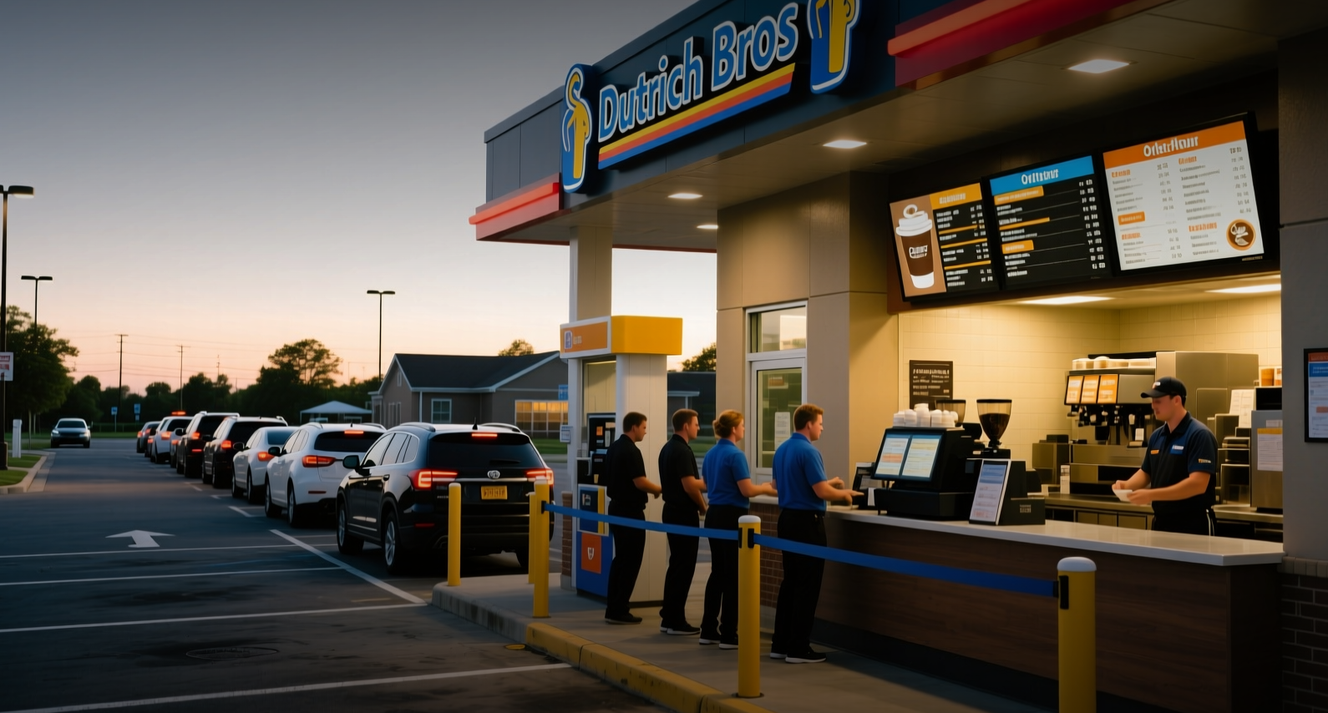
Dutch Bros shares fell 22% in a month to 46 times forward earnings as rising coffee and occupancy costs pressured margins.
The Oregon-based coffee chain posted 8.3% same-store sales growth for company-owned stores in Q2, its 13th consecutive quarter of positive comparable sales, and raised its full-year outlook. Traffic rose 3.4 percent, marking the eighth straight quarter of transaction growth, with the Dutch Rewards program now accounting for 74 percent of transactions. The company was lapping a 7.8 percent gain in the year-ago quarter, putting two-year stacked growth at roughly 16 percent.
Food costs rose to 26.1 percent of company-operated revenue, up 80 basis points year over year, driven by higher coffee costs and the rollout of new food offerings. Occupancy costs climbed 50 basis points as the company shifted toward build-to-suit leases. The stock traded at about 66 times forward earnings before the report, compressing to 46 times after the drop.
The pullback offers a lower entry point into a company with 1,225 shops and a stated path to 3,500 locations in current markets, with an aspirational goal of 7,000 domestic shops. Management guided third-quarter same-store sales of 4 percent to 5 percent, a step down from recent results, and expects earnings to grow 70 percent in fiscal 2026 to 92 cents per share.
The decline contrasts with rival Starbucks, whose shares are up 25 percent year to date on a turnaround under CEO Brian Niccol. Starbucks' global comparable-store sales climbed 7.9 percent in its fiscal third quarter, but Dutch Bros remains the faster grower, with trailing-12-month revenue up 29 percent and operating profit up 35 percent. The drive-thru specialist also faces fresh competition as Starbucks launched blended energy refreshers last month to court the same afternoon crowd.
Relative to growth, Dutch Bros trades at a price/earnings-to-growth ratio of 1.63, below Starbucks' 2.15, based on consensus long-term earnings growth of 32 percent annually versus 19 percent for Starbucks.
The selloff reflects investor skepticism about margin trajectory and the cost of rapid expansion, but transaction growth, digital engagement and new-market strength support the long-term story. Investors will watch the Q3 earnings report for updated margin guidance and same-store sales momentum.
This article is for informational purposes only and does not constitute investment advice.