
Energy Fuels completed its acquisition of Australian Strategic Materials, adding 1,300 tonnes of rare earth alloy capacity and closing a key gap in the Western supply chain.
Energy Fuels completed its acquisition of Australian Strategic Materials, adding 1,300 tonnes of rare earth alloy capacity and closing a key gap in the Western supply chain.
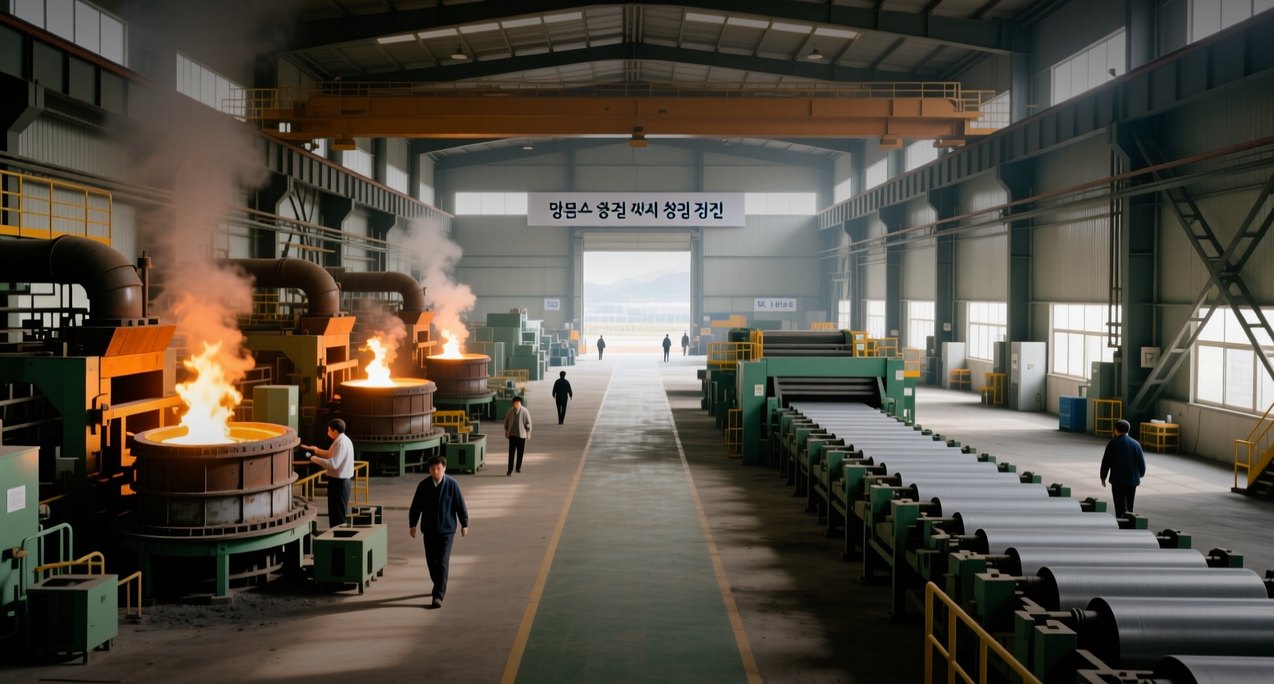
Energy Fuels completed its acquisition of Australian Strategic Materials, adding 1,300 tonnes of neodymium-iron-boron alloy capacity in South Korea and closing a critical midstream gap in a Western rare earth supply chain that China dominates.
"ASM brings exceptional technical expertise, commercial experience and proven capabilities in rare earth metals and alloys that significantly strengthen our organization and accelerate our strategy to build a fully integrated, Western mine-to-magnet supply chain," Ross Bhappu, president and chief executive officer of Energy Fuels, said.
The Korean Metals Plant in Ochang is being expanded to 3,600 tonnes per year of NdFeB alloy, expected to be commissioned as early as the end of 2026 — enough for more than 1 million EVs per year. ASM's Dubbo project in Australia adds a long-life rare earth and critical minerals resource.
The deal puts Energy Fuels across mining, processing, oxides, metals and alloys, with the final magnet stage to come through its planned $1.9 billion acquisition of Vacuumschmelze, the leading rare earth permanent magnet producer in North America and Europe.
Metallization fills the West's weakest link
Rare earth metallization — converting separated oxides into metals and alloys — is the most constrained step in the ex-China supply chain. Most Western developers sell raw concentrates or separated oxides to third-party processors, losing downstream margin. The Korean Metals Plant, with four operating furnaces and one alloy strip caster, gives Energy Fuels commercial-scale metallization for neodymium-praseodymium, with dysprosium and terbium capabilities in development.
The plant's output feeds directly into Energy Fuels' oxide production at the White Mesa Mill in Utah, the only fully licensed conventional uranium processing facility in the United States. The mill's Phase 1A circuit targets 10,000 tonnes of monazite per year, producing 1,000 tonnes of separated NdPr oxide, with a Phase 1B heavy-rare-earth separation expansion targeted for commissioning in the fourth quarter of 2027.
Dubbo and heavy mineral sands anchor the upstream
ASM's Dubbo project in New South Wales brings a construction-ready resource with a 42-year mine life, complementing Energy Fuels' heavy mineral sands portfolio: the wholly owned Vara Mada project in Madagascar, the Bahia project in Brazil, and the Donald project in Australia, where Energy Fuels can earn up to a 49 percent interest in a joint venture with Astron Limited.
Uranium cash engine funds the build-out
Uranium production remains the profit engine. Energy Fuels produced more than 1.5 million pounds of uranium concentrate in the first half of 2026, on track for full-year guidance of 1.5 million to 2.5 million pounds. Near-term growth capital of $400 million to $450 million is majority funded by roughly $300 million in government sources, including Export Finance Australia and a conditional loan from the US Office of Strategic Capital, limiting additional capital needs to $100 million to $150 million.
The company plans to pause milling in the third quarter of 2026 to rebuild ore stockpiles while conducting rare earth separation work. Terbium oxide, which improves heat resistance in magnets for automotive and defense applications, commands about $5.5 million per tonne, according to Benchmark Mineral Intelligence pricing.
VAC deal completes the chain
The final stage — permanent magnet production — depends on the planned acquisition of Vacuumschmelze, announced in June for a $1.9 billion equity value. VAC operates a plant in Sumter, South Carolina, with planned future capacity of 15,700 tonnes per year of finished magnet blocks. The acquisition remains subject to regulatory and shareholder approvals.
ASM's shares have been delisted from the Australian Securities Exchange following the deal's completion. Energy Fuels trades on the NYSE American under "UUUU," on the Toronto Stock Exchange under "EFR," and on the ASX under "EF2."
This article is for informational purposes only and does not constitute investment advice.
