

Key Takeaways:
- GE Vernova's backlog reached $176 billion, up 37% year over year.
- Gas turbine orders hit 20 GW in Q2, with slots sold out through 2030.
- Company targets $200 billion backlog by 2027 as AI power demand surges.
Key Takeaways:
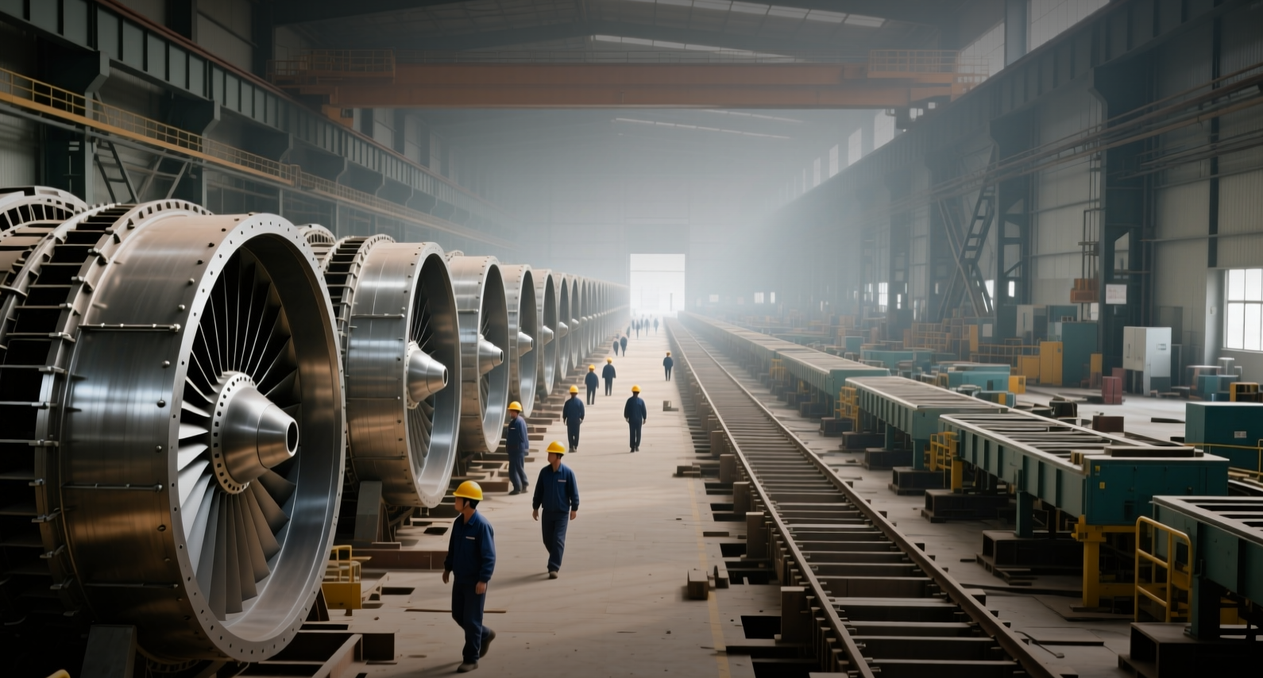
GE Vernova's order backlog reached $176 billion, up 37% year over year, as AI data center build-out drives historic demand for gas turbines.
The backlog, tracked as remaining performance obligation, grew $13 billion since the second quarter, GE Vernova said in its Q2 report. The figure exceeds the gross domestic product of Kuwait, Ecuador, and Slovakia, according to the company's disclosures.
The backlog is split nearly evenly between equipment sales of $87.8 billion and services of $88.4 billion. GE Vernova signed 20 gigawatts of new gas equipment orders in Q2, including 18 gigawatts of slot reservation agreements requiring upfront deposits and 2 gigawatts of firm orders. The company supplies roughly half of the world's gas turbine capacity, and its installed base generates about one-quarter of global electricity.
Demand is outstripping supply. GE Vernova is mostly sold out of gas turbine production slots through 2030, with more than half of its 2031 slots expected under contract by the end of 2026. The company's annualized production run rate is set to reach 20 gigawatts by the third quarter, scale to 24 gigawatts by 2028, and hit 30 gigawatts by 2030.
Equipment backlog recognition is near-term, with 36 percent expected within one year and 97 percent within five years. Services backlog stretches further, with 16 percent recognized within a year and 54 percent within five years, extending earnings visibility into the 2030s.
GE Vernova projects its backlog to reach $200 billion by 2027. The company generated $38 billion in revenue last year, meaning the backlog represents more than four years of current sales.
The gas turbine boom masks weakness elsewhere. GE Vernova's wind business fell 40 percent, a decline overshadowed by the power segment's surge. The company has reallocated capital away from wind toward power and electrification, according to its Q2 report.
The company is also expanding into next-generation nuclear fuel management. GE Vernova's Advanced Research Center is collaborating with fusion firm SHINE on an AI-powered system to track and recycle spent nuclear fuel under a US Department of Energy ARPA-E program.
The backlog gives investors multi-year revenue visibility, with equipment orders converting over the next five years and services contracts extending into the 2030s. The company's next catalyst is its upcoming earnings report, where investors will watch updated segment margins and progress toward the $200 billion backlog target.
This article is for informational purposes only and does not constitute investment advice.
