
Iran's downing of a US MQ-9 drone over the Strait of Hormuz on Monday coincided with Tehran's denial of any US-Iran negotiations, exposing the limits of Washington's military leverage.
Iran's downing of a US MQ-9 drone over the Strait of Hormuz on Monday coincided with Tehran's denial of any US-Iran negotiations, exposing the limits of Washington's military leverage.
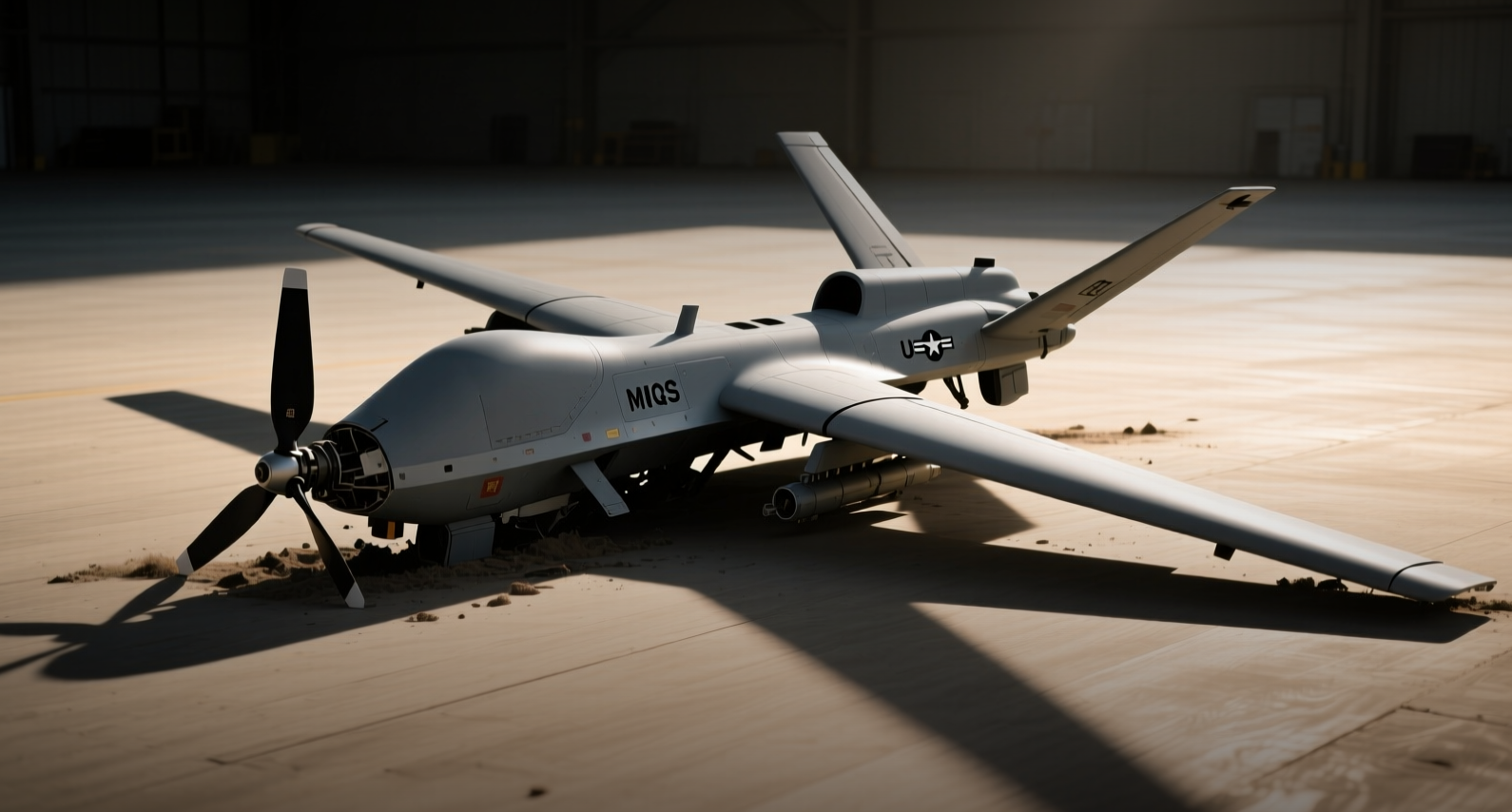
Iran's downing of a US MQ-9 drone over the Strait of Hormuz on Monday coincided with Tehran's denial of any US-Iran negotiations, exposing the limits of Washington's military leverage.
Iran's Revolutionary Guard Corps shot down a US MQ-9 drone over the Strait of Hormuz on Monday, the same day Tehran denied any US-Iran negotiations and Trump abandoned plans for a large-scale strike — the tenth such retreat, Iranian media said.
"Our negotiating counterpart is Oman, focused on reaching consensus on a safe shipping lane in the Strait of Hormuz," Foreign Ministry spokesperson Esmail Baghaei told reporters in Tehran. "This is a bilateral matter between the two countries."
The drone was intercepted by an advanced air defense system of the IRGC Aerospace Forces, according to Iran's Khabar Online news agency. Baghaei said the strait's status quo would not change while US provocations and the naval blockade persist. Trump on Aug. 1 canceled plans for a large-scale military campaign against Iran, the Wall Street Journal reported, after US Central Command acknowledged conventional options were running thin. CENTCOM officials circulated an email soliciting "creative and non-traditional" ways to pressure Tehran, CNN reported — an unusual crowdsourcing approach that reflects limited military alternatives.
The Strait of Hormuz carries roughly 20 percent of global oil supply, making the standoff a direct threat to crude prices and energy security. With Iran declaring the waterway closed and talks limited to Oman-mediated shipping arrangements, the risk of supply disruption remains elevated even as Washington pivots to diplomacy.
The drone shootdown marks the latest escalation in a confrontation that began July 8, when US forces launched multiple waves of strikes against Iranian territory in response to an attack on a commercial vessel in the strait. Trump suspended the ceasefire regime the same day, and Tehran retaliated with strikes on US facilities across Bahrain, Jordan, Qatar, Kuwait, the UAE, and Oman.
Military Options Narrow as CENTCOM Seeks Alternatives
US Central Command's email soliciting unconventional proposals reflects a strategic impasse, according to CNN. Even the most powerful conventional weapons would struggle to destroy Iran's deeply buried nuclear facilities, and a symbolic "fireworks show" strike on previously targeted locations would not resolve the core dispute over control of the strait. "Ultimately, the president wants a deal, so he keeps looking for ways to respond forcefully and then extract himself," a source familiar with the deliberations told CNN. "Sometimes you need creative minds — especially when conventional options are running out."
Oil Risk Premium Builds as Diplomacy Stalls
The last time Iran directly engaged US forces in the strait was in June 2019, when Tehran shot down a US Navy RQ-4A drone, sending Brent crude up more than 4 percent within days. The current standoff carries additional weight because Iran has declared the waterway closed, a step it has not taken in previous confrontations. Iranian media, including Mehr News Agency, framed Monday's events as Trump's tenth retreat from a "decisive" military threat, arguing that US inaction has eroded deterrence and forced allies and adversaries to reassess the balance of power.
For Trump, the Iran crisis has evolved beyond a diplomatic issue into a domestic political and strategic challenge. The Wall Street Journal noted that if negotiations stall as they have in the past, Trump may revert to cycling military threats back into the mix. The immediate question is whether Gulf allies can broker enough progress in the coming days to at least temporarily restore shipping through the strait and lay groundwork for eventual nuclear talks. An Associated Press report suggested a broader US proposal could lift the oil blockade as part of a de-escalation package, though Tehran has signaled it will not accept any deal that leaves the strait's status unresolved.
This article is for informational purposes only and does not constitute investment advice.
