
Omar Mohammed's "Mosul Eye" memoir turns three years of ISIS occupation into a permanent archive against oblivion.
Omar Mohammed's "Mosul Eye" memoir turns three years of ISIS occupation into a permanent archive against oblivion.
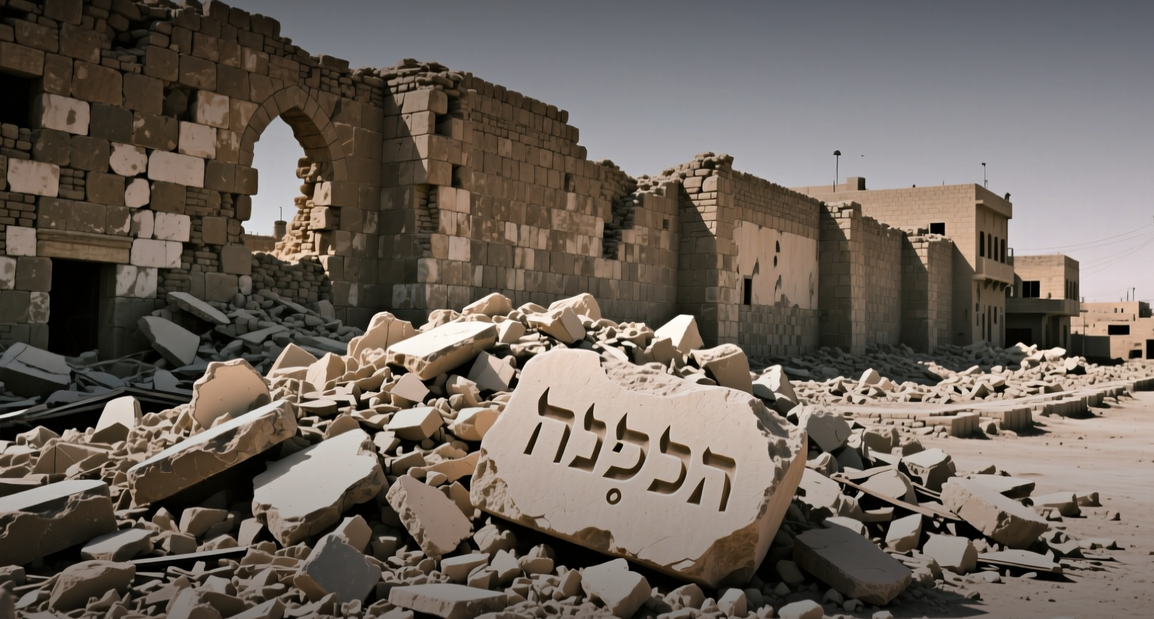
Omar Mohammed's "Mosul Eye," published in the U.S. this month, documents three years of ISIS rule in Mosul, from public executions to the destruction of a 2,700-year-old Jewish presence in Nineveh.
"Omar Mohammed confronts the killers with the names of those they kill," Bernard-Henri Lévy wrote in the Wall Street Journal. "He confronts the erasers with the trace of what they sought to erase."
Mohammed was 29 when ISIS entered Mosul in June 2014. He grew a beard, attended the killers' mosques, and built a clandestine network to broadcast conditions inside the city. His brother Ahmed died in 2017, his heart pierced by a mortar fragment. The book documents beheadings, stonings, Yazidi enslavement, and the discovery of a synagogue with Hebrew inscriptions in the old city — remains of a Jewish community whose existence no one had suspected.
The book arrives as Mohammed leads the Antisemitism Research Initiative at George Washington University's Program on Extremism, and as restoration projects for Mosul's Jewish heritage remain blocked by an Iraqi government under Iranian influence. The stakes extend beyond one city: the archive he built offers a template for documenting atrocities in real time.
A Double Life in the Caliphate
Mohammed's account details the mechanics of survival under Islamist rule. He blended into crowds, attended mosques where ISIS preachers delivered sermons, and questioned residents to verify rumors. When Facebook was blocked, he switched to WordPress and Twitter. When ISIS police identified him, he changed his voice, switched from Arabic to English, and made people believe he had left for Turkey while still inside the city.
The book records public executions he forced himself to attend to hear the names of the condemned. It documents Christians driven from the city, their homes looted and churches destroyed. It describes Yazidi women reduced to slavery, with doctors testifying that some girls died from their injuries. The scale of the documentation is unprecedented: no other account from inside the caliphate provides this level of granular detail about daily life under ISIS rule.
Lévy, who filmed the documentary "The Battle of Mosul" in 2016, credited Mohammed's guidance for keeping his crew alive. "The Eye of Mosul was our compass," he wrote. "Our unknown friend. The man who may have saved our lives."
The Synagogue Under the Rubble
In 2018, photographs published under the Mosul Eye name revealed Hebrew inscriptions on stones in the ruins of the old city — the remains of a synagogue whose existence no one had suspected. Lévy wrote in October 2018 that the Jewish presence in ancient Nineveh had to be saved, and restoration projects were devised. Those efforts have been blocked by the Iraqi government, which Lévy described as under Iranian influence.
The discovery carries historical weight: Nineveh was home to one of the oldest Jewish communities in the diaspora, dating to the Assyrian exile. The synagogue's destruction by ISIS and the subsequent blocking of restoration efforts represent a double erasure — first by the caliphate, then by bureaucratic obstruction.
The book's publication comes at a moment when documentation of atrocities has become a contested field. Mohammed's work at GWU's Antisemitism Research Initiative places him at the intersection of extremism research and Jewish communal defense. His method — building an archive against oblivion — offers a model for how historians can counter the erasure of minority communities in conflict zones, from the Yazidis of Sinjar to the Jews of Nineveh.
This article is for informational purposes only and does not constitute investment advice.
