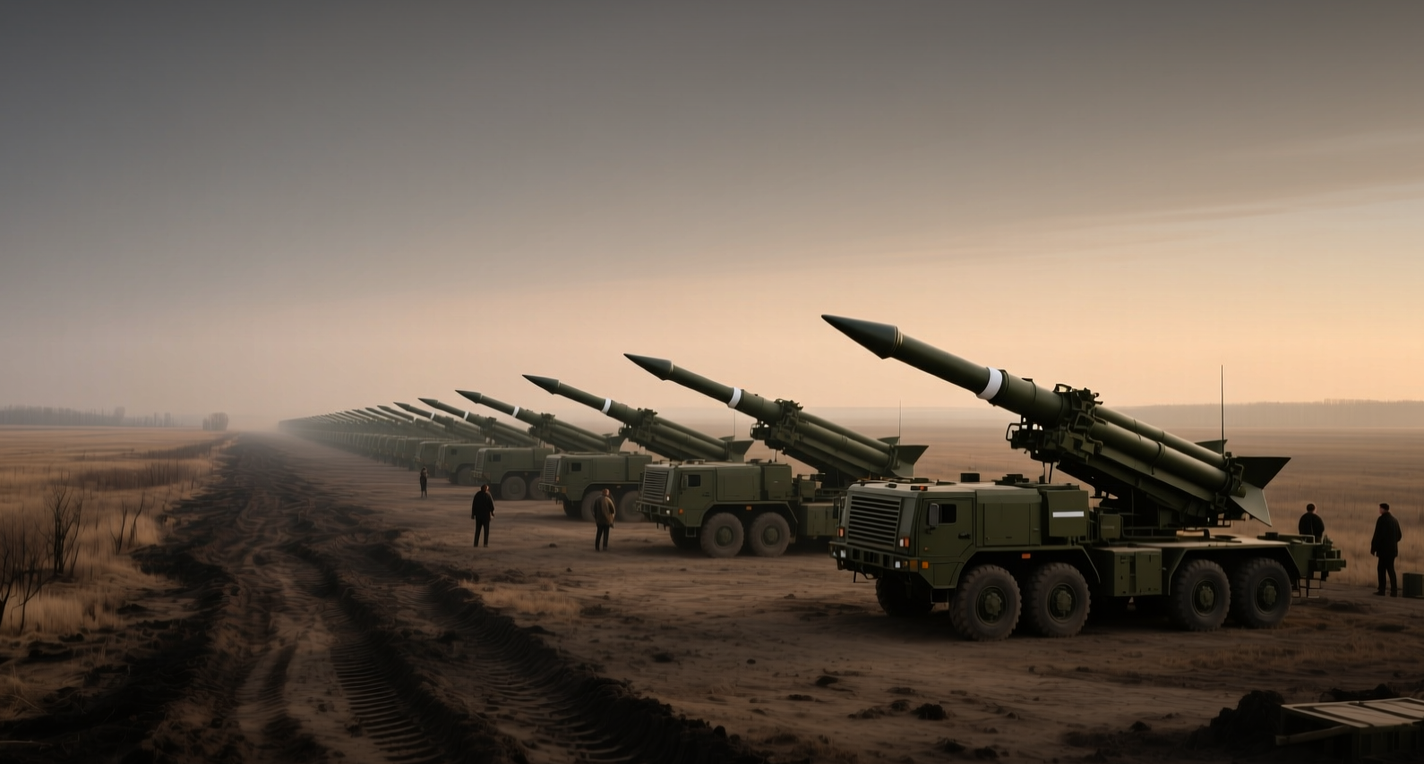
Ukraine's bid to use Starlink-guided drones for strikes up to 200 kilometers inside Russia has been rejected by President Donald Trump, leaving Kyiv to defend against a missile barrage it intercepted only 59 of 280 times this summer.
Trump rejected Ukraine's request to use Starlink for drone strikes up to 200 kilometers inside Russia, a plan Kyiv said could offset a Patriot shortage that left just 59 of 280 ballistic missiles intercepted.
"How can Ukraine engage in a more proactive, shooting-the-archer strategy?" asked Franz-Stefan Gady, a Vienna-based military analyst, referring to efforts to destroy Russian missile launchers before they fire.
The rejection, reported by the Financial Times on Aug. 21, follows a late-July White House meeting where President Volodymyr Zelenskyy asked Trump to intervene with SpaceX CEO Elon Musk. The Institute for the Study of War estimates Russia fired at least 280 ballistic missiles at Ukraine between June 1 and Aug. 14, with only about 59 intercepted. Russia's monthly ballistic missile production now matches or exceeds US Patriot output, according to the WSJ Editorial Board.
Without Starlink access over Russian border regions such as Kursk and Bryansk, Ukraine must rely on alternative navigation systems for long-range drones, including AI-based technology. The decision carries direct implications for civilian safety as Moscow is expected to intensify attacks on Ukraine's energy infrastructure before winter, and for defense contractors as Patriot interceptor demand continues to outpace global supply.
The 221-Missile Gap
Ukraine's proposal would have allowed Starlink-equipped drones to target mobile ballistic missile launchers, command posts, and logistics hubs within 200 kilometers of the border. Kyiv believed limiting strike depth could persuade Musk to approve the request, but Trump was non-committal at the July meeting and did not back the plan, according to people familiar with the Oval Office discussion.
The global interceptor shortage has been compounded by Patriot deployments in the Middle East during the US war with Iran. Even if Washington granted Kyiv a license to manufacture Patriots domestically, as Trump has floated, production would take time to come online. Iryna Terekh, CEO of Fire Point, a Ukrainian defense company that makes long-range drones and missiles, said granting Starlink access over Russian border regions would let Ukraine expand its defensive bubble by taking out Russian missile launchers before they fire, potentially halting ballistic missile strikes on Kyiv.
Musk's Escalation Calculus
Musk has previously restricted Starlink's use for attacks deep inside Russia over concerns about nuclear escalation. In 2022, he cut off Starlink access to Ukrainian forces during an operation near occupied Crimea, saying he feared the operation could trigger a nuclear response. The Atlantic reported on Aug. 8 that Musk had declined to grant Ukraine access to Starlink for targeting Russian missile launchers inside Russia.
The dismissal of former Ukrainian Defense Minister Mykhailo Fedorov last month removed a key intermediary who had maintained a direct channel to Musk. Fedorov told CBS News that Musk's February decision to block Russia's unauthorized Starlink use had "protected our air defence, saved our air force and spared thousands of civilian lives." Musk responded to Fedorov's recent praise on X: "Trying to do the right thing. I hope there is peace soon."
SpaceX currently allows Ukraine to use Starlink on Ukrainian-controlled territory, including Russian-occupied areas such as Crimea, where Kyiv has used the network to target Russian missile launchers. But the network remains blocked inside Russia proper, forcing Ukrainian long-range drones to rely on AI-based navigation when operating across the border.
The WSJ Editorial Board argued that Trump should grant the request, noting that if Putin attempted to shoot down Starlink satellites, he would risk indiscriminate damage to his own orbital systems and those of China and other countries from debris. The board called the Biden administration's limits on Ukrainian strikes inside Russia "one of its biggest mistakes."
This article is for informational purposes only and does not constitute investment advice.