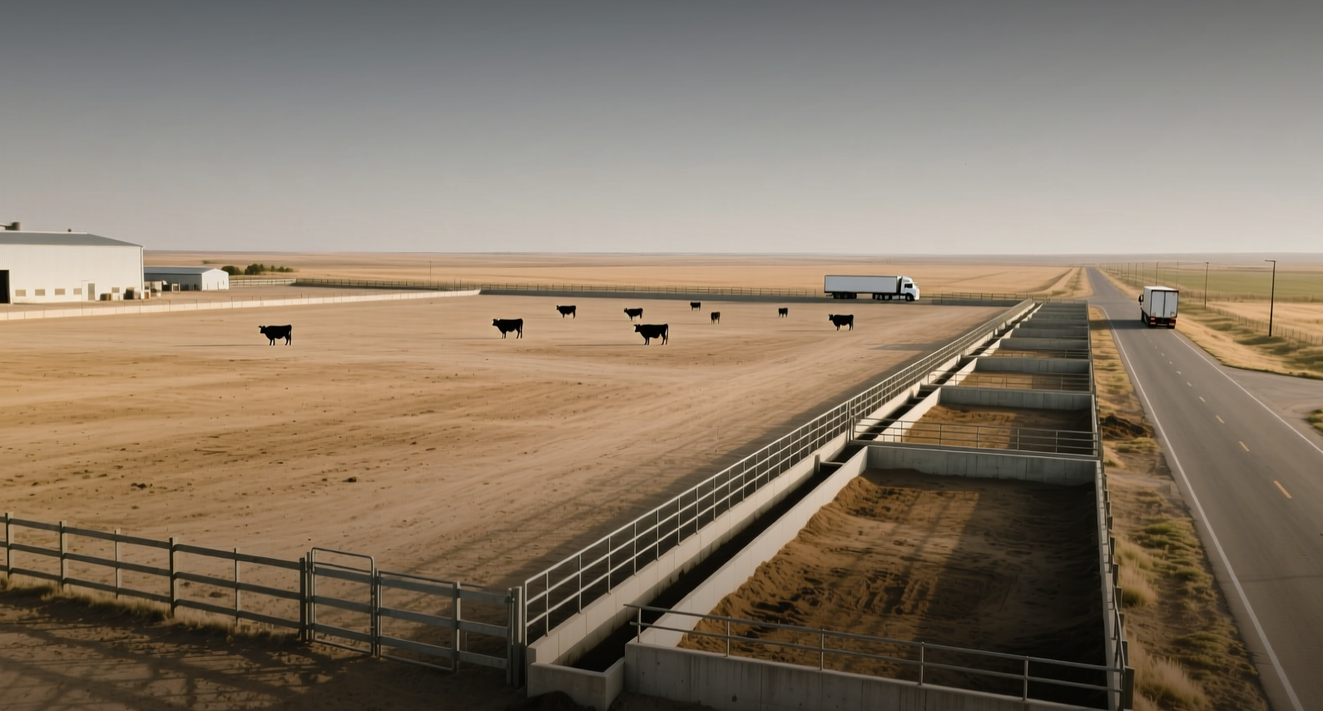
A widening loss in Tyson Foods' beef segment pushed the meat processor to cut its fiscal 2026 revenue-growth forecast to 1.5%-2.0% from 2.5%-3.5%.
"As announced in August, we are restructuring our Beef network around three strategically located facilities in the central United States to create a more efficient and competitive footprint for the long term," Donnie King, outgoing president and chief executive officer, said in a statement. "We expect these actions to begin reducing operating cost pressures as we enter fiscal 2027."
The Springdale, Arkansas-based company now expects its beef segment to post an operating loss of $625 million to $775 million in fiscal 2026, wider than the $500 million to $650 million range it set Aug. 3. Companywide adjusted operating income was trimmed to $1.85 billion-$2.05 billion from $2.1 billion-$2.4 billion, with chicken guidance cut to $1.85 billion-$1.95 billion from $1.90 billion-$2.05 billion and pork to $200 million-$250 million from $250 million-$300 million. Prepared foods guidance was held at $1.30 billion-$1.35 billion.
Shares fell 7.3% to close at $51.76 on Sept. 3, the day of the revision, after touching a 12-month low of $50.56. The beef unit lost $1.13 billion in fiscal 2025 and $701 million across the first three quarters of fiscal 2026, as one of the most severe cattle shortages in U.S. history pushed farm-level cattle prices up an expected 9.9% this year, according to the USDA.
Tyson cited volatile cattle prices, lower values on live cattle inventories and a softer food-service environment as the drivers, weeks after it announced the closure of beef plants in Joslin, Illinois, and Eagle Mountain, Utah, and the planned sale of a Pasco, Washington, facility. Analysts at Little Rock-based Stephens Inc. estimate the closures cut Tyson's slaughter capacity by 50%.
The downgrade drew scrutiny from investors who bought into the company's $1 billion senior-note offering in the months before the cut. Levi & Korsinsky said it is investigating potential securities law violations on behalf of Tyson shareholders who suffered losses, following a similar probe announced by Bronstein, Gewirtz & Grossman.
BMO Capital Markets' Andrew Strelzik kept an "outperform" rating while cutting his price target to $65 from $75, arguing the beef guidance was "backward looking" and included about $100 million in mark-to-market losses on cattle asset values. Goldman Sachs reaffirmed a "buy" rating, and Barclays trimmed its target to $75 from $78 with an "overweight" call.
The revision signals management expects beef losses to persist through fiscal 2026, with relief tied to the plant closures taking effect in fiscal 2027. Investors will watch Tyson's next earnings report for signs that chicken and prepared-foods margins can offset the drag from cattle.
This article is for informational purposes only and does not constitute investment advice.