
The U.S.-Venezuela deal covering 65 billion barrels of reserves is unlikely to ease record-high U.S. gas prices for years, analysts said.
The U.S.-Venezuela deal covering 65 billion barrels of reserves is unlikely to ease record-high U.S. gas prices for years, analysts said.
The agreement announced Friday hands Washington a 55 percent stake in a joint venture spanning 65 billion barrels of proved reserves, yet analysts say the pact faces years of operational and legal hurdles before it can meaningfully lift output or cut U.S. pump prices, which averaged $4.08 a gallon Monday.
"Nothing has been published, so we're really still operating on Tweets and rumors," said David Goldwyn, who served as State Department special envoy for international energy affairs under President Barack Obama.
Venezuela produces about 1.2 million barrels a day, down from a peak of 3.5 million in the late 1990s. Rystad Energy estimated in January that returning to peak output would require roughly $180 billion of investment through 2040, while Secretary of State Marco Rubio said the deal will draw nearly $100 billion of private capital.
U.S. drivers were paying $4.08 a gallon on average Monday, nearly 30 percent higher than a year earlier, according to AAA data, with GasBuddy's Patrick De Haan calling a record Labor Day average "next to impossible" to avoid. The agreement's largest fields sit in the Orinoco Belt with little or no infrastructure access, and "those fields will take five to seven years, at best, to deliver increased production for the market," Goldwyn said.
The deal requires a complicated three-layer structure to develop at least part of the 64 billion barrels of proved reserves across 17 oilfields, according to Reuters. The first layer is the government-to-government pact negotiated by Venezuela's acting President Delcy Rodríguez, Secretary of State Marco Rubio and Defense Secretary Pete Hegseth, with the Energy Department excluded from that phase.
The second layer involves North American Blue Energy Partners (NABEP), the U.S. company Washington chose as its partner, which must form a joint venture with Venezuela's state-run PDVSA. The third and most complex piece is an equity transaction: the Wall Street Journal reported the Pentagon plans to take a 35 percent passive stake in NABEP through "penny warrants," with the Defense Department's Office of Strategic Capital structuring the investment. The U.S. also negotiated rights to an additional 20 percent of the fields' output, which could help replenish the Strategic Petroleum Reserve.
The structure is unprecedented because the U.S. has no national oil company, unlike Saudi Arabia's Saudi Aramco or Mexico's Pemex. "We have no government-owned operational capability per se in the oil and gas sector," said Gerald Kepes, president of Competitive Energy Strategies. "The question is, who's going to operate on the ground?"
The deal's terms have not been released, and a recent reform of Venezuela's oil law removed the National Assembly's mandatory oversight over energy contracts marked as in the national interest. Lawyers and experts have warned the pact could end up in court, citing its long duration, lack of approval by other institutions in Venezuela and the U.S., and the absence of a competitive process to choose partners.
The agreement was made with the government of acting President Delcy Rodríguez, who came into office after the U.S. seized and arrested former President Nicolás Maduro in January. "At the end of the day, they're still signing a deal with the Delcy Rodríguez government," Kepes said. "How legitimate is that government, and what's that going to look like in three to five years?"
The pact also faces political risk in Washington. "A Democratic president in 2029 would likely reconsider or terminate the deal," said Bob McNally, president of Rapidan Energy. Even if a Republican wins the next election, a future Venezuelan government could tear up the agreement as Caracas has done before.
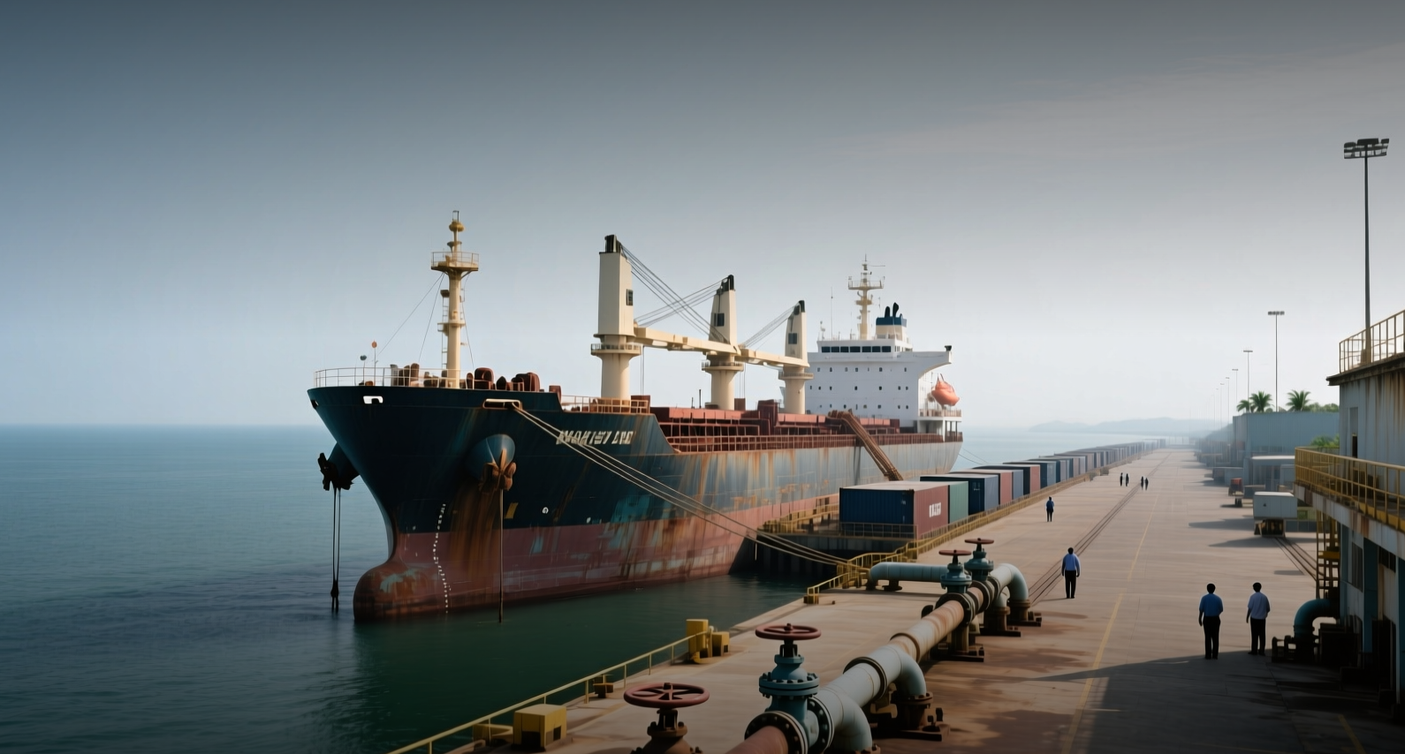
Chevron, the only major U.S. oil company active in Venezuela, has increased production 15 percent to 280,000 barrels a day this year and expects growth of up to 50 percent through 2028, chief financial officer Eimear Bonner said on the company's July 31 earnings call. But output growth will be constrained by limits at export terminals, where tankers are waiting up to 30 days to load cargoes because of aging infrastructure and power outages, said Andy Lipow, president of Lipow Oil Associates.
The terminals "would have to be expanded in order to handle more production," Goldwyn said. "It's unclear who's taking on that project."
The deal's near-term impact on global crude markets is minimal, analysts said. "A significant increase in production is highly unlikely," said Francisco Monaldi, director of the Latin America Energy Program at Rice University. "So this is not something that will have any relevant impact on the world oil market in the short term." If the pact survives its legal and political challenges, Venezuelan oil could add large and much-needed supplies in the coming decades, McNally said, but it is "not a major factor near term in terms of pump prices."
This article is for informational purposes only and does not constitute investment advice.
