
Volkswagen will transfer its Osnabrueck auto plant to Israeli investor Aurelius Capital and Lower Saxony by 2027, converting it into a defense production facility as European industrial capacity shifts toward security spending.
Volkswagen will transfer its Osnabrueck auto plant to Israeli investor Aurelius Capital and Lower Saxony by 2027, converting it into a defense production facility as European industrial capacity shifts toward security spending.
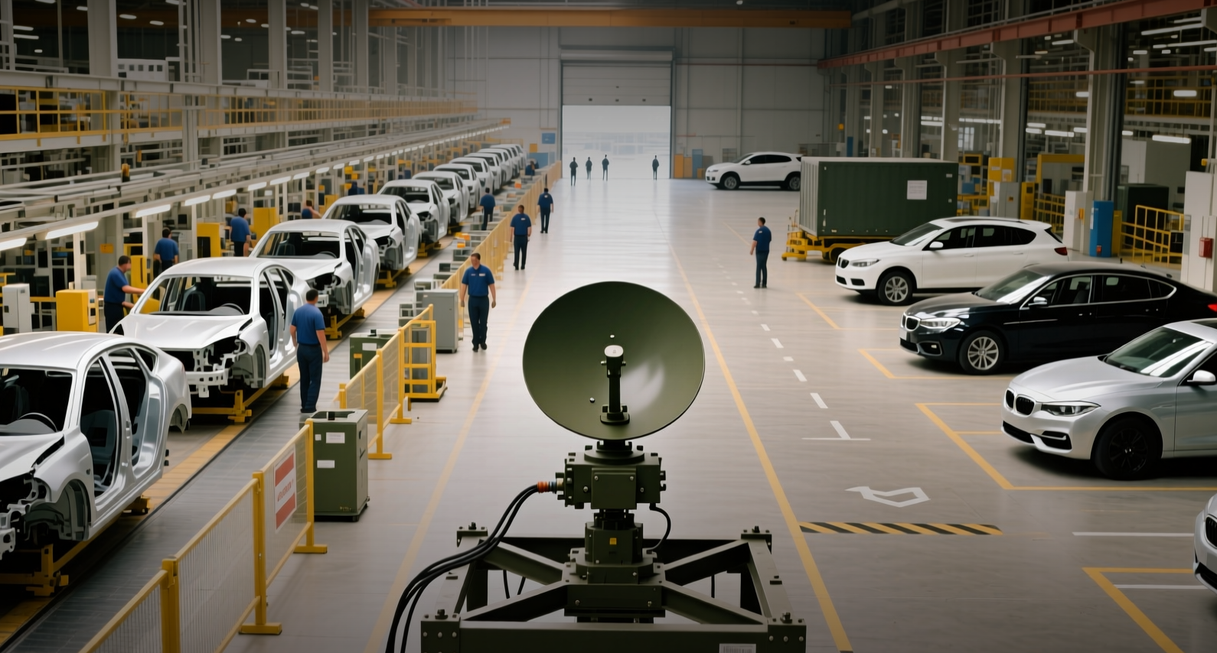
Volkswagen's Osnabrueck plant will shift from auto manufacturing to defense production by 2027 under Aurelius Capital and Lower Saxony, marking the clearest sign yet of European industrial capacity pivoting toward security.
"These plans involve the potential manufacture of systems and components for air defense systems for Germany and Europe," Volkswagen said in a joint statement with Aurelius and Lower Saxony on Monday, adding the cooperation would pave the way for further such deals.
The statement of intent, signed Sept. 7, would see Aurelius take over the factory as majority owner alongside Lower Saxony — Volkswagen's second-largest shareholder. Auto production at Osnabrueck will be phased out in 2027, with the initial anchor project being a cooperation with Israel's Rafael Advanced Defense Systems. No further details were disclosed, and the plans still need to be finalized.
The deal comes days after Volkswagen agreed on its biggest-ever turnaround, which could result in the closure or repurposing of other German sites. Plagued by overcapacity and high costs, Europe's largest carmaker faces a weakening European market, high labor costs and intensifying competition from Chinese manufacturers.
Defense Conversion as an Industrial Template
The Osnabrueck transaction is the most concrete example yet of European automotive capacity being redirected toward defense, a trend that Rheinmetall and Continental have both pursued as demand for military equipment rises across the continent. Rheinmetall, Germany's largest defense contractor, has been expanding its production footprint since Russia's 2022 invasion of Ukraine triggered a sustained increase in European defense budgets across NATO members.
For Volkswagen, the deal offers a path for an underutilized plant that would otherwise face closure. The automaker has been in discussions with stakeholders over Osnabrueck for months, with defense production emerging as a viable alternative to shutting the facility entirely. The company's broader restructuring reflects structural pressures that extend well beyond a single facility: European passenger car demand has weakened as consumers defer big-ticket purchases, while Chinese EV makers have intensified price competition in Volkswagen's home market.
The involvement of Lower Saxony — which holds a significant stake in Volkswagen's voting rights — reflects the regional government's interest in preserving jobs and strategic industrial assets. The state's participation as co-owner provides a measure of political cover for a transition that would otherwise eliminate hundreds of auto manufacturing positions. Lower Saxony's willingness to co-invest in a defense conversion signals that regional authorities see security production as a legitimate industrial policy tool, not merely a corporate exit strategy.
The broader implication extends beyond Volkswagen. As automakers across Europe grapple with overcapacity from the EV transition and Chinese competition, defense conversion offers a potential template for repurposing industrial assets. The last comparable shift in German industrial priorities occurred in the early Cold War era, when manufacturers balanced civilian and military production lines to rebuild national defense capacity. Today's dynamic is different in scale but similar in direction: European governments are pushing defense spending higher, and industrial capacity is following.
What remains unclear is how many additional plants could follow Osnabrueck's path. Volkswagen's turnaround plan could result in the closure or repurposing of other German sites, and the company has not ruled out further defense conversions. The final terms of the Osnabrueck deal — including the purchase price, employment guarantees and the timeline for Rafael's air defense systems production — have not yet been disclosed. European defense contractors and automotive suppliers will be watching closely for whether this transaction becomes a blueprint or remains an exception.
This article is for informational purposes only and does not constitute investment advice.
