
Weekend US strikes on three Iranian tankers and Tehran's missile retaliation pushed Brent crude to $97.2 a barrel, a third straight gain near six-week highs.
Weekend US strikes on three Iranian tankers and Tehran's missile retaliation pushed Brent crude to $97.2 a barrel, a third straight gain near six-week highs.
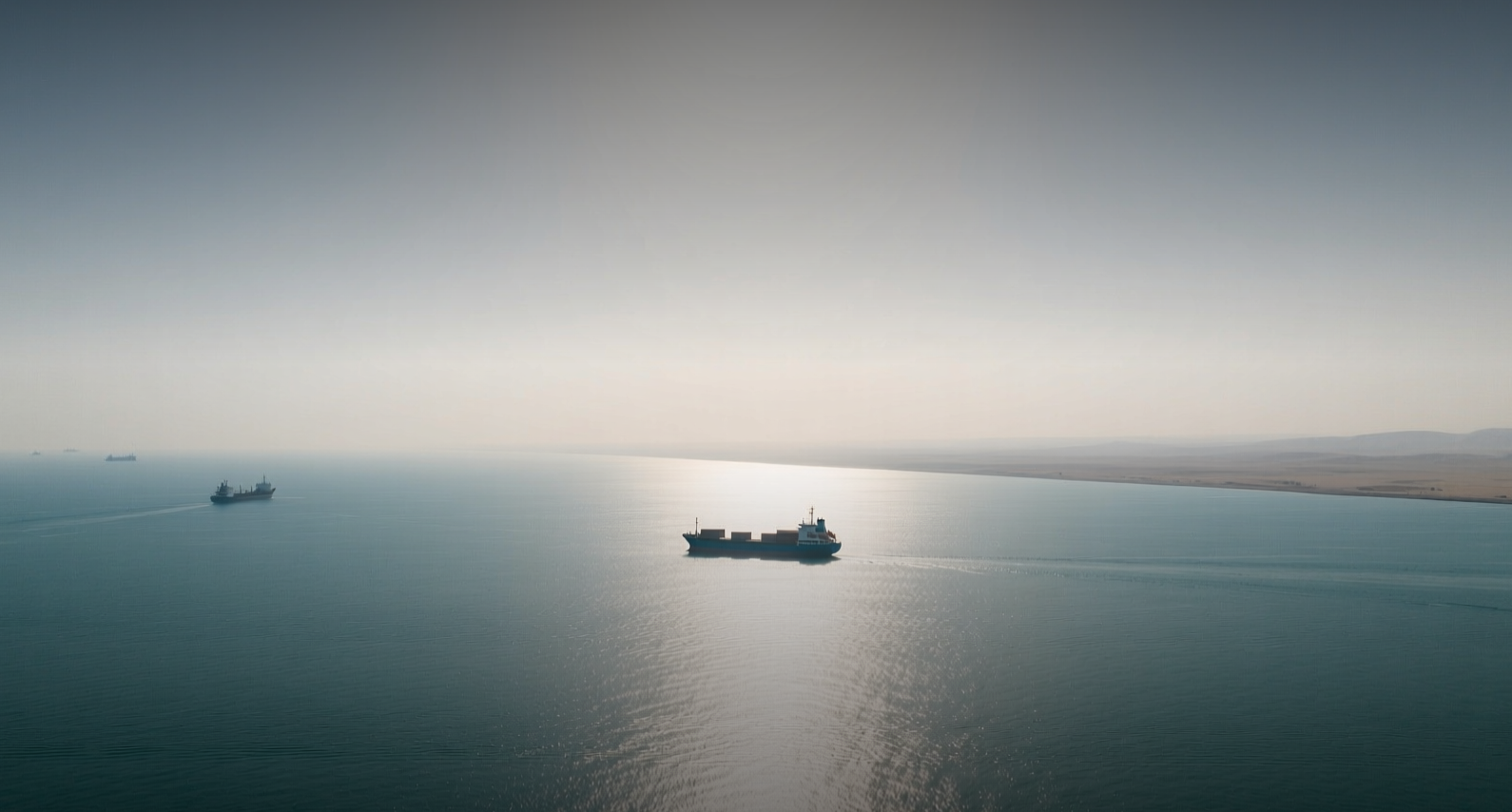
Brent crude climbed a third day to $97.2 a barrel as weekend strikes between Washington and Tehran on tankers and warships deepened fears of supply disruption through the Strait of Hormuz.
"The incident appears to be a major escalation and tensions are heating up again," said David Morrison, senior market analyst at Trade Nation.
Brent futures for November delivery rose 0.2 percent to $97.2 a barrel, while West Texas Intermediate for October gained 1.07 percent to $92.56, both holding near six-week highs. Natural gas prices touched record highs after the reciprocal attacks, adding to energy cost pressure across the region.
The premium reflects the risk that fighting spreads beyond Iran's shadow fleet to the Strait of Hormuz, the chokepoint carrying roughly one-fifth of global crude and liquefied natural gas shipments. Goldman Sachs projects Brent could reach $120 a barrel if attacks on vessels widen, a scenario that would feed into global inflation and central bank policy.
U.S. Central Command said Saturday its forces permanently disabled the IRGC crude carriers M/T Downy off Kharg Island and M/T Stark 1 near Jask, and destroyed the unladen M/T Kylo, also known as the Noxen, in the Gulf of Oman. The strikes followed Iran's ballistic missile launches at an American aircraft carrier and guided-missile destroyer, both of which evaded the attacks without casualties.
"Let the message to the IRGC be clear: If you shoot at two of our ships, we will impose an even higher economic cost — taking out three of yours," Adm. Brad Cooper, the CENTCOM commander, said.
The attack on the Downy near Kharg Island carries outsized weight because the terminal has historically handled about 90 percent of Iran's crude exports. Washington has described the vessels as part of a multibillion-dollar shadow network that funds the Revolutionary Guard and its regional proxies, an approach that turns commercial shipping into an instrument of economic pressure.
Commercial traffic through the Strait of Hormuz has fallen sharply. Ship-tracking data cited by Reuters showed only five commodity vessels transiting the strait on a recent Saturday, versus 31 the previous weekend and more than 130 a day before the war. Kpler data put the 10-day average at 10 vessels a day, the lowest since May.
Iran's parliament speaker, Mohammad Bagher Ghalibaf, warned that "if they attack our assets, we will attack theirs," while the Supreme National Security Council said Tehran plans to declare a restricted zone outside the strait within days. Saudi Aramco's Jizan refining facility, with capacity of about 400,000 barrels a day, was also hit, and a Saudi-owned tanker was attacked by Iran last week, killing two crew members.
OPEC+ kept its October output policy unchanged at a Sunday meeting, leaving little near-term prospect of supply relief. U.S. gasoline and refined product inventories sit well below year-ago levels and the five-year seasonal average, according to PVM Energy analysts.
The trajectory now hinges on whether Iran retaliates against additional U.S. forces or commercial shipping, and whether attacks reach terminals and loading facilities rather than individual tankers. U.S. Energy Secretary Chris Wright said an agreement with Iran to prevent it from obtaining nuclear weapons may be unattainable, pointing to a prolonged confrontation. Brent has risen about 8 percent over the past week and WTI nearly 10 percent, leaving prices at their strongest since late July and within reach of the $100 threshold for the first time since the conflict began in February with joint U.S.-Israeli strikes.
This article is for informational purposes only and does not constitute investment advice.
