Saudi Arabia's HUMAIN launched its first Arabic frontier LLM built on MiniMax's M3 open-weights base, lifting the Chinese firm's shares more than 10 percent intraday.
Saudi Arabia's HUMAIN launched its first Arabic frontier LLM built on MiniMax's M3 open-weights base, lifting the Chinese firm's shares more than 10 percent intraday.
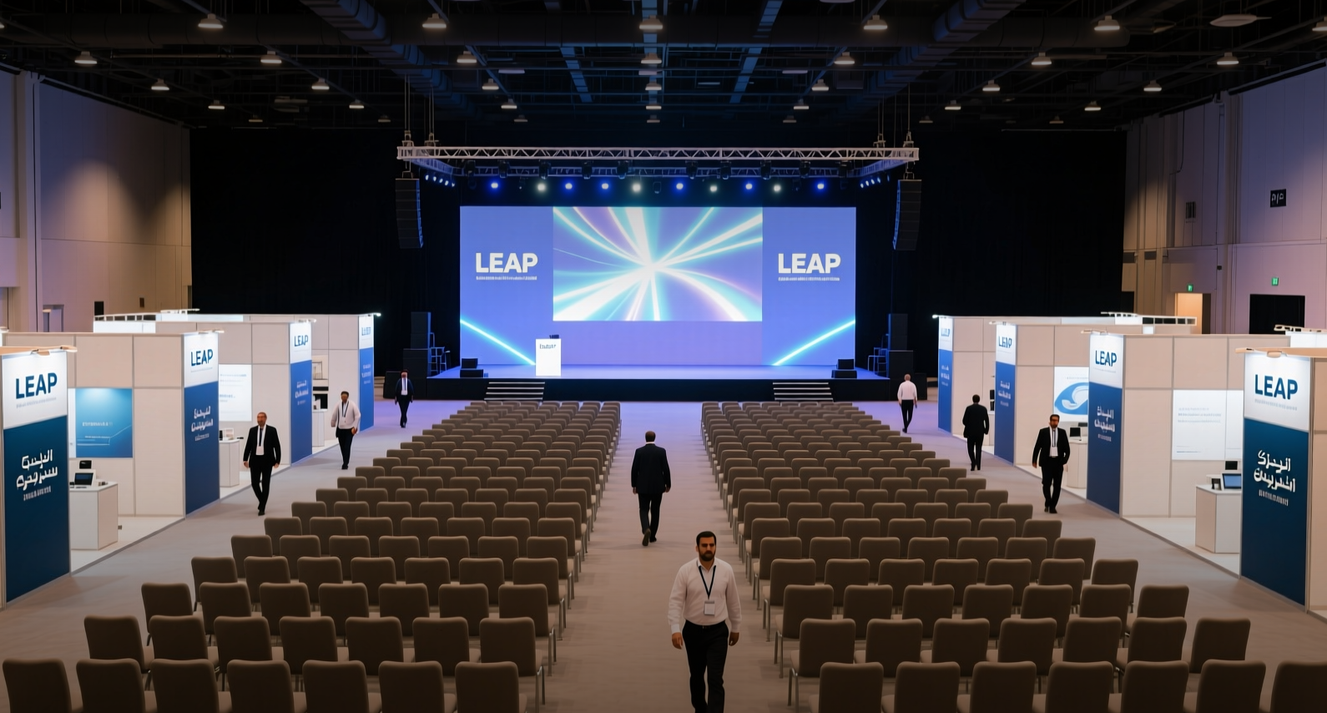
MiniMax's M3 open-weights model now underpins Saudi Arabia's first frontier Arabic LLM, a sovereign AI deployment that lifted the Chinese company's shares more than 10 percent intraday on Sept. 4.
"Arabic is spoken by hundreds of millions of people, yet it remains significantly underrepresented at the frontier of artificial intelligence," Tareq Amin, chief executive officer of HUMAIN, said at the LEAP conference in Riyadh. "With humain-m3, we are investing in changing that."
HUMAIN M3, unveiled Sept. 3, uses a 428-billion-parameter mixture-of-experts architecture that activates 23 billion parameters per token. The model was post-trained on more than 1 trillion tokens of Arabic-native content atop MiniMax's open-source M3 base, released in June. It scored an equal-weighted average of 89.37 percent across seven public Arabic benchmarks, taking top marks in five.
The partnership marks a departure from how Chinese AI companies have historically entered overseas markets. Rather than exporting capability through APIs or consumer applications, MiniMax M3 directly anchors a foreign national AI program. HUMAIN, a Public Investment Fund company chaired by Crown Prince Mohammed bin Salman, plans to release model weights under the MiniMax Community License next month with support for sovereign deployment in Saudi data centers.
HUMAIN's decision to build on MiniMax's architecture represents a strategic shift from its earlier ALLAM series of Arabic models, which the company had developed in-house. Rather than spending years building a competitive base model from scratch, HUMAIN took MiniMax's open M3 and customized it heavily for Arabic — a pragmatic choice that accelerates the kingdom's AI timeline under Vision 2030.
The model's MoE design routes each input to the most relevant subset of its 428 billion total parameters, keeping inference costs manageable while delivering frontier-scale capacity. HUMAIN said the model will first be available as a research preview through its HUMAIN Node platform, with open-weight release planned for next month.
The choice of a Chinese base model is notable given geopolitical tensions around AI technology transfer between Washington and Beijing. Because MiniMax's weights are publicly available, HUMAIN avoids a proprietary dependency relationship — it takes freely available technology and adapts it for Arabic. HUMAIN has also partnered with Nvidia, AMD, and Mistral for other parts of its AI infrastructure stack.
The HUMAIN deal reflects a broader shift in how Chinese AI models reach international markets. Hugging Face's "State of Open Source" report shows Chinese-developed models accounted for 41 percent of platform downloads over the past year, surpassing the United States for the first time. Chinese open-source models are moving beyond direct API invocation into deeper layers: model retraining, local deployment, and industry-specific customization.
For MiniMax, the Saudi partnership provides a national-level endorsement of its technology. HUMAIN's selection of M3 as the foundation for its sovereign Arabic model confirms the model's cross-lingual transfer and post-training capabilities can support the requirements of a national AI program. The stock reaction — more than 10 percent intraday — suggests investors are pricing in the potential for additional Middle Eastern sovereign deals.
Arabic is spoken by more than 400 million people, yet mainstream large models have historically offered far less support for Arabic than for English or Chinese. HUMAIN M3 aims to fill that gap, giving developers across the Middle East and North Africa a model foundation with native-level Arabic comprehension. For MiniMax and other Chinese AI companies, the deal opens a template for sovereign AI partnerships that could reshape their international revenue model — from per-token API fees to deeper, multi-year technology foundation agreements.
This article is for informational purposes only and does not constitute investment advice.
