
Nvidia's Sept 10 Goldman Sachs Communacopia appearance puts Vera Rubin production timing, memory availability and China export policy under investor scrutiny.
Nvidia's Sept 10 Goldman Sachs Communacopia appearance puts Vera Rubin production timing, memory availability and China export policy under investor scrutiny.
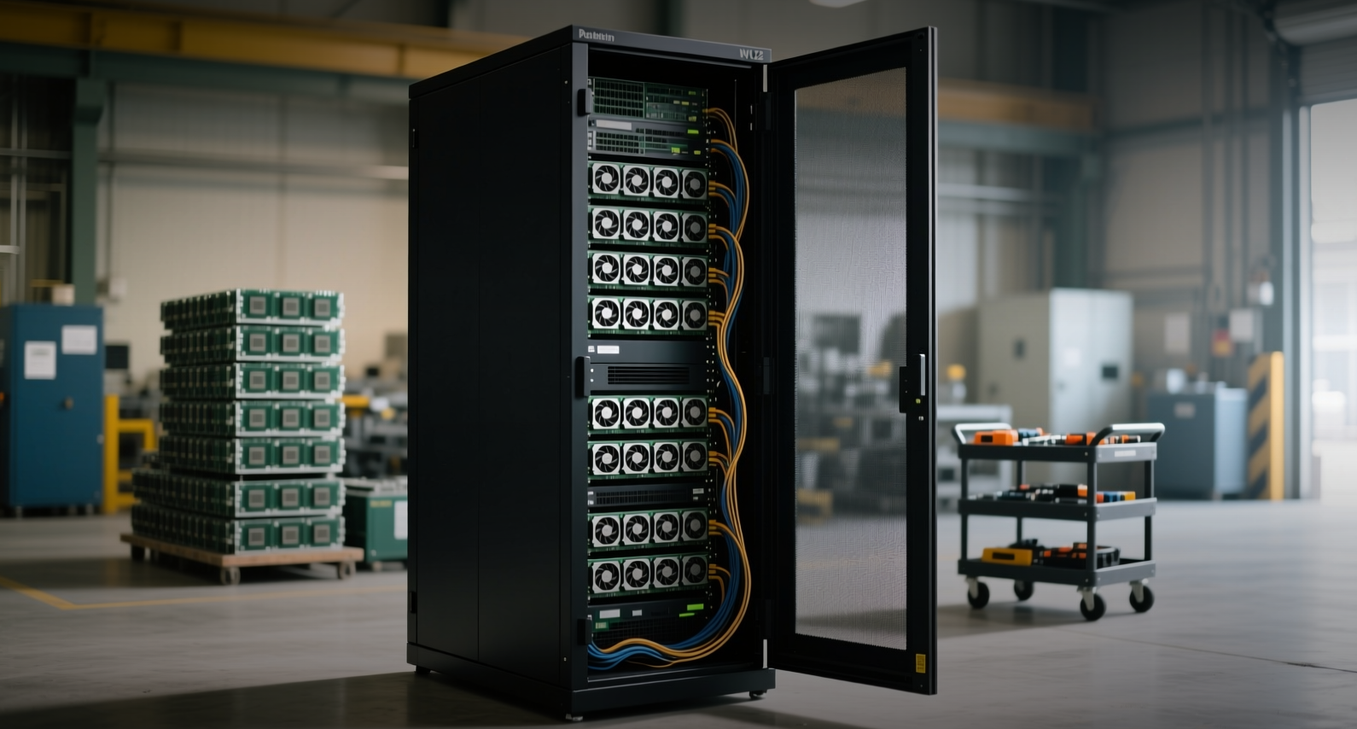
Nvidia executives take the Goldman Sachs Communacopia stage Sept 10 with Vera Rubin production, memory supply and China export policy in focus, after an upbeat revenue outlook lifted Asian chip stocks.
The appearance follows a forecast of strong AI-driven revenue growth that helped lift chipmakers from Samsung Electronics to SK Hynix, with South Korea's KOSPI climbing more than 1 percent on the outlook. Industry participants expect Nvidia shares to swing in the days after the conference, according to the event preview, with a confident read on Vera Rubin production seen as the trigger for a surge.
Vera Rubin is Nvidia's next-generation AI platform, the successor to the Blackwell architecture that underpins its data-center dominance. The Register has reported the lineup includes an NVL72 rack-scale system, and Nvidia is building an IP licensing business around its NVLink interconnect that lets it collect royalties even from systems that do not carry its nameplate GPUs. A production timeline for Vera Rubin is the most-watched data point, since it determines how much of the AI accelerator market Nvidia can hold against challengers such as AMD and Cerebras.
Memory supply is a second focus. Nvidia's accelerators depend on high-bandwidth memory (HBM, the fast memory stacked beside the GPU that feeds data to the compute cores), and tight supply has constrained output across the AI supply chain. Samsung and SK Hynix, the two dominant HBM makers, have rallied on AI optimism, and any Nvidia commentary on memory availability will move their shares. The ceiling on how many accelerators Nvidia can ship rests on HBM allocation from those two suppliers plus the advanced packaging capacity of foundry partner TSMC.
US export controls round out the agenda. Washington's restrictions on advanced chip sales to China cap a market that once accounted for a large share of Nvidia's data-center revenue, and executives' read on the policy's trajectory will shape the stock's direction. Kyiv has separately pressed for tighter controls to keep Nvidia silicon out of Russian weapons, adding a second geopolitical layer to the export question. Any signal that Washington intends to tighten or ease the rules will move not just Nvidia but the whole AI supply chain that depends on Chinese demand.
The CPU business is a quieter thread. Nvidia has pushed beyond GPUs into data-center processors, and executives may frame how that expansion fits its roadmap. The Register has noted Nvidia's NVLink licensing push means even rivals' systems can generate royalty revenue for the company, a model that extends its reach beyond its own chip sales.
The stakes extend beyond Nvidia. Qualcomm struck a deal with Amazon this week that could see the cloud giant buy up to $60 billion of AI data-center chips, while Ooredoo-backed Zankore secured $3.1 billion in financing for an Nvidia-powered AI cloud platform — evidence that demand for accelerators stays strong even as rivals push in. Nvidia shares, a bellwether for the AI trade, will ripple through the semiconductor complex, from HBM suppliers SK Hynix and Samsung to foundry partner TSMC and rivals AMD and Cerebras.
This article is for informational purposes only and does not constitute investment advice.
